Five assassination attempts in year: UN reveals details of ISIS campaign targeting Syria's new authorities

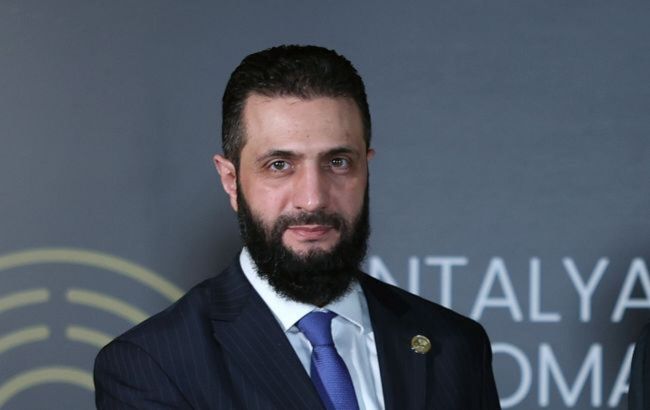 Photo: President of Syria Ahmad al-Sharaa (Getty Images)
The United Nations has released a report on five failed assassination attempts targeting the President of Syria, Ahmad al-Sharaa, and his ministers, according to AP.
Read also: Russian forces pull back from Qamishli airport as Syrian government advances
According to a report by the United Nations Office of Counter-Terrorism published on February 11, President Ahmad al-Sharaa and his ministers survived at least five failed assassination attempts over the past year. The targets included Interior Minister Anas Hassan Khattab and Foreign Minister Asaad al-Shaibani.
Assassination attempts against the president were recorded in Aleppo and Daraa.
Who is behind attacks
According to UN experts, the group Saraya Ansar al-Sunna claimed responsibility for the attempted killings.
However, UN analysts believe this structure serves merely as an umbrella organization acting as a front for ISIS. The use of such a proxy group allows the terrorist organization to maintain plausible deniability while expanding its operational capabilities.
Security vacuum and ISIS retaliation
Experts emphasize that militants are seeking to exploit the "security vacuum and period of uncertainty" that followed the fall of Bashar al-Assad’s regime in December 2024.
Ahmad al-Sharaa, a former leader of Hayat Tahrir al-Sham who came to power amid the uprising, has now been designated by ISIS as its "number one target." The situation escalated after the new Syrian government officially joined the international coalition against ISIS in November 2025.
Current situation in country
Despite the change in leadership, militants remain active across multiple regions:
-
In the north and northeast, regular attacks on security forces continue.
-
Russian troops are gradually reducing their presence, withdrawing from bases and further shifting the balance of power.
-
Turkey is increasing its influence, supporting the government in its fight against Kurdish formations.
The United Nations stresses that attempts to physically eliminate the country’s leadership indicate radical groups’ intention to derail stabilization efforts and destabilize the new political order in Syria.
In December 2025, analysts from the Institute for the Study of War (ISW) predicted a further reduction of Russia’s military presence in Syria. According to their assessment, Moscow had effectively decided to leave its last major northern base in Qamishli due to opposition from Turkey and Syrian factions, including Hayat Tahrir al-Sham and the Syrian National Army.
On December 17, Syrian media also reported that Russian forces had withdrawn from the Tiyas airbase in Homs province and redeployed to the Hmeimim base.