Finnish and Norwegian leaders secretly contacted Putin to avoid Baltic war - WSJ

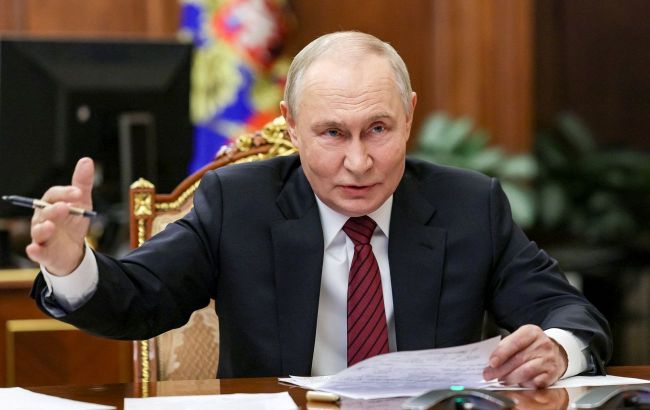 Vladimir Putin, Kremlin leader (photo: Getty Images)
Finnish President Alexander Stubb and Norwegian Prime Minister Jonas Gahr Støre enlisted a Russian oligarch to establish secret communication with Russian leader Vladimir Putin in an effort to prevent direct military confrontation in the Baltic Sea, according to The Wall Street Journal.
According to WSJ, the Baltic Sea has become one of the most dangerous flashpoints between Moscow and the West.
Russia transports over 60% of its seaborne oil through this route, fueling its war economy, yet the waters are surrounded by NATO countries.
Amid seizures of Russian shadow fleet tankers and statements from some European politicians about potentially closing the Gulf of Finland, fears of a naval blockade have intensified in Moscow.
In response, the Kremlin has taken aggressive steps, ordering warships equipped with nuclear-capable missiles to escort oil tankers; Germany's coast guard recorded 260 such incidents over the past year.
The situation has been exacerbated by maritime incidents, including a near-collision between the Russian corvette Soobrazitelny and German coast guard vessels in June, the firing of signal flares at a Danish helicopter in September, and the blocking of access to a distressed tanker near Bornholm Island in October.
Moreover, in September, Moscow sent NATO a written warning stating its readiness to launch preemptive nuclear strikes to protect its interests in the Baltics, even without a direct attack on Russian territory.
Due to the risk of uncontrolled escalation, the Pentagon urged Baltic allies to tone down their rhetoric in late October, prompting Helsinki and Oslo to take direct action.
Since official diplomatic signals had yielded no results, the Scandinavian leaders turned to a Russian oligarch who traveled to Norway for consultations with senior officials before returning to Moscow to deliver a message to Putin.
On October 27, a phone call took place involving Stubb, Støre, and Putin. Officially, the topic was ending the war in Ukraine, but in reality, the leaders sought to allay the Kremlin's fears regarding a naval blockade.
“We have no intention of blockading the Baltic in peacetime, you can rely on that, we will act in accordance with the law," Finnish President Alexander Stubb stated during the call.
The de-escalation agreements were tested following a recent Ukrainian drone strike on a Russian cargo vessel carrying weapons.
The strike occurred in Russian waters, but the damaged vessel entered Finnish territorial waters. Adhering to maritime law, Finnish authorities coordinated with Russia to extinguish the fire and allowed the ship to be towed away.
Meanwhile, the Kremlin stated that this incident once again heightened tensions in the region and demanded that Baltic states use their influence on Kyiv to prevent similar attacks in the future.
Russian threats in the Baltic Sea
Due to rising tensions and suspicious Russian activity in the Baltic Sea, regional countries have stepped up security measures and shipping controls.
In particular, in September, Finland conducted large-scale exercises during which security forces practiced boarding and searching vessels to protect underwater critical infrastructure from potential sabotage.
Against the backdrop of high threats in the region, European intelligence agencies have also moved to real-world operations.
For instance, in late October, Swedish special forces carried out a nighttime operation aboard a dry cargo ship with a Russian crew near Gotland Island.
Furthermore, European states are systematically countering Russia's so-called "shadow fleet," which Moscow uses to circumvent oil sanctions - a practice that has repeatedly led to incidents involving Russian warships.