Baltic Sea forces train for ship seizures amid high Russian threat

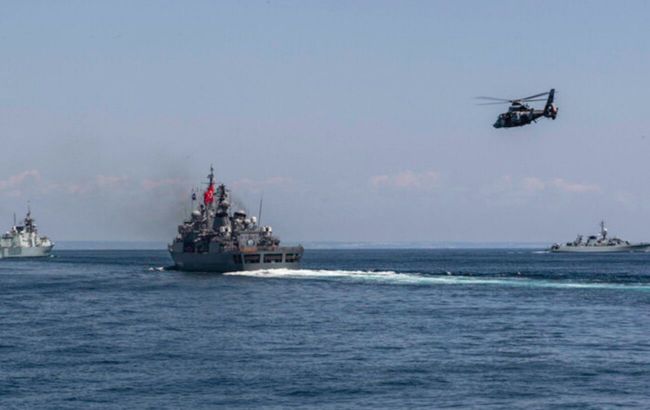 Photo: exercises in the Baltic Sea (open sources)
Finland conducted exercises during which security forces practiced boarding and searching a vessel in the Baltic Sea. The goal was to test readiness to respond to possible damage to critical underwater infrastructure and suspicious activity at sea, according to Reuters.
During the drill, Coast Guard, police, and armed forces personnel boarded a vessel from a helicopter. They took control of the crew and searched the premises.
The exercises took place against the backdrop of concerns among Baltic region countries regarding damage to underwater cables, gas pipelines, and other critical infrastructure. Finland notes that several similar incidents have occurred in the region in recent years.
Coast Guard Commander Ilja Iljin stated that such exercises reflect the "new normal" for Finland.
"In the past two or three years we've had several incidents in the Baltic related to the damaging of critical underwater infrastructure. So we have to be ready for when the next event happens," he said.
According to representatives of Finnish security structures, suspicion may be aroused by, among other things, a sudden change in a vessel's speed or course while passing over underwater cables.
Finland is also working on strengthening the capabilities of its Border Guard to inspect suspicious vessels or those without a state flag, as well as unmanned underwater vehicles.
EU exercises
Concurrently, the practical phase of the MARSEC EU 26 exercises took place in Finland from September 15–17. Participants practiced responding to an incident involving a suspicious vessel near underwater infrastructure, including boarding, searching, and securing control of the vessel.
The exercises were organized by the Finnish Border Guard in cooperation with other countries and EU structures. The main focus was on protecting underwater cables and pipelines and responding to potential hybrid threats.
Previously, Finland had detained vessels suspected of damaging underwater cables. At the same time, Russia's involvement in all such incidents has not been proven, and Moscow denies its involvement.
Various provocations occasionally occur in the Baltic Sea, for which Russia is openly blamed. For example, an underwater fiber-optic cable was previously damaged in the territorial waters of Latvia in the Baltic Sea.
Moreover, there were reports of a case where Russia wanted to blame Ukraine for provocations.
A representative of one of the Baltic countries reported that Russian military and special services might be planning an attack on infrastructure facilities in Russia, the Baltic states, and Poland using Ukrainian drones.