Feeling isolated among friends? Psychologist reveals reasons

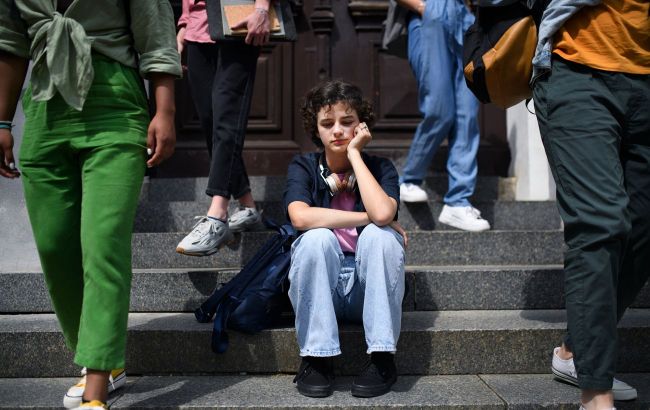 Why do you feel lonely even among close friends and family (photo: Getty Images)
You can sit at the same table with friends, laugh at their jokes, and take part in the conversation, while still feeling like a space tourist on a foreign planet. The phenomenon of loneliness in a crowd is not a sign of being strange — it is a clear psychological signal of disrupted emotional connections.
Why this feeling of loneliness in social settings arises and how to restore depth in relationships was explained by clinical psychologist and art therapist Olena Dorohavtseva.
Why being around people doesn’t cure loneliness
Being near and being together are different things. The psychologist explains that the root of the problem often lies in authenticity and the quality of connection.
“This is a very subtle feeling: as if you are among people, there are conversations and laughter around you, but inside, there is silence and the feeling that no one truly sees you. Feeling lonely among friends or in a crowd occurs when the external presence of people does not match the internal experience of closeness. And this is not rare. Often it is not about the number of friends, but about the quality of connection and how you yourself are present in that connection,” says Olena Dorohavtseva.
Main psychological causes of loneliness
Lack of emotional closeness. You communicate, but do not feel understood or accepted. Others interact with a version of you, not the real you.
Social roles instead of authenticity. In a group, you play a role instead of showing real emotions. You seek meaning, sincerity, depth — but around you are jokes, news, and everyday talk. This creates a feeling that we are not on the same wavelength.
Internal barriers.Fear of opening up, insecurity, and past rejection. Internal alienation from yourself. If you don’t fully understand your own emotions, it is difficult to be truly close to others.
Comparison with others. In a crowd, it is easy to feel that everyone else is happier than you.
You are playing a role instead of living your own life — smiling, supporting others, adapting, but not showing real feelings.
Cultural pressure. Society often frames loneliness as a failure, which intensifies feelings of isolation.
You are used to being strong. Others see that you are fine and do not realize you also need support.
The path to real connection
Getting out of this state does not necessarily require changing your environment. Sometimes it requires changing how you interact with the world and with yourself.
How to cope:
Seek quality connections
- Focus on people who truly listen and accept you, not just those who are present in your life.
Be authentic
- Allow yourself to express your feelings, even if it feels risky.
Reduce comparisons
- Remember: the external image of friends or colleagues does not always reflect their inner state.
Practice mindfulness
- Awareness helps you feel here and now instead of lost among others.
Seek support
- If loneliness becomes chronic, consider talking to a psychologist to work through internal barriers.
Important idea. Loneliness in a crowd is not about something being wrong with you. It is about a lack of genuine connection — either with others or with yourself. And it can be changed, not abruptly, but through small steps of honesty, choice of people, and self-awareness.
“Loneliness among friends is a signal that you lack deep emotional connection, not just company. It is important to learn to recognize this state and work toward authentic relationships with mutuality and acceptance,” the expert concludes.