Europe’s drift toward dictatorship, experts explain dangers

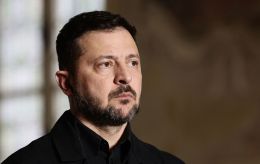
 Europeans have become more inclined toward a tougher hand in power (Photo: Getty Images)
Twenty-two percent of citizens in five European countries believe that, under certain circumstances, a dictatorship is better than democracy. At the same time, a quarter of Europeans are willing to grant a strong leader extraordinary powers - even at the cost of limiting democratic procedures, according to a Politico study.
Where and how the survey was conducted
The study was carried out by the AboutPeople Institute on behalf of the analytical center Progressive Lab. The survey ran from November 25 to December 16, 2025, and covered five countries:
- Greece;
- France;
- Sweden;
- United Kingdom;
- Romania.
Sociologists emphasize that most citizens still support democracy as a fundamental principle, but an increasing number are frustrated with how it functions in practice.
Dissatisfaction with democracy
According to the survey, the level of dissatisfaction with how democracy functions varies significantly by country:
- Greece – 76% of respondents said the system does not work properly;
- France – 68%;
- Romania – 66%;
- United Kingdom – 42%;
- Sweden – 32%.
Thus, southern and eastern European countries show much higher levels of frustration compared to northern ones.
Analysts explain this by a combination of economic difficulties, high inflation in recent years, the migration crisis, declining trust in traditional parties, and general fatigue from political instability.
Inclination toward a “strong hand”
A separate section of the study examined attitudes toward authoritarian tools of governance.
Twenty-six percent of respondents agreed with the statement that an effective and capable leader could be granted temporary dictatorial powers to handle crisis situations - even if this meant weakening parliamentary oversight and limiting democratic procedures.
Interestingly, younger respondents and people with higher education in certain countries showed unexpectedly high levels of tolerance for this model.
Why skepticism is rising
Experts interviewed by POLITICO point to several key factors:
- A sense that governments are unable to respond quickly to crises;
- Growing social inequality;
- Information polarization and the spread of disinformation;
- Loss of trust in political elites.
At the same time, the study emphasizes that even among those who see advantages in an authoritarian approach, most do not fully support abandoning elections or removing basic rights and freedoms. Rather, there is a demand for speed, efficiency, and tough decision-making.
Warning signal for Europe
The study’s authors believe the results should serve as a serious warning to European governments. The gap between formal support for democratic values and practical disappointment in their implementation can create fertile ground for the rise of populist and radical political forces.
Amid Russia’s war against Ukraine, ongoing security challenges, and economic turbulence, trust in democratic institutions is becoming one of the key issues for Europe’s future.