Europe moves to fully end Russian gas imports by 2027 as Russian economy weakens

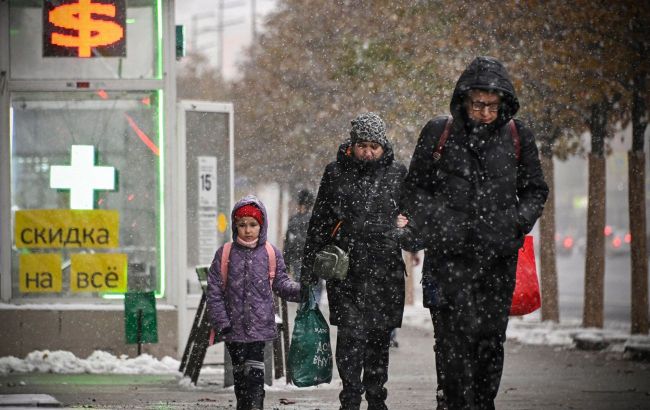 Intelligence explains how anti-Russian sanctions work (photo: Getty Images)
EU countries have finally approved a plan for a complete rejection of Russian gas by the end of 2027. At the same time, 2025 became the worst year for trade in Russia in the past decade amid mass bankruptcies, according to the Foreign Intelligence Service of Ukraine.
Energy isolation and sanctions pressure
The European Union has officially set deadlines for ending supplies of Russian energy resources. Under the decision, imports of liquefied natural gas (LNG) will stop by the end of 2026, while pipeline fuel supplies will end by September 30, 2027.
At the same time, the United States and the EU have agreed on protecting Greenland's resources. The new agreement provides for the creation of a supervisory body that will prevent Russia and China from obtaining rights to explore mineral resources on the island.
Legal disputes with Russia
Germany's Foreign Ministry is meanwhile criticizing Russia for its uncompromising stance on territorial issues.
German company Uniper has filed a lawsuit against Russia's Gazprom (state-owned Russian energy giant and gas monopoly) with an international arbitration court in Geneva, seeking €45 million over breaches of gas transportation contracts.
Mass bankruptcies
The year 2025 became the worst for Russian trade in the past ten years.
According to the intelligence service, only 173,000 new companies were established in Russia over the year, the lowest figure in 14 years. The number of liquidated firms rose to 233,000, with closures exceeding openings by 26%.
According to the service, business activity collapsed in 60 regions, including Moscow and St. Petersburg. The number of contracts for specialized equipment and transport fell by 30–46%, effectively halting the renewal of production capacities.
Baby food as a luxury
Financial pressure on ordinary Russians has reached a critical level. More than half a million citizens have officially declared bankruptcy.
Sales of children's goods fell by 8%, while demand for baby food collapsed by 12%. The reason is a sharp 44% increase in prices.
As many as 66% of purchases of children's items are now made through second-hand marketplaces.
Psychological breakdown
Against the backdrop of economic helplessness, Russia has set a historic record in the consumption of sedatives.
Citizens purchased 22.3 million packages of antidepressants worth 20.5 billion rubles. Compared with 2022, demand increased 2.4 times.
Education coercion
Russian colleges are introducing strict restrictions on paid education in the fields of law and economics.
The authorities officially state that this is being done to address labor shortages in industry.
The Kremlin's goal is to artificially redirect young people toward blue-collar professions, effectively depriving applicants of a choice of career. Due to a lack of workers at defense factories and construction sites, the state is deliberately cutting back on prestigious fields in an attempt to fill vacancies at factory machines.
Geopolitical isolation and pressure on Belarus
Moscow is trying to compensate for internal losses through full control over Belarus, harshly suppressing any attempts by Minsk to pursue an independent course.
At the same time, Belarus itself is showing critical signs of degradation: a trade deficit of $1.3 billion and rapid depopulation of large cities.
In response to these threats, NATO is already preparing to create a robotized uninhabited zone along borders with aggressors to minimize the risk of confrontation.
Ukrainian intelligence has released another interception confirming the critical condition of regional budgets in Russia. Due to an acute lack of funds, local authorities have begun radical spending optimization, primarily affecting the state apparatus.
In the regions, plans are in place to cut up to 20% of administrative staff. Such savings are the result of depleted reserves, as most regional budget funds are being redirected to the needs of the army.
In addition, the Russian economy ended 2025 with catastrophic indicators, pointing to a deep systemic crisis.
The main blow to the aggressor's budget was the drop in oil prices, which fell to a five-year low, sharply reducing the country's foreign currency revenues.