EU parliament moves toward ratifying deal with US

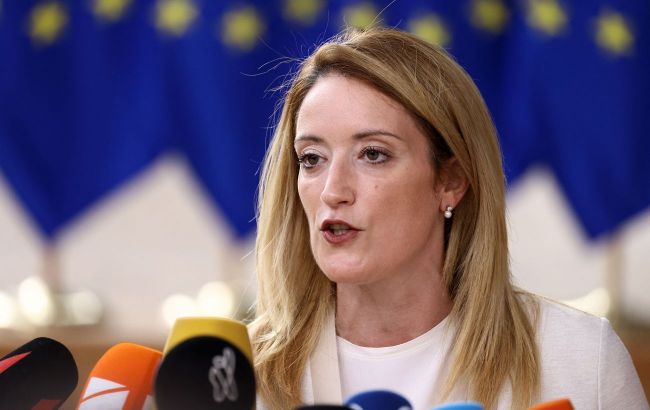 Photo: European Parliament President Roberta Metsola (Getty Images)
The European Union is resuming voting on a trade agreement with the United States after US President Donald Trump backed away from imposing tariffs on European goods, Bloomberg reports.
Earlier, voting in the European Parliament had been suspended due to Trump’s "coercive" threats, which the lawmakers considered unacceptable.
However, the US President’s latest statement on abandoning the tariffs has allowed lawmakers to move forward with consideration of the agreement.
European Parliament President Roberta Metsola told journalists in Brussels on Thursday, January 22, that Trump’s decision to drop the tariffs makes it possible to resume the vote. According to her, a preliminary vote could take place in the coming days, while final approval by Parliament would be the last step before the agreement officially enters into force.
The EU-US trade agreement was concluded in July 2025 and is already being partially applied. It provides for the near-total removal of European tariffs on US goods, while the United States agreed to impose a 15% tariff on most EU exports and a 50% tariff on steel and aluminum.
Reasons for the EU-US dispute
Tensions between the EU and the US escalated over a dispute related to Greenland, when Trump demanded changes to European policy toward the island. The EU even threatened to use a new anti-coercion mechanism designed to deter such actions by third countries.
However, Donald Trump revised his position after a meeting with NATO Secretary General Mark Rutte at the World Economic Forum in Davos, Switzerland, late Wednesday evening.
Problematic issues in the EU-US deal
Although Trump’s latest threat is no longer relevant, Bernd Lange, the European Parliament’s lead lawmaker on the EU-US trade agreement and head of the parliament’s trade committee, said that "there is no room for false security" as "the next threat is sure to come." According to him, the agreement requires close oversight during its implementation.
Even before the Greenland crisis, the deal faced resistance in parliament due to the US expansion of 50% tariffs on metal products and demands for changes to European technology regulations.
At the same time, the resumption of voting paves the way for full implementation of the agreement, which is expected to ensure stable trade relations between the EU and the US and establish clear rules for tariffs and market access on both sides.
Earlier, US President Donald Trump said he would impose tariffs on a number of European countries until Washington was able to buy Greenland. The tariffs were expected to be introduced in two stages.
Against this backdrop, several EU countries began developing possible responses to the United States. For example, the German government said it was considering a significant increase in fees charged to the US for leasing military bases on German territory.