EU breaks Russia's energy hold, opening door to new suppliers

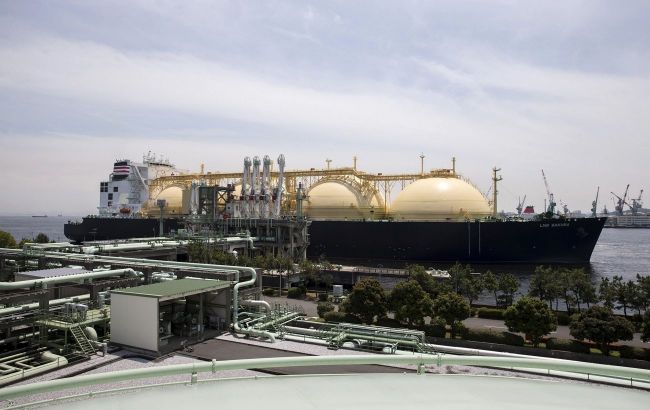 Photo: an LNG ship (Getty Images)
The US is poised to become the European Union’s leading supplier of natural gas as early as this year. US exports are growing rapidly and threatening Norway’s leadership, according to the maritime industry portal The Maritime Executive.
Europe has managed to overcome its dependence on Russian pipeline gas, but now the continent is choosing a new favorite. The United States is confidently overtaking Norway, which was previously the EU’s key partner in energy security.
The White House has bet on liquefied natural gas, and the US is actively building plants along the Gulf Coast. Capacity is growing every month, while Norway, in contrast, relies on aging pipelines, according to the IEEFA report.
US terminals now account for two-thirds of all European LNG imports. IEEFA analysts offer a bold forecast: by 2028, the U.S. share of the EU market could reach 80 percent.
Russian gas and EU plans
The situation with Russian fuel remains ambiguous. LNG supplies from Russia to Europe continue to grow. This is happening despite Brussels' plans, as the blockade of the Strait of Hormuz is playing a negative role.
It is precisely because of Trump’s war in Iran that imports of Russian LNG rose by 16 percent in the first quarter alone. These figures are now the highest since the start of Russia's full-scale invasion of Ukraine.
Europe simply has to buy gas from Russia, as no one foresaw the hostilities between the US and Iran. It is simply impossible to find an alternative immediately.
IEEFA lead analyst Ana Maria Jaller-Makarewicz considers this strategy risky.
"LNG has become the Achilles’ heel of Europe's energy security strategy, leaving the continent exposed to high gas prices and to new forms of supply disruption," the analyst notes.
She adds that the 2026 energy crisis is forcing countries to accept a new set of rules.
"The 2026 energy crisis shows that as long as European countries choose to rely on gas, they must accept the geopolitical risks that come with it," Jaller-Makarewicz emphasizes.
What needs to be done right now
Experts propose a radical solution: we need to consume less. Europe must reduce its demand for gas by 14 percent by 2030. This applies first and foremost to expensive imports.
Alternative steps to stabilize the system:
- Widespread adoption of heat pumps in the residential sector
- Accelerating the transition to renewable energy sources
- Optimizing the use of existing terminals.
IEEFA warns of a potential planning error. The EU is building too many import terminals. By 2030, there may be more infrastructure than is needed for gas. This will lead to idle capacity and wasted billions of euros.
EU gas market
The European Union is preparing to resume joint gas purchases at the bloc-wide level. This is Brussels’ response to instability in the Middle East and the threat of an energy crisis.
Meanwhile, the US has stated its readiness to quickly replace all Russian gas and oil supplied to Europe with its own energy resources if necessary.