Estonia pushes 'NATO legion' idea but faces major hurdles

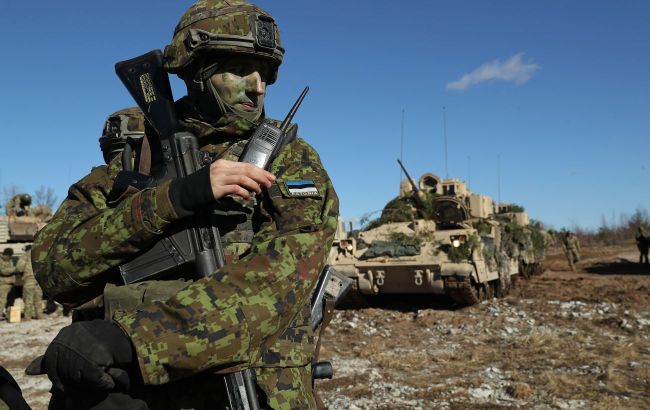 Photo: Estonian army (Getty Images)
Estonia plans to officially allow citizens of NATO member countries to serve in its Defense Forces. The relevant draft law has already been submitted to the country's parliament, according to Estonian public broadcaster ERR.
The initiative was supported by 53 members of the Riigikogu. The document proposes allowing foreigners from the Alliance to join the Estonian Defense League (Kaitseliit). This volunteer formation is an important part of national security.
The main innovation is granting foreigners the right to hold wartime positions. This applies to positions that require holding a military rank. Previously, such a mechanism lacked a clear legislative basis.
This decision will allow the official recruitment of experienced soldiers from other Alliance countries to plan defense operations and form command structures.
Who and how will serve in the Estonian army
Participation of foreigners will be exclusively voluntary. Compulsory conscription will not apply to them.
Requirements for future volunteers:
- Age 18 or over;
- Citizenship of a NATO member country;
- Mandatory taking of the Estonian military oath.
The new rules also expand the role of auxiliary members of the Defense League. They will be able to provide more active assistance during crises or emergencies. If parliament adopts the document, the law will take effect on January 1, 2027.
Why it's not so straightforward
Not all experts received the idea positively. Advisor to the National Defense Committee, Aivar Engel, voiced several objections. He doubts the necessity of such a step.
"Considering that the Defense League, together with its women's and youth organizations, has more than 30,100 members, there should be no shortage of personnel within the organization," he noted.
A separate issue is the language barrier. The language of military command in Estonia is Estonian. However, the draft law does not yet establish language proficiency requirements for foreigners. There are also discrepancies in medical standards. Volunteers are significantly more lenient than professional military personnel.
More news on the NATO topic
Lithuania, Estonia's Baltic neighbor, wants to lift the restriction on the deployment of nuclear weapons in the country at the constitutional level. Lithuanian President Gitanas Nausėda stated that there is practically unanimous support for such an idea among parliamentary party leaders.
Meanwhile, Finnish President Alexander Stubb officially signed amendments to the nuclear energy law. This step definitely allowed the import, transit, and storage of nuclear weapons on the country's territory.