Efforts to freeze Russia's powers at UN General Assembly already underway


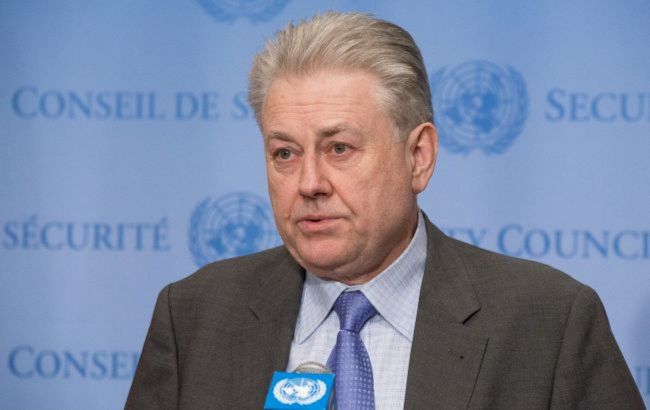 Former Ukrainian ambassador to the United States and the UN Volodymyr Yelchenko (photo: Getty Images)
If Ukraine and its allies manage to "freeze" Russia's credentials as a delegation in the UN General Assembly, it would also suspend its activities in the UN Security Council, Former Ukrainian Ambassador to the United States and the United Nations Volodymyr Yelchenko said.
The diplomat explained that expelling Russia from the UN is not currently being considered because it is politically unrealistic. However, they could "freeze" its credentials, as they did with South Africa during the apartheid era.
"Or here's an example few people know about: Hungary in 1956. After Soviet troops invaded Budapest, the credentials of the Hungarian delegation were frozen, and this continued for almost three years. This would mean that Russian representatives such as Nebenzya would no longer be able to attend meetings and spread the nonsense we hear on television at every UN Security Council or General Assembly meeting," Yelchenko explained.
According to him, the procedure is relatively straightforward: Ukraine would need to submit the issue to the General Assembly by sending a letter.
An even better option would be a letter from a group of countries supporting the initiative.
"And that is exactly what the Pylyp Orlyk Foundation is working on right now. We have already visited several countries and are continuing these trips, persuading them at the parliamentary, governmental, and public levels to join our initiative," Yelchenko emphasized.
The diplomat explained that the joint letter should state that the group of countries does not recognize the Russian delegation's credentials and call for the issue to be added to the agenda and formally considered.
The former ambassador expects the initiative to be extremely irritating for Russia. Moreover, it would once again draw attention to an issue that hasn't been properly discussed in a long time.
"From my own experience, I can say that when we spoke with senior diplomats in several countries recently, they said, 'Oh, that's right, we hadn't thought of raising the issue in exactly this way.' In other words, everyone knows about it, but somehow, you know, it's not the right time; they have other priorities, because no one has reminded them of it," Yelchenko added.
He believes there is a genuine chance of success, as there are substantial grounds for refusing to recognize Russia's credentials. The issue is not that Russia is an aggressor, but that it failed to complete the required procedures to become a UN member in 1991.
"That is what we are challenging, and any international law expert will tell you that a ruling could unequivocally go against the Russian Federation," Yelchenko concluded.
Recently, it also emerged that the UN Secretary-General had appointed a Russian diplomat to assist him on mine action and policing issues.
Meanwhile, media reports revealed a joint candidate backed by the United States, Russia, and China who could become UN Secretary-General.