Earth froze over 22 times: Scientists uncover real cause

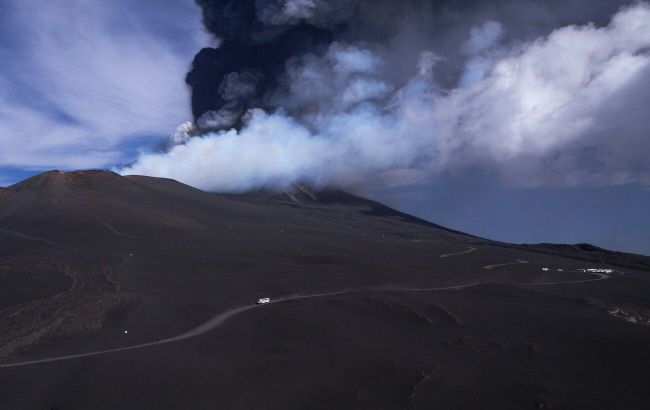 Scientists have proven the role of volcanoes in Earth's deep freezes (photo: Unsplash)
Earth has experienced 22 major cooling events over the past 11,700 years – and scientists have now identified their cause. It turns out that powerful volcanic eruptions played a key role, according to scientific research published in the journal Nature Communications.
What triggers the chain reaction?
Scientists explain that while volcanic ash settles relatively quickly, the key factor driving long-term climate impact is the release of sulfur into the upper atmosphere.
Sulfur aerosols reflect sunlight, causing an initial cooling of the surface.
Researchers have reconstructed the timeline of the 51 most powerful eruptions over the past 12,000 years and matched them against periods of glacier advance. More than 80 percent of the glacier advances clearly coincided with major volcanic events.
The mechanism of long-term cooling typically unfolds as follows:
- Initial impact: sulfur enters the stratosphere and sharply lowers temperatures in the Northern Hemisphere.
- Sea ice expansion: the area of Arctic ice increases – bright ice reflects more solar radiation, amplifying the cooling.
- Shift in ocean currents: the growing ice cover hinders heat exchange between the ocean and the atmosphere and slows down water circulation in the North Atlantic.
- Shift in rainfall belts: the tropical rain belt shifts southward, leading to prolonged dry and cold conditions in the north.
Why the cold lasts for centuries – and could it happen today?
Although the sulfur particles themselves wash out of the atmosphere within a few years, the ocean and sea ice respond much more slowly.
Once locked into a new state, this system can sustain low temperatures for decades or even centuries, giving mountain glaciers time to expand significantly.
The scientists noted that similar processes were observed after the eruptions of Samalas in 1257 and Tambora in 1815.
At the same time, they caution that predicting the consequences of a similar eruption under modern conditions is far more complex.
Due to anthropogenic global warming and changes in atmospheric composition, today's climate differs substantially from the natural state of the Holocene epoch.
It remains unclear whether a major eruption could halt warming altogether, or merely temporarily disrupt the global temperature trend.
Even more interesting: