DSP satellites retired: US closes 50-year chapter on nuclear surveillance

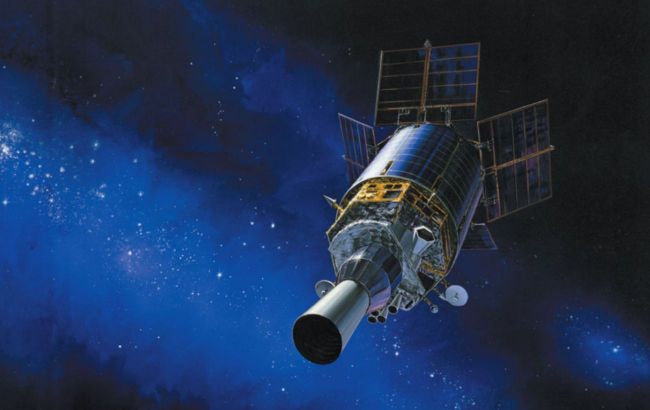 US Space Forces move final DSP satellites to graveyard orbit (photo: National Museum of the US Air Force)
The US Space Force has officially decommissioned the last two satellites of the Defense Support Program (DSP) constellation, which for over half a century monitored ballistic missile launches and thermal signatures of threats from geostationary orbit, according to Gizmodo.
How did the DSP system work?
DSP satellites operated at an altitude of approximately 35,888 kilometers above the Earth's surface and served as a key component of the US missile warning system.
Each spacecraft was equipped with sensitive infrared sensors capable of detecting thermal plumes from ballistic missile engines. The constellation’s satellites continuously rotated, scanning the planet's surface approximately six times per minute.
In the 1970s, when infrared surveillance technology was just developing, the DSP program helped transform these technologies into a fully functional defense line.
Initially designed to detect Soviet intercontinental ballistic missiles, the system was later used during actual military conflicts - specifically to track Iraqi Scud missile launches during Operation Desert Storm in 1990–1991.
In addition to military tasks, DSP infrared sensors were used to detect natural disasters.
Evolution of satellites and generational change
In total, from 1971 to 2007, the US Air Force launched 23 DSP-series satellites. Each subsequent generation of spacecraft received enhanced capabilities and an extended service life.
If the first satellites weighed about 907 kg and had 2,000 infrared detectors with a calculated service life of only one year, the latest modifications weighed 2,381 kg, contained 6,000 sensors, and could operate for more than 12 years.
Over time, DSP technologies gave way to more modern developments. To replace the outdated spacecraft, the US began deploying new systems—the Space Based Infrared System (SBIRS), whose launches started in 2011, as well as the Next-Generation Overhead Persistent Infrared (Next-Gen OPIR).
According to representatives of the US Space Force, the decommissioning of the last two satellites summarized more than half a century of work by the space-based early warning system, which provided deterrence during the Cold War and protected military contingents in local conflicts.