Diplomatic cover blown: Up to 20 Russian spies operated out of Bonn consulate

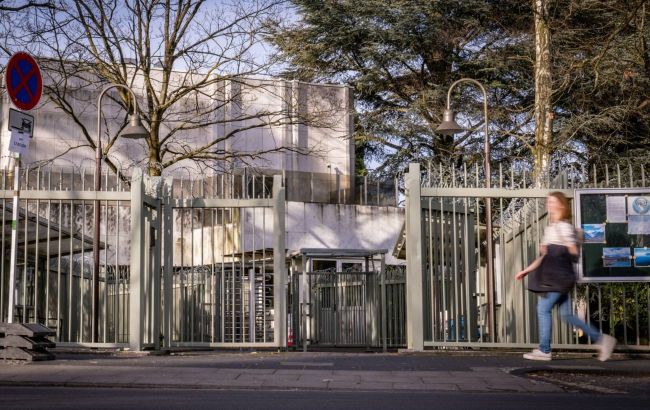 Photo: Russian consulate in Bonn (ga.de)
Germany’s decision to close the Russian consulate general in Bonn is linked not only to the sabotage attempt at Leipzig Airport. There is evidence that the diplomatic mission may have been used by Russian intelligence services for espionage activities, according to Bild.
Bild cites internal information from Brussels circles. According to this data, approximately 15–20 Russian agents, disguised as diplomatic staff, may have been working at the Russian consulate in Bonn.
As Bild asserts, these individuals were effectively working for Russian intelligence services - the Foreign Intelligence Service (SVR), the Federal Security Service (FSB), and the Main Intelligence Directorate (GRU).
Thus, according to Bild, the consulate may have served as a platform for Russian intelligence operations in Europe. At the same time, it is important to note that information about the number of agents and their activities comes specifically from Bild’s sources and has not been officially disclosed by German authorities as a confirmed fact.
Consulate may have been used for hybrid operations
According to Bild, European diplomats consider the Russian consulate in Bonn a hub for supporting hybrid operations.
Allegedly, campaigns coordinated from there were directed not only against Germany. Among the targets cited are Benelux countries, European Union institutions, and NATO headquarters in Belgium.
Therefore, according to Bild’s sources, Berlin’s decision to close the consulate general should not be viewed solely as a symbolic response to the sabotage attempt at Leipzig Airport.
Context of the article
The drone incident in Leipzig has become a trigger for new warnings from European leaders about increased Russian hybrid activity.
Earlier, we reported that Germany has already taken steps in response to the sabotage attempt in Leipzig. The federal government decided not only to close the Russian consulate general in Bonn but also to cancel the agreement on the construction of a cultural center in Berlin, strengthen restrictions for Russian citizens, pressure the shadow fleet, and initiate pan-European sanctions.