Central Asia breaks free from Russia, creates independent energy market

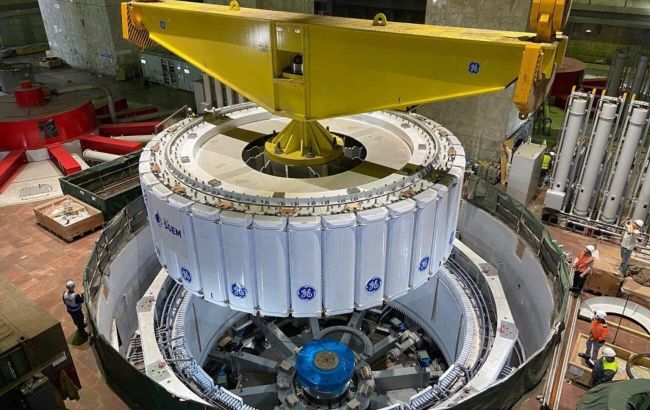 Toktogul Dam in Kyrgyzstan (Illustrative photo: mes.kg)
Russia is losing influence over the Central Asian energy sector, according to the Ukrainian Foreign Intelligence Service.
Central Asian countries, together with the World Bank, are launching a large-scale project called REMIT to integrate their energy systems into a single regional network.
The plan is to balance power generation across different sources: hydroelectric plants in Kyrgyzstan and Tajikistan will be combined with thermal power in Kazakhstan, Turkmenistan, and Uzbekistan, as well as solar and wind energy. The program is planned for 10 years and has a total cost exceeding $1 billion, of which $143 million has already been secured.
A few years ago, Russia tried to establish itself as a key coordinator of energy integration in the region, the Foreign Intelligence Service notes. Through the Eurasian Economic Union, it promoted its own project for a shared energy center in Central Asia.
However, the war in Ukraine, strict sanctions, and technological lag in Russia and Belarus have effectively frozen these plans - the project’s 2025 start date has been pushed back to at least 2027.
Even within the Eurasian Economic Commission, officials admit that 2030 may be only a tentative target rather than a realistic launch date. Major challenges include the lack of a fully functioning gas market in Russia and significant differences in rules and regulations between member states. As a result, the prospects for the Russian energy project remain uncertain.
“In this context, the REMIT initiative is more pragmatic and institutionally supported,” the Foreign Intelligence Service says.
According to World Bank estimates, by 2050, REMIT could generate up to $15 billion in economic benefits for the region, becoming one of the largest infrastructure breakthroughs in Central Asia in decades.
China pushes Russia out of Central Asia
Earlier, Chinese President Xi Jinping unveiled a grand plan for the development of Central Asia, ranging from infrastructure projects to expanded trade, taking on a new leadership role in a region traditionally dominated by Russia.
China is ready to coordinate development strategies with Kazakhstan, Kyrgyzstan, Tajikistan, Turkmenistan, and Uzbekistan to support modernization across the region.
In the long term, Xi said China will support the construction of an international transport corridor across the Caspian Sea and expand freight rail hub development connecting China and Europe.