Buses set on fire, barricades erected as student protests spread across Europe

 Mass student protests spread across Europe: after France, demonstrations reach Belgium and Austria (photo: Getty Images)
Massive student protests in France, ongoing for more than two weeks, have now spread beyond the country. The protests have spread to other European nations, including Belgium and Austria.
RBC-Ukraine explains why the protests erupted and what participants are seeking.
Why student protests began in France
The protest movement began at Lycée Saint-Exupéry in a suburb of Paris. On September 17, the school's teachers went on strike over a staff shortage. They said the school lacked teachers of mathematics, French, history, literature, and other subjects.
Students decided to support their teachers, but the next morning their actions became more radical. Barricades began to appear around the school. At the same time, the protesters insisted they had no intention of destroying anything and simply wanted to stand up for their rights.
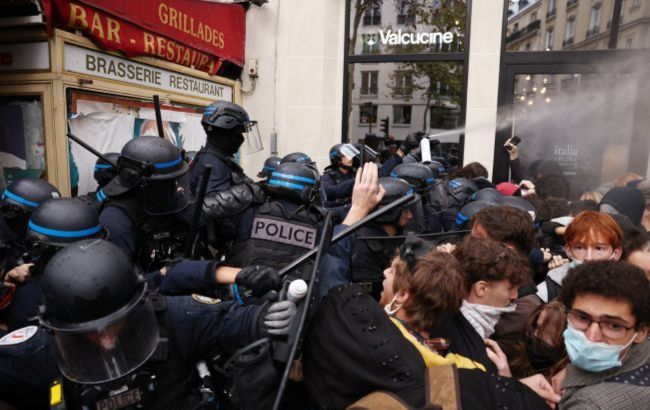
For more than two weeks, people across France have been taking to the streets, with peaceful demonstrations in many cases escalating into unrest and clashes with police.
.jpg)
Student protests in France (photo: Getty Images)
The protesters' main grievances include:
-
Poor learning conditions
-
Teacher shortages
-
Excessive workloads
-
Deteriorating conditions in school buildings.
Moreover, pupils and students are criticizing the Parcoursup system, through which applicants apply to higher education institutions. In their view, the selection process lacks transparency and creates unequal opportunities for accessing education.
Amid the latest developments, French President Emmanuel Macron convened an emergency government meeting. He later said he would do everything possible to meet students' and teachers' demands. Police were also banned from using stun grenades. However, the protests have continued despite these measures.
Why protests spread to Belgium
Mass student protests in Belgium began on October 1 in the country's French-speaking region. They are linked to education reforms and planned spending cuts that the Parliament of the French Community of Belgium approved in June.
Students and education workers are voicing concerns about:
-
Higher university tuition fees
-
Increased workloads for teachers
-
Cuts to education funding
-
Fears that the changes will lower education quality and affect extracurricular activities.
Mass student #protests spread across #Europe: After #France, demos reach #Belgium and #Austria
— RBC-Ukraine (@NewsUkraineRBC) October 10, 2026
Students in these countries have also taken to the streets carrying #Palestina flags and #communist symbols. Young protesters have started setting buses on fire and building… pic.twitter.com/r1dr1dfcMu
The situation has become particularly tense in Liège. Hundreds of students and schoolchildren have taken to the streets there and blocked entrances to educational institutions. Some groups of protesters have damaged property and committed arson, including setting buses on fire. Police have used tear gas and water cannons.
At the same time, the protesters emphasize that their movement is not simply following the French example. They oppose specific Belgian reforms, though they acknowledge that events in France inspired them to take more decisive action.
Palestinian flags have also been spotted during the protests, carried by some of the demonstrators.
The protests erupted over teacher shortages, poor learning conditions, and unequal access to higher education. pic.twitter.com/Mub7BZjv3l
— RBC-Ukraine (@NewsUkraineRBC) October 10, 2026
Austria protests details
The situation in Austria is different: the main source of discontent is not the condition of schools, but potential cuts to university funding.
Austrian student organizations and university leaders fear that funding for higher education institutions could be cut by approximately €1 billion under the 2028–2030 budget. Students already protested the issue in spring 2026.
Students and university representatives fear that budget cuts could lead to:
-
Fewer teachers and researchers
-
Increased workloads for students and faculty
-
Cuts to academic courses and research programs
-
Deteriorating learning conditions and reduced access to higher education.
On October 9, schoolchildren and youth organizations organized a protest in Vienna against a ban on girls under 14 wearing hijabs in schools. Socialist and communist youth organizations also helped organize it.