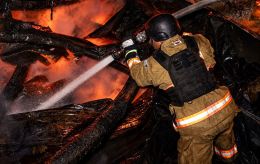
Air Force explains why Russia focusing attacks on Ukraine's Odesa region

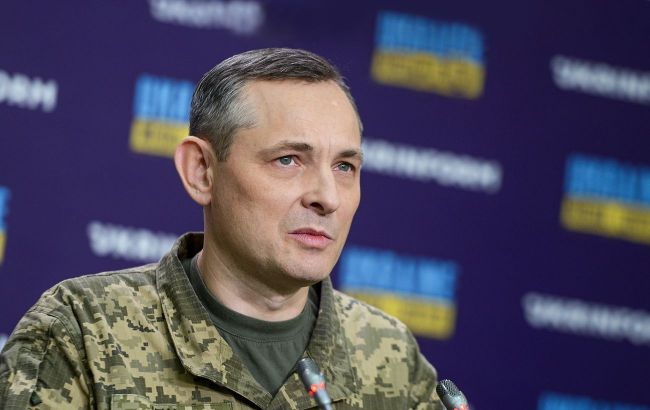 Photo: Yurii Ihnat, head of communications for the Ukrainian Air Force (Getty Images)
Russia has intensified its attacks on the Odesa region, using missiles and new types of drones. Behind this tactic is an effort to target a region that plays a key role in Ukraine's maritime logistics, according to Yurii Ihnat, head of communications for the Ukrainian Air Force, speaking on the Ranok.LIVE broadcast.
According to Ihnat, the reason for the constant attacks on the Odesa region goes beyond its geographic location. The region has an extensive Black Sea coastline, borders Romania and Moldova, and serves as one of Ukraine's key maritime logistics hubs.
"The unique feature of Odesa's location is its long coastline, where many infrastructure facilities are concentrated. It is also home to significant economic assets of Ukraine, particularly maritime logistics," Ihnat said.
For this reason, Russian forces have recently intensified combined strikes on the region. They are using aircraft and missiles launched from temporarily occupied Crimea in an attempt to damage port infrastructure, civilian vessels, and shipping-related facilities.
What weapons Russia is using against Odesa
Russia has used Kh-59 air-launched guided missiles, Kh-31P anti-radiation missiles, Onyx and Kh-22 missiles, as well as Shahed attack drones to strike the Odesa region.
In addition, Russian forces are increasingly deploying Gerbera drones and Banderol loitering munitions.
"This is not a new weapon. It was simply used less frequently before, so it attracted less attention. The pace of attacks is now quite intense, especially against Ukraine's southern regions," Ihnat explained.
Why the Banderol poses new challenges for air defense
He also noted that the growing use of jet-powered drones and Banderol loitering munitions is creating new challenges for Ukraine's air defenses.
"The enemy has begun using Banderol loitering munitions more frequently — a hybrid between a drone and a missile. The share of jet-powered UAVs is steadily increasing. We see the enemy deploying jet drones more often across different sectors," the Air Force spokesperson said.
He added that the Banderol flies at a speed of about 600 km/h and has flight characteristics similar to those of a cruise missile. As a result, Ukrainian air defense forces use the same interception methods against it as they do against cruise missiles.
Ihnat also said that these munitions are most often launched from Russian Orion drones operating over the Black Sea. From there, Russian forces regularly attack the Odesa and Mykolaiv regions, although other aircraft can also serve as carriers for the Banderol.
On July 20, Russian forces struck Odesa in the middle of the day. The attack targeted infrastructure facilities, causing power outages in several parts of the city.
According to Ukraine's State Emergency Service, three people were killed and six others were injured. The strike also damaged a gas pipeline.