AI deciphers millions of medieval manuscript pages per second

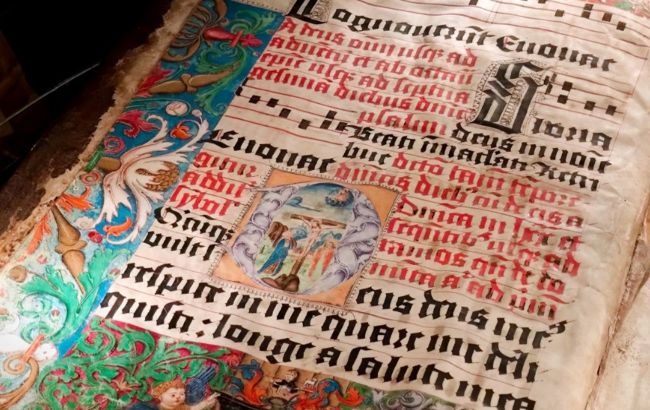 AI will unlock the secrets of age-old archives (photo: Mark Milligan)
AI has begun "reading" medieval manuscripts and archival documents that previously required years of manual labor. Handwriting recognition and automatic transcription technologies now allow researchers to study vast arrays of historical sources significantly faster, according to Heritage Daily.
At a summit in Vienna, organized by the Austrian Academy of Sciences (ÖAW) and the University of Vienna with support from Princeton University, specialists worked on the technical architecture of future AI systems.
The goal is to guarantee absolute accuracy and reliability of automatic transcriptions.
Technological leap: from manual reading to neural networks
The main problem with medieval archives is their physical and linguistic complexity.
Non-standard word graphics, temporal deformation of materials, individual graphical features of scribes, and extinct dialects made most documents practically inaccessible for rapid study.
Modern AI models solve this through a comprehensive algorithmic approach.
How exactly?
- Neural network handwriting recognition (HTR) – computer vision is trained on thousands of samples from a specific era. This allows the algorithm to distinguish and restore even partially preserved letters;
- Automatic transcription and normalization – AI doesn't just convert graphics into digital text, but also recognizes obsolete abbreviations, adapting them to modern language structures;
- Processing of multispectral scans – neural networks analyze images in different light ranges, revealing ink that has burned out or was intentionally washed off parchment (palimpsests).
Big Data in working with centuries-old history and artifacts
The biggest breakthrough lies in changing the scale of research. Instead of analyzing each manuscript individually, scientists apply Big Data methods to entire digital repositories.
Special algorithms can instantly scan millions of pages, finding cross-references, identical toponyms, mentions of little-known individuals, and hidden linguistic patterns.
This allows building digital maps of connections between documents from different corners of the world, reconstructing complete historical events in mere seconds.
More interesting: