6,000 new worlds in space: NASA releases massive exoplanet map

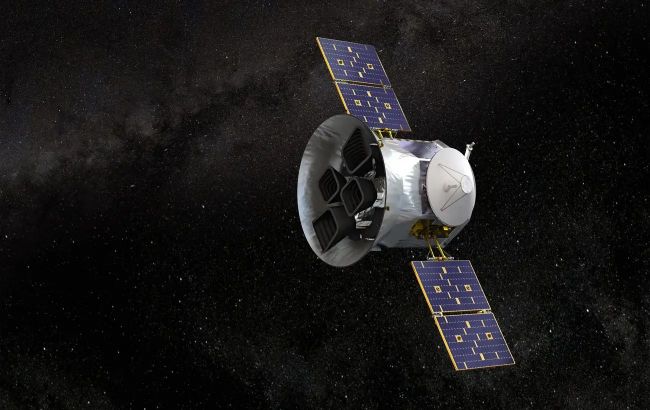 TESS compiled the largest map of potentially habitable worlds (photo: NASA)
Six thousand new worlds: TESS statistics
To create the image, astronomers combined 96 separate observations made by the satellite between April 2018 and September 2025. The map demonstrates the vast diversity of cosmic objects in our sector of the galaxy.
- Blue dots: indicate about 700 confirmed exoplanets whose existence has been verified by other instruments.
- Orange dots: indicate more than 5,000 potential planets currently awaiting final confirmation.
- Unique discoveries: among the detected objects are planets orbiting two stars at once.
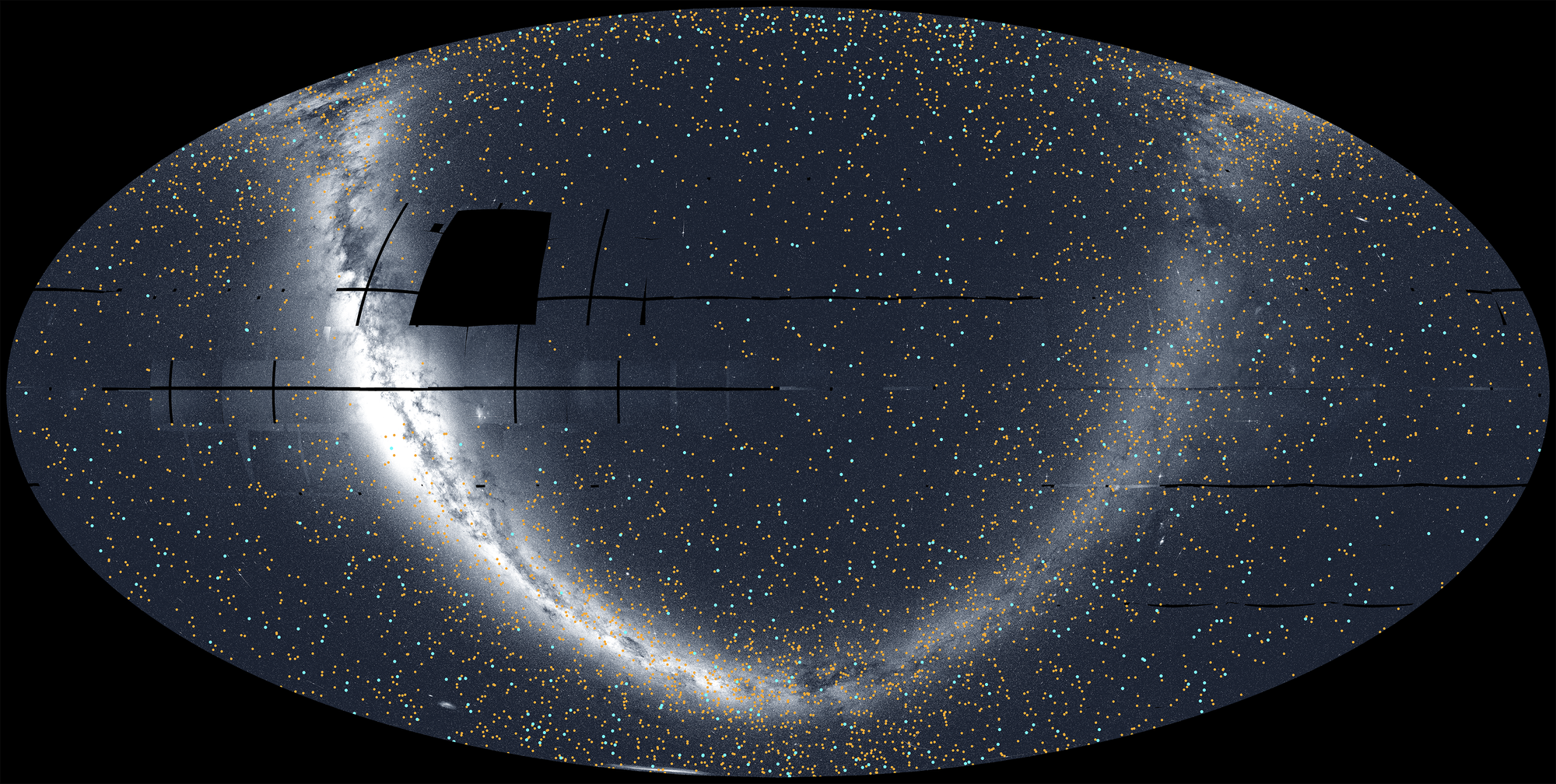 The telescope detected 679 exoplanets (blue dots) and 5,165 potential objects (orange dots). The bright arc running through the center is the plane of the Milky Way (photo: NASA/MIT/TESS and Veselin Kostov)
“Over the last eight years, TESS has become a fire hose of exoplanet science,” said Rebekah Hounsell, a TESS associate project scientist at the University of Maryland, Baltimore County and NASA’s Goddard Space Flight Center in Greenbelt, Maryland.
How does TESS see the invisible?
The satellite uses ultra-sensitive instruments for the transit photometry method. The spacecraft focuses on a large region of space for about a month, tracking microscopic fluctuations in the brightness of stars. If a star’s light briefly dims, it may indicate that a planet passed in front of it.
In the published image, in addition to the planet markers, the Milky Way is clearly visible as a bright arc stretching across the center of the picture. The mosaic also shows the Large and Small Magellanic Clouds — neighboring galaxies located hundreds of thousands of light-years from Earth.
The path to the biggest discovery
Although the discovery of 6,000 worlds is astonishing, scientists emphasize that this is only the beginning. Years of additional research still lie ahead. Astronomers must analyze the atmospheres of the most promising planets in the “habitable zone” to search for oxygen, methane, or other possible signs of biological activity.
You may also be interested in: