Russia legalizes large-scale property seizures in occupied territories

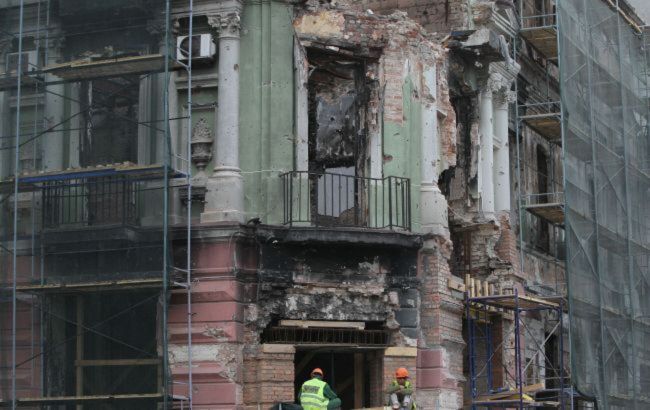 Photo: occupied towns (Getty Images)
Pressure on Ukrainian property owners in the temporarily occupied territories is increasing as Russia introduces a mechanism enabling the mass seizure of housing under the guise of registering it as "ownerless." This effectively creates conditions for a large-scale redistribution of property in favor of newly resettled, loyal citizens, according to a publication by the Center for Countering Disinformation.
Russia has formally approved a law that grants occupation administrations the authority to designate apartments and houses in seized Ukrainian territories as "ownerless" and reassign them to new users.
The expropriation mechanism remains in force through 2030, matching the Kremlin’s political cycle.
Although the practice of taking property under the pretext of fictitious "abandonment" had occurred before, it now has federal backing: decisions on the fate of private Ukrainian property effectively shifted to Moscow.
Lack of criteria and expanded powers of occupation authorities
The law does not set clear conditions under which housing may be deemed "ownerless," enabling occupation structures to decide independently which homes are subject to confiscation.
As a result, the threat extends not only to those forced to flee because of the war, but also to residents who continue to live in the occupied areas.
Experts note that the mechanism creates a pathway for systematic appropriation of Ukrainian property.
Who receives confiscated housing
Confiscated houses and apartments are expected to be distributed among Russian military personnel, security forces, administrators, and public-sector employees brought into the region.
This amounts to a replacement of the local population with individuals loyal to the occupation authorities.
The policy complements other steps Russia takes to entrench control over the temporarily occupied territories, including preparations to legalize coercion of residents into military service for Russian forces, which violates international law.
Information control and population registries
Russia continues to tighten control over the information space in the occupied territories by restricting access to Ukrainian and international media. Occupation administrations in the Donetsk and Luhansk regions have imposed bans on the sale, installation, and use of satellite equipment capable of receiving Ukrainian TV channels.
In the occupied part of the Kherson region, Russian-appointed officials use a campaign that ties residents to local clinics through Russia’s compulsory medical insurance system as a tool to compile a full registry of local inhabitants, including men of conscription age.