'Ukraine is not expensive for Europeans': Interview with French minister Benjamin Haddad


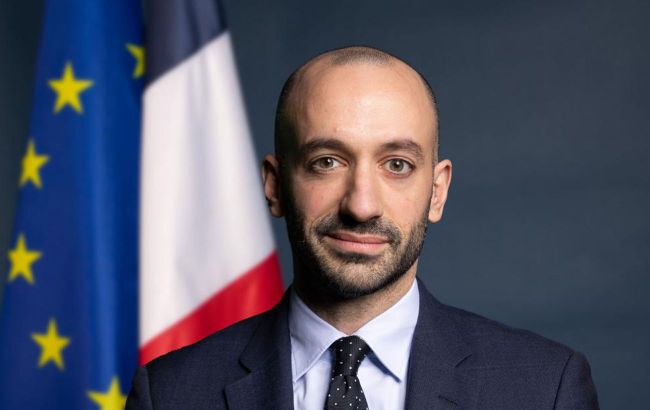 Benjamin Haddad (Photo: commission.europa.eu)
France has been one of Ukraine's key partners in Europe throughout the past several years. However, President Emmanuel Macron will complete his second term next year and leave office — and the far right could potentially take his place in the Élysée Palace.
In an interview with RBC-Ukraine, Benjamin Haddad, France's Minister Delegate for Europe, discussed whether this could pose any risks for Ukraine, as well as efforts to overcome Hungary's veto on Ukraine's path to EU membership, counter Russian disinformation, and build a new security architecture for Europe.
Key points:
- Macron's strategic vision: France continues to champion Europe's sovereignty and competitiveness by protecting its market and increasing defense investment.
- EU accession: France is seeking compromises with Budapest to unblock the negotiating clusters, while insisting that Ukraine's progress be assessed solely on the basis of reforms.
- Political resilience: The growing influence of populist forces in Europe has not undermined the long-term support for Ukraine among the majority of European citizens, including in France.
- Security architecture: Europe is strengthening its own defense capabilities, with Ukraine playing a key role in protecting the continent as a whole.
- Support for Chernihiv region: France is helping rebuild shelters in schools and hospitals across the region to protect civilians.
France was among the first countries to take responsibility for the reconstruction of a specific Ukrainian region — the Chernihiv region. From building reliable shelters in local schools and pediatric hospitals to supplying dozens of generators, Paris is working to ensure the continuity of essential services amid Russia’s ongoing attacks.
"Our support for Ukraine is composed of many pillars: military support, economic support, but it's very important that we can also have an impact on the daily lives of Ukrainian citizens who continue to live their lives very bravely despite the aggression, despite the bombing," Benjamin Haddad, France's Minister Delegate for Europe and a member of Emmanuel Macron's political circle, told RBC-Ukraine in an interview.
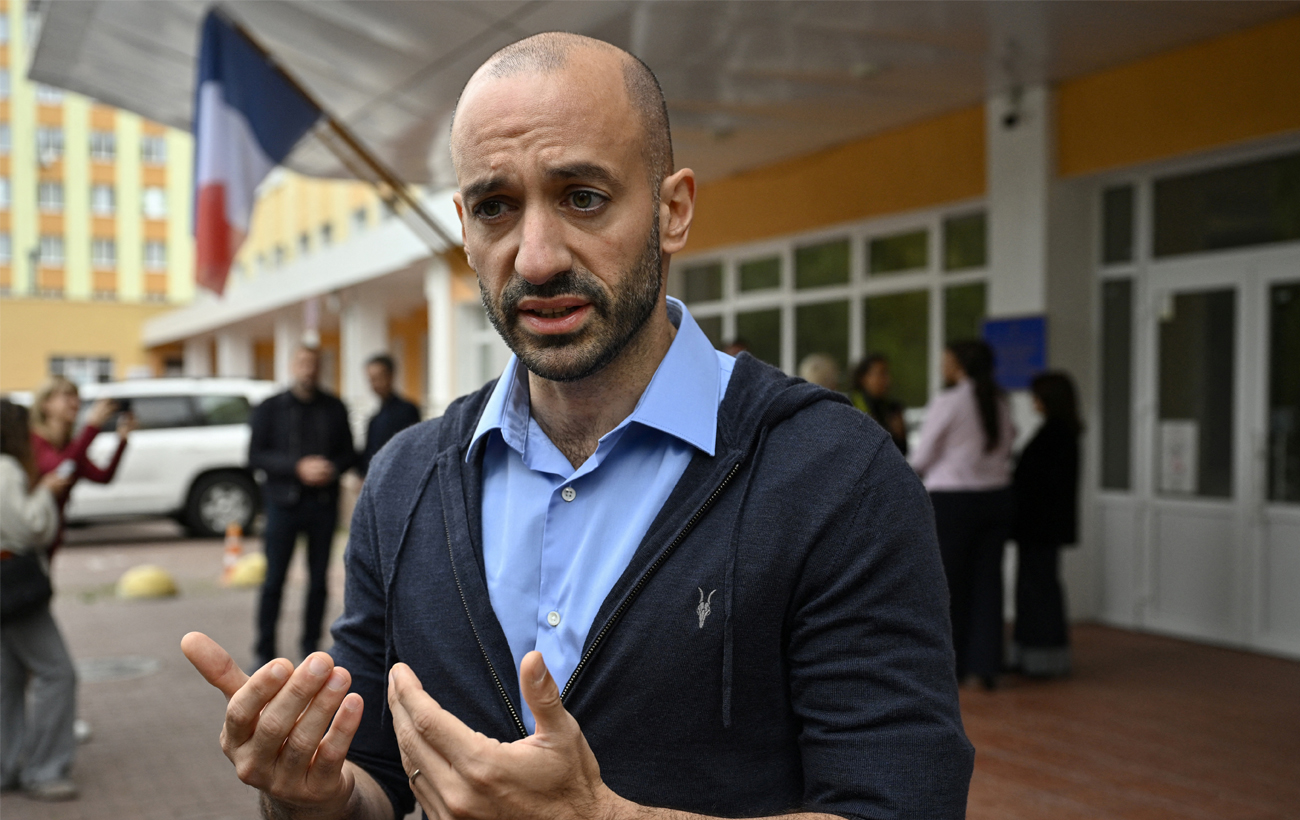
Benjamin Haddad during his visit to the Chernihiv region (Photo: Getty Images)
RBC-Ukraine spoke with the diplomat during his visit to the Chernihiv region, where he personally inspected restored facilities, underground shelters and medical institutions.
At the same time, the conversation went far beyond regional initiatives. In his role, Haddad oversees France's broader European policy and, consequently, Ukraine’s place in the continent’s emerging security and political architecture.
That is why much of the interview focused on broader geopolitical challenges — from overcoming obstacles on Kyiv's path to the European Union and the risks posed by the potential rise of right-wing populists in France to Europe's own "strategic awakening," as the continent is increasingly forced to take responsibility for its security into its own hands.
– You have seen a variety of locations and projects during this visit. What are France's key priorities in humanitarian aid?
– In the region of Chernihiv, we have a lot of French priorities in funding to help the Ukrainians sustain the impact of the Russian aggression. Whether that's in health, where France has funded projects worth about 18 million euros, as you've seen, in terms of rehabilitation of the wounded, or in terms of protection in the underground of the kids in the pediatric hospital that we visited. This is to make sure that the health support can continue despite the drone attacks, despite the alarms.
We've also been involved in projects related to energy, with about 35 generators over the last two years that have been sent to the region. On education, especially because I have seen how important it is to the elected officials that I just had lunch with to ensure the continuity of schooling. This is why you need, unfortunately, bunkers and underground spaces also for the kids to be able to learn.
So, of course, our support for Ukraine is composed of many pillars: military support, economic support, but it's very important that we can also have an impact on the daily lives of Ukrainian citizens who continue to live their lives very bravely despite the aggression, despite the bombing, and I think we've seen very concrete projects of this today.
– You visit Ukraine on a regular basis. How do you assess the implementation of these projects supported and financed by France, and are you satisfied with the pace of their implementation?
– Yes. I think the question of being satisfied, you have to ask the population; you have to ask the local officials. And I think I've heard a lot of gratitude. I've seen the positive impact that it's having, you know.
If we go to the hospital, you have 730 square meters underground with really top-notch equipment when it comes to surgical equipment, when it comes to beds, the ventilation system, the electrical system. It's really key, obviously, to be able to ensure the continuity of health services despite the drone attacks and the bombings.
We will continue. I think you can count on France for long-term commitment, for long-term engagement. We have other projects, once again from health to education to renovation of historical sites, that will continue, in addition, of course, to our political and military support to Ukraine.
– Another part of French support is macro-financial and macroeconomic aid, which is part of the broader EU assistance to Ukraine. However, we now see an approach where support is conditioned on reforms, and in certain areas – notably anti-corruption, particularly in Parliament – progress has been unstable. What is your view on this situation?
– It's very important to continue the reforms, whether that's the fight against corruption, whether that's the reforms for the EU process. So the independence of the judiciary, the reforms to the rule of law – they are important for Ukrainians.
That is why Ukrainians support EU aspirations, because they know that it will ensure the rule of law, checks and balances, and transparency in the system. We have experts in the Ukrainian institutions to support, for example, judicial reform, and we'll continue to do so.
It is in the interest of Europe and in the geopolitical stability of Europe that Ukraine joins the European family. It will bring peace to our continent. But this process is based on merits. It's based on reforms, and so it is demanding, and we will follow and closely support Ukraine on this path of reforms.
– You mentioned long-term cooperation between Ukraine and France, but next year brings presidential elections. Given that Emmanuel Macron is in his second term, do you foresee any potential risks for bilateral cooperation between Ukraine and France?
– I think the French population, in its huge majority, is very supportive of Ukraine, and every poll has shown this from the start. I see here in Chernihiv many partnerships between French localities – municipalities, regions from different political parties – that cooperate here, and it's something that I found very impressive.
To be frank, for the last four and a half years, the French people have been interested in what's happening in Ukraine. They watch it on TV, they read about it, they've been supportive; they even, to be honest, sometimes ask us to do more. And you've seen this in other countries in Europe.
I think in the vast majority of Europe it is the same, so I am confident that this friendship with Ukraine and the support for Ukraine will continue.
– Are there existing mechanisms, or could new ones be established, to ensure this long-term cooperation in bilateral projects?
– In a way, it's already what we're doing with the European Union, because if you look at the 90 billion euro package, it is a long-term commitment over the next few years. We've already given about 10-11 billion, I think. We have 22 billion more that have already been approved. The rest will come afterwards. It's both macroeconomic and military aid.
We are currently negotiating the EU budget, what we call the multi-annual financial framework for the period 2028-2034, which will provide substantial support to Ukraine. So the Europeans are putting together long-term instruments for the support of Ukraine.
– At the same time, we are witnessing the rise of far-right and radical-left populists across Europe. Do you consider this a risk from a medium- and long-term perspective?
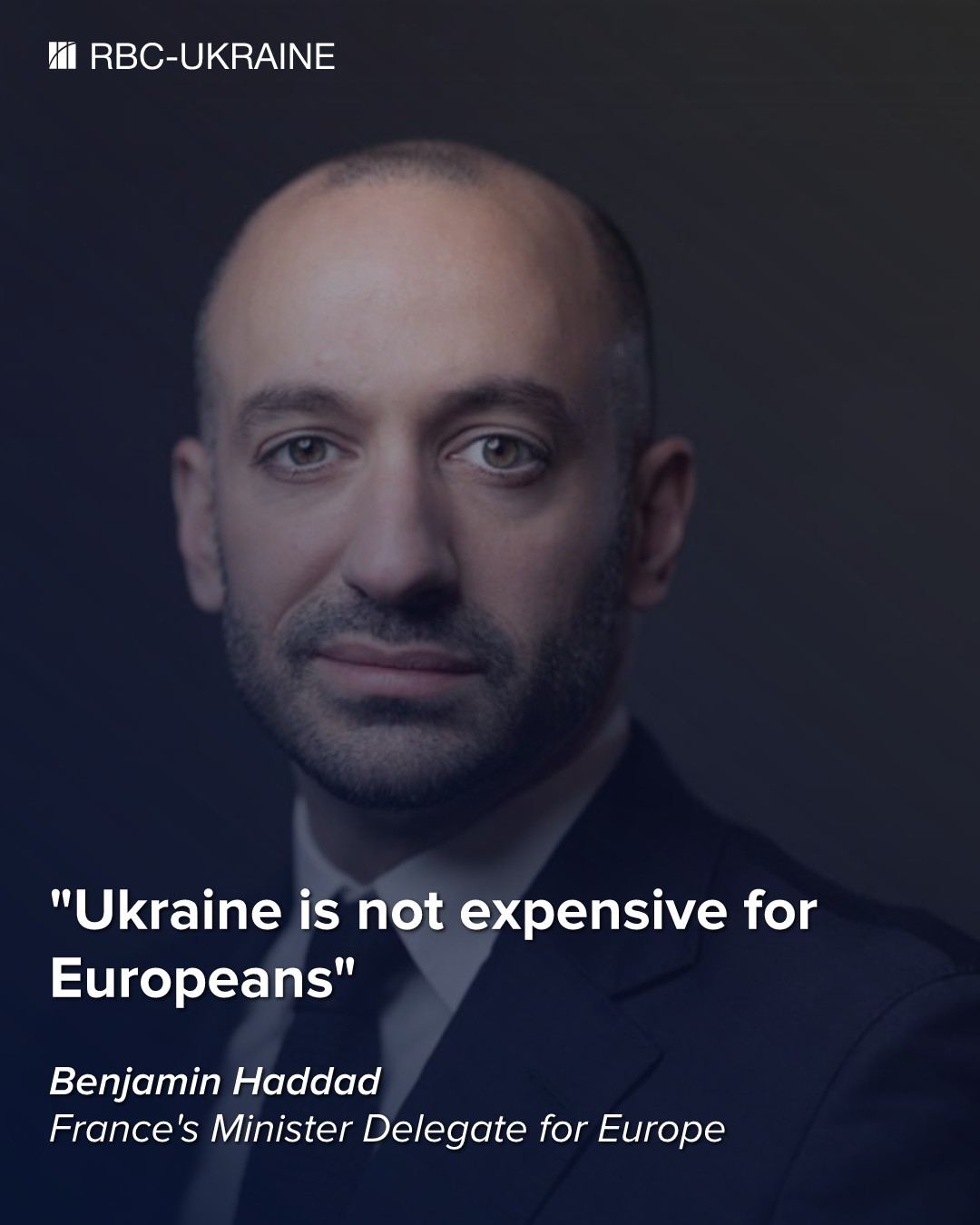
– I think we have a responsibility to answer the demands and the needs of our citizens, whether that's on security, whether that's on jobs, growth, or fighting illegal immigration. But Ukraine is not expensive for Europeans.
It's actually the cost of our own security. Ukrainians are the first line of defense for Europe. And if we stop supporting Ukraine, it would actually be more dangerous for us and more costly for us.
Once again, I am convinced that our populations are actually very lucid about this. It's what every report has shown. I am convinced that the majority of our citizens understand that it is also in our own interest to continue to support Ukraine.
– However, many people in European countries absorb and support pro-Russian messaging from these populist parties. Why do you think this is happening?
– It's true that you have pro-Russian messages being spread also through disinformation online. We have foreign interference coming into all of our democracies.
France is very much targeted by disinformation and propaganda operations from Russia, probably because they know that we are a big supporter and a key player in Europe when it comes to security issues. But it's been the same for our neighbors.
I think in moments like this, you need to keep calm and carry on. We need to defend ourselves against interference, against hybrid warfare. We need to continue what we're doing for our security and for the security of Ukrainians, and keep going in the long run.
– Countering disinformation is an area where Ukraine has extensive experience dating back to 2014, and Ukraine has proposed cooperating with European partners in this field. Is there currently any cooperation between Ukraine and France on this, and what are the prospects for it?
– I think it's clear that we can learn a lot from Ukraine when it comes to cyber, when it comes to countering disinformation. And actually, more generally, when you look at the incredible dynamism in terms of innovation on the battlefield.
On my visit, I brought a few French companies in drones, space, and robotics. You have a lot of areas where the space for cooperation between Ukrainian industries and startups and French innovators and startups would be tremendous. So I think we want to accelerate this in the interest of both sides. I think there's a lot of opportunity.
– Currently, there are hurdles in Ukraine's EU integration process, as only two out of six clusters have been opened while the rest are blocked by Hungary. However, this illustrates a much broader problem within the European Union – the requirement that every issue be adopted by all member states. What is France's position on this issue?
– First, we will work with all the partners to make sure that we can move forward. I will be in Hungary myself soon. And I have regular exchanges with my Hungarian counterparts. And I think it's important that we find a solution.
I think the dialogue has been quite positive in the last few months. Since the election of Péter Magyar, we've managed to overcome a few obstacles, as you know, whether that's on the 90 billion package or on the opening of the first two clusters. And I really want to commend and congratulate the Ukrainian government for the good cooperation they've had in dealing with the issues of minorities.
I'm hopeful that we will be able to, and it's important that Ukraine can move forward based on the reforms and on the merits.
To your question on the decision-making process – look, you know, two things. First, if you wanted to change the system, you still need unanimity. So it's actually complicated to move from one to the other.
Entering the European Union is, in a way, sharing sovereignty with other countries. Therefore, it's normal that it involves high standards and strict requirements. So it's not surprising that many countries want to maintain high standards and unanimity.
What's important is that bilateral relations don't get in the way of this process. We want to process this based on reforms, on the acquis communautaire, and on the merits. And so this is why, really, I'm hopeful that we will find a solution.
We have managed to find solutions between Ukraine and Hungary in a friendly way in the last few months. And so I'm hopeful that we can continue this way in the next few months.
– But this problem reduces Europe's competitiveness compared with the US and China. At the same time, over recent years, President Macron has tried to make Europe more capable and sovereign. Are there any ideas on how to manage this situation and make Europe stronger?
– Absolutely. Look, we have a very ambitious agenda of competitiveness at the European level. Whether that's the integration of our single market, whether that's putting more investment on the table in defense, space, AI, the green transition, all these areas will be at the heart of the budgetary negotiation.
We need to simplify our rules because we have a framework that's still too complex and too administrative. And we've launched a big effort at simplification in the last year, in the follow-up to the Draghi and Letta reports.
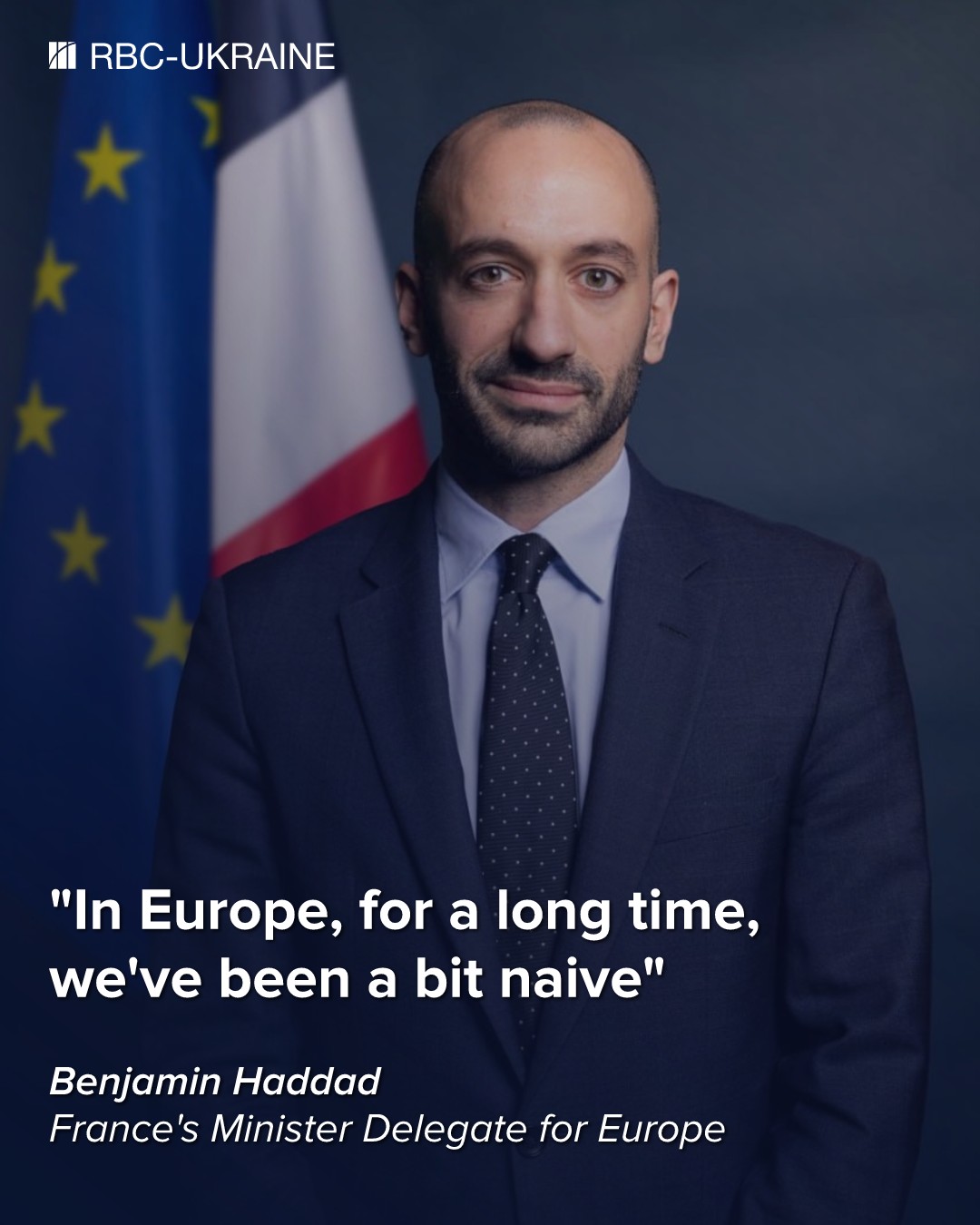
And we also need to protect ourselves. Because, you know, when you look at the US, they protect their own market, they support their own companies, they do "Buy American" clauses. In Europe, for a long time, we've been a bit naive.
Now you can see the pressure from China, from the US. It's leading to a real strategic awakening from Europeans. We're looking at areas where we can protect our companies from unfair competition from China.
We've had countries like Germany that were exporting to China for a long time, and now they've had a trade deficit for the last two years. So there's a big shift in the debate. And so we are reinforcing our instruments.
President Macron's vision has always been that Europe should be a power, it should behave as such, and should be able to defend its own interests. In the last few years, we've done a lot. We've increased our defense spending.
Now all of the support for Ukraine comes from Europeans, not from the US anymore, for the last year and a half. So we really stepped up our support for Ukraine, and we need to continue. But it's a really big effort in terms of security and strategic autonomy for Europeans.
And now we need to invest in our innovation, and we need to be able to protect ourselves.
– Some experts, especially in Ukraine, estimate that the EU's awakening and rearmament process is too slow, particularly as the US turns its focus inward. This was precisely the subject of your book "Paradis Perdu". Do you think Europe can accelerate this process, both in decision-making and in putting those decisions into practice?
– Yes, we need to accelerate. And I think we need to be a bit more agile in how we do things. I'll give you just one example: the Coalition of the Willing for Ukraine. This is something that doesn't go through the EU.
It's individual member states that decide to step up. We brought countries that are not part of the EU but share our values. The UK, of course, is essential in supporting Ukraine, alongside Norway, Canada, Australia, and Japan.
We can do the same thing on economic issues. If you look at the integration of the single market, for example, if we don't do it at 27, then let's do it with 6, 8, or 10 countries. And you create momentum this way.
Same thing for defense issues. We can have industrial projects among different countries, take the lead, and create momentum. So I think you have an awakening among Europeans.
You have a sense of urgency that was not there a few years ago. That was not there when I wrote my book at the time (in 2019). But now I think we need to be a bit more flexible and creative in how we implement all this.
– How do you see Ukraine's role in this new European security architecture?
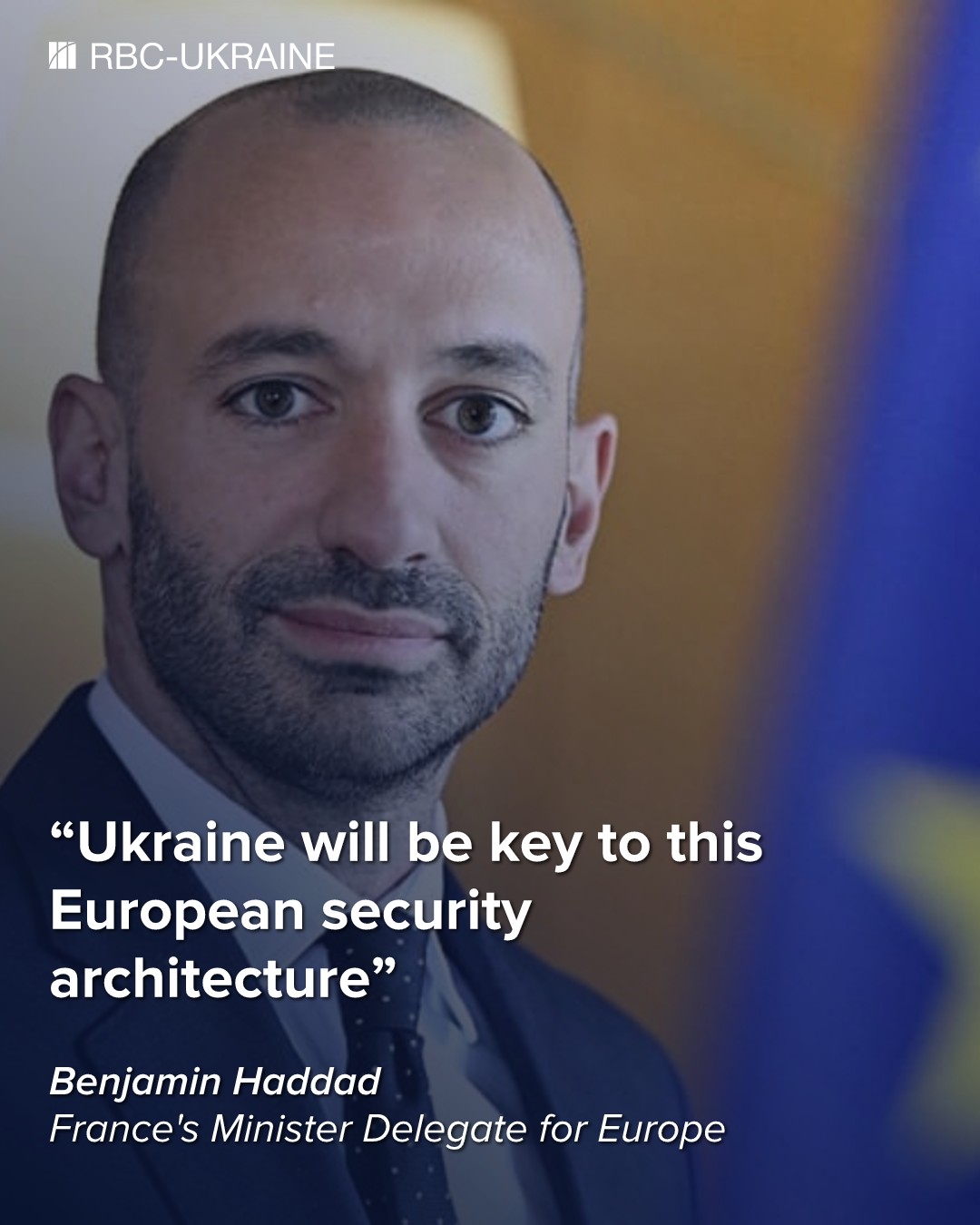
– I think Ukraine will be key to this European security architecture. And this is why, by the way, it was natural to include Ukraine in some of these instruments like SAFE.
Not only is it the first line of defense for Europeans, but to be frank, it's also an opportunity for our companies to see what's going on here, to bring together the European and the Ukrainian defense industrial base to see how we can cooperate on concrete projects on cyber, drones, air defense, for example.
This is also why we built the Coalition of the Willing, because we know that even if tomorrow you have a ceasefire between Ukraine and Russia, this will not be long-term peace. This might just be a pause, a break that Russia takes to rearm, to regroup, and re-attack.
And this is why we need to also build security guarantees in the long run, support for the Ukrainian army, maybe the deployment of European troops on the ground, because we know that the long-term security of Europe will continue to be played out here.
So I think it's clear that Ukraine is already at the heart of European security and will be so in the long run.