'Cigarettes during wars were more important than food.' Interview with professor about real harm of tobacco
 Photo: Professor Karl Fagerström (Facebook)
Today, everyone knows about the dangers of cigarettes, but millions of people continue to smoke every day. Why is this habit so hard to give up? How does nicotine rebuild our brains? And can the concept of harm reduction stop the epidemic of deadly diseases?
The answers to these questions, RBC-Ukraine obtained in the interview with the world-renowned Swedish scientist, founder of the Nicotine and Tobacco Research Society, Professor Karl Fagerström. He is the author of the famous Test for Nicotine Dependence, which was officially approved by the WHO and which has been used for many years by doctors all over the world for the individual selection of therapy.
Key points:
- World standard. Professor Fagerström created the legendary Test for Nicotine Dependence (FTND), which was approved by the WHO and is used worldwide today.
- The nature of addiction. Addiction is formed at the junction of the properties of the substance and the number of rituals. Cigarettes are the most addictive because the nicotine instantly gets into the brain.
- Self-treatment effect. Many people continue to smoke because of subclinical conditions: nicotine helps them to suppress anxiety, to focus attention, and to filter external stimuli.
- Withdrawal syndrome. After a person quits smoking, the brain rebuilds itself to its natural state within 2 to 4 months, and the symptoms are always opposite to the effects a person was looking for in a cigarette.
- Harm reduction. It is not realistic to completely eradicate nicotine in the world. However, the transition to smokeless alternatives (pouches, snus) allows us to get rid of deadly collateral diseases such as cancer.
- Swedish phenomenon. Sweden has the lowest smoking rate in the EU (just 3.7%) due to the historic popularity of snus and flexible government "carrots" approaches, not just sticks of various bans.
They smoked everywhere. How the world realized the harm from cigarettes
— You are the author of the test for nicotine dependence, which was approved by the WHO and is used all over the world. I also passed this test a few years ago. Tell us how you created it.
— It was the beginning of the 1970s. At that time, smoking was considered to be just a normal behavior, and smokers themselves perceived it only as a bad habit. It was a time when a lot of people smoked, and it was possible to smoke indoors. Smoking was considered to be normal. It was quite a usual thing, especially among men.
I was working with drug addicts at that time, and 90% of them smoked cigarettes. They admitted that to quit smoking for them was even more difficult than to give up heroin or amphetamines. That sparked my interest: I realized that there was a strong narcotic component in smoking. And the behavior of patients indicated the real chemical dependence on nicotine, and not just a bad habit.
I started looking for markers of this addiction. First, an addicted person consumes more of the substance. Second, for an addict, the first cigarette in the morning is the most important thing, which relieves the withdrawal syndrome at night. And the sooner a person smokes after waking up, the stronger the addiction. Also, with an intense need, craving arises even under the circumstances when people rarely smoke.
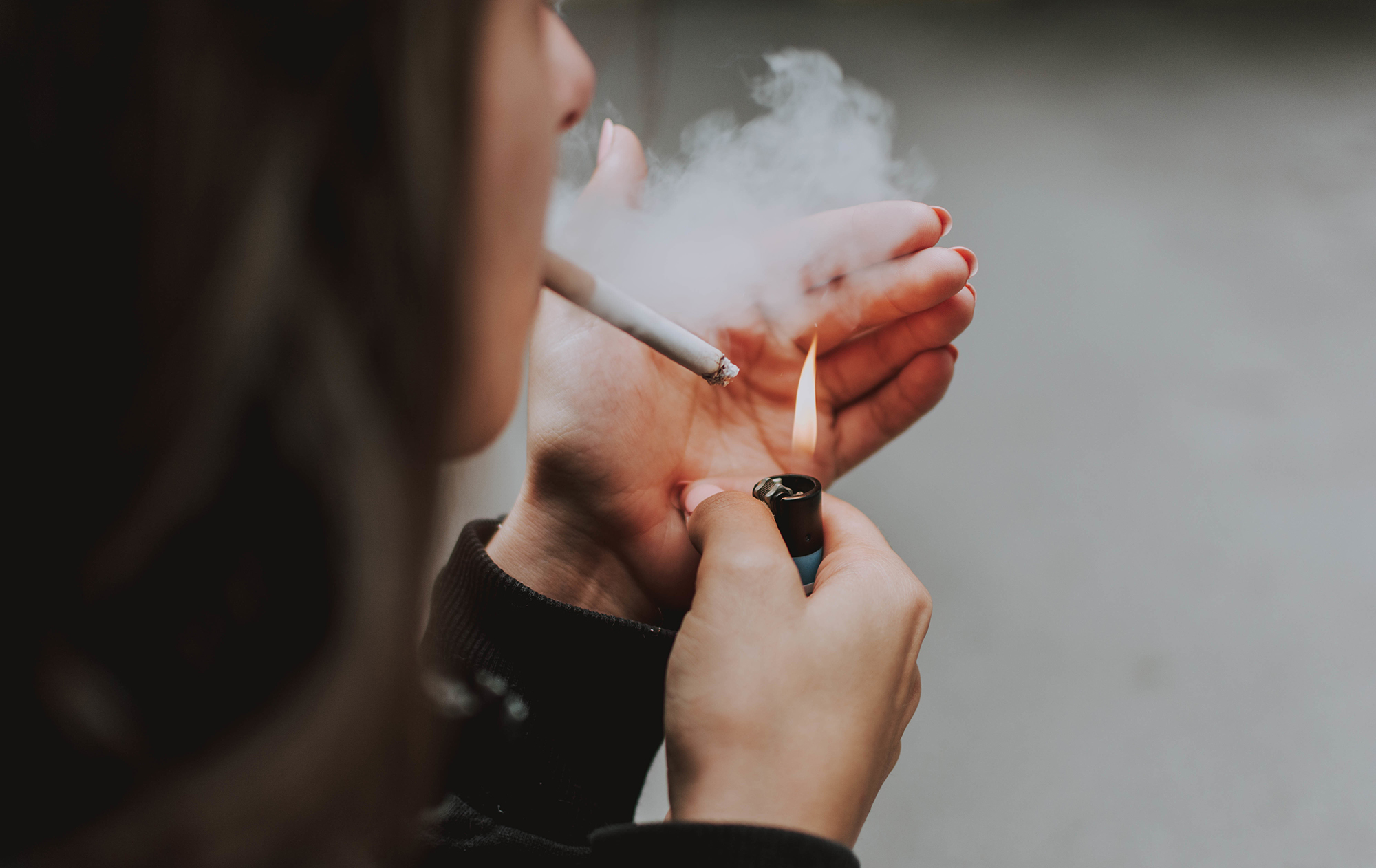
Photo: In the early 1970s, smoking was considered perfectly normal (Freepik)
Even seriously ill patients continued to smoke in bed, and I realized that was a powerful indicator of chemical dependency. This is how a questionnaire with six questions appeared. I needed to measure the degree of addiction for individual treatment. It's like with hypertension: it is not enough for a doctor to know that the blood pressure is high; a doctor needs to understand exactly how high it is.
By that time, I had experimented with different dosages of nicotine gum. Over time, it became obvious: it was impossible to make people with an enormous level of addiction simply quit. That’s how I came to the concept of harm reduction. If the patient cannot quit completely, it is worth offering him less harmful smokeless alternatives so that he gradually replaces cigarettes with them.
Why do people continue to smoke, knowing the dangers of cigarettes? What is nicotine addiction?
— What is nicotine addiction in general? For most people, is it more psychological, or is nicotine really addictive at the cellular level? How does it work?
— Nicotine in cigarettes is highly addictive, but there is practically no addiction in the case of usage of nicotine patches. Studies show that even high doses of nicotine via a patch did not cause cravings or withdrawal symptoms for patients with Parkinson's disease.
Cigarettes are the most addictive, while smokeless tobacco or substitution therapy is much easier to quit. The fact is that addiction is formed at the junction of the properties of the substance and the number of rituals. The more actions (getting a pack out, lighting a cigarette, puffing, talking), the stronger the addiction. With snus, there are fewer such rituals, and with the plaster, everything is generally limited to one manipulation per day.
Besides, the speed of getting the substance into the brain is critically important. Tobacco smoke takes only 15 seconds to do this, which is even faster than through an intravenous injection. Therefore, the strength of addiction is always a combination of the speed of absorption of the substance, its dose, and the number of behavioral rituals around it.
— Probably, most people on the planet know very well that smoking cigarettes is harmful, but millions continue to do it.
— We should all realize: to give up addiction - especially to such everyday rituals - is incredibly difficult. It's not like the doctor just said a few words and magically solved the problem.

Photo: A smoker needs to have the motivation to quit smoking (Getty Images)
A smoker must have the motivation to quit smoking. He needs to clearly understand what a difficult period awaits him ahead: with pain, irritation, a constant desire to eat something, risks of gaining weight, and sleep disorders. At the stage of quitting smoking, cognitive problems may arise. For example, a person may completely lose the ability to concentrate for a while.
Besides, many smokers continue to smoke, even knowing about the enormous harm to health, because for them it is a kind of self-treatment. And here we are not necessarily talking about serious mental disorders. These can be mild subclinical conditions. For example, people with attention deficit hyperactivity disorder (ADHD) smoke much more often and significantly more than the rest of the population.
Stressed people and schizophrenics reach for cigarettes because nicotine dulls anxiety and turns on sensory filtering (gating) — helping to focus and filter out external chaos. These positive effects also explain the smoking habits of many creative people, such as Einstein.
However, the constant use of nicotine rebuilds the brain, and after giving up the substance, it takes 2-4 months to recover. This period is accompanied by a withdrawal syndrome, the symptoms of which are always opposite to the expected effect: instead of cheerfulness and concentration, a person gets apathy and fatigue, and instead of calming down, a person experiences increased anxiety and irritability.
— Who should not use nicotine in any form - whether in cigarettes or in any other way?
— Basically, pregnancy is the only condition for which nicotine is strictly contraindicated. In other cases, yes, it cannot be called a useful product, but caffeine is not useful either. And alcohol is definitely much worse. Caffeine is also harmful.
Free cigarettes during the war and the harm of sugar. Tips on how to quit smoking
— Some people start their morning with a cigarette and coffee, to which they add a couple of spoons of sugar. Can it be described as a kind of triple dependence? What advice would you give to those who want to get rid of it?
— Smokers drink more coffee simply because their liver works more intensively and therefore breaks down caffeine much faster. Therefore, to maintain the same concentration of the substance in the body as a non-smoker, a smoker has to drink coffee more often and in larger quantities.
As for sugar, this problem is greatly underestimated. When we talk about nicotine as a serious threat, I usually think of little kids walking down the streets with Coca-Cola bottles or, even worse, energy drinks. What is an energy drink? It is the huge concentration of caffeine and sugar.

Photo: Smokers drink more coffee (Getty Images)
In general, sugar in high doses should be considered at least as a semi-drug. I am convinced that the excessive addiction to energy drinks and sodas in childhood increases the probability that later, as adults, these children will switch to other, much harder substances.
— So what advice would be suitable for those who are aware of the harm of smoking but start their morning with this classic scenario: coffee with sugar and a cigarette?
— One of the solutions could be nicotine pouches. It is extremely difficult to quit smoking immediately without reducing the dose of nicotine. By the way, my addiction scale also measures the risk of developing diseases: a high score on the test means a significantly higher risk, for example, of a heart attack.
It is much easier to quit smoking if you have a prosperous life full of resources and hobbies. But if you're a soldier on the front line, you need to suppress anxiety and increase focus. That is why, during all wars, cigarettes were provided free of charge. Cigarettes during wars were often more important than food.
During the war in Vietnam, the American command, in case of problems with logistics, first supplied water, cigarettes second, and only then food. Cigarettes were considered to be more important than food.
The same happened during the Second World War: even Hitler, a fierce opponent of smoking, was aware of the army's need for cigarettes. Even more, the Germans created pervitin (a substance similar to amphetamine), which soldiers received for free in any quantity. Those are the realities of our world.
— How can the nicotine replacement therapy help?
— Nicotine replacement therapy really helps, because while smoking, a person has two addictions: chemical (to the substance) and behavioral (to the ritual). Switching to pouches or chewing gum allows you to remove the ritual, but to continue the supply of nicotine, which facilitates the process and increases the chances of success.
However, nicotine from alternative products does not get into the brain as efficiently as from a cigarette. With the nicotine pouch, a person does not get a subjective effect ("getting high") at all - its only function is to make the withdrawal syndrome less painful. While chewing gum, a light effect is felt for a few minutes, but it is still not as strong as that from cigarettes. Therefore, all these patches, sprays, and candies are effective, but not to the full extent.
For example, if the chance to quit smoking successfully without nicotine replacement therapy is 10%, with its use, it usually increases by 60%. So it leads us to a 16% success rate instead of 10%.

Photo: The chance of quitting smoking without assistance is about 10% (Getty Images)
The goal is zero harm from tobacco. Sweden's secret and smokeless tobacco
— How did it happen that historically smoking rates in Sweden have been really low? And why have smokeless products been popular here since the 19th century?
— Everything is hidden in our culture. First, Sweden did not participate in two world wars. And during the war, soldiers always smoked. Cigarettes are provided to them for free. In countries that struggled through the First and Second World Wars, 60% to 80% of men returned home as heavy smokers. Sweden avoided that experience.
Second, our traditional workers - farmers, loggers, miners, fishermen - never particularly smoked cigarettes, because it was simply not practical. Try smoking a cigarette in winter at sea, when it's cold, and you're wearing bulky gloves. And for a farmer, it is generally dangerous to smoke because of the risk of burning down the farm. That is why they have always chosen snus - traditional Swedish smokeless tobacco, which is placed under the upper lip, where nicotine is absorbed through the mucous membrane.
And in the late 1960s and early 1970s, a radical leftist student movement arose in our country. Young intellectuals really wanted to express solidarity with the "real working class". And what did a real Swedish worker do? He chewed snus. So the students en masse began to repeat after them.
It was the time when the first information appeared that smoking caused lung cancer. The state tobacco monopoly, which existed by that time, quickly found its way and launched an advertisement with the message: "You can enjoy tobacco without annoying others."
Society at that time very aggressively demanded that smokers not poison the air with smoke. People understood it clearly and started massively switching to snus. And when, in the early 90s, they figured it out to package the loose snus in small portion pouches, this transition became simply rapid, and women became seriously interested in the product for the first time.

Photo: Tobacco-based snus from a Swedish brand that is hugely popular in the country (Wikipedia)
— Now Sweden actually ranks last in the EU by the number of smokers per capita (only about 3%), and their number continues to decrease. Do you personally believe that Sweden will one day become a country without cigarettes?
— WHO has an "endgame" goal of reducing the smoking rate to 5% or less. In my opinion, the approach is wrong: even at a 5% rate, we will have a lot of lung cancer and COPD cases. The goal should be zero deaths and zero damage.
Sweden has come a long way because it gives smokers "carrots" and not just "sticks". Instead, France bans snus, and other countries ban electronic cigarettes. The destruction of alternatives creates a monopoly for cigarette companies, and people with no choice consume the most harmful product. If the government had offered substitutes, made them more affordable, and taxed them less than cigarettes, the problem would have solved itself due to proper regulation.
The great example is excise taxes on alcohol, where the tax depends on the degree of harm of the drink. Beer is available everywhere, wine is taxed more, and hard liquor has strict age and advertising restrictions. The regulatory system assesses the level of harm and builds rules, and then market mechanisms will regulate everything themselves.
— That is, the smarter decision is to allow all available alternatives?
— That's right. It will help to acknowledge the existence of addiction, but to get rid of its deadly consequences completely. Total bans have never worked in history. If we accept nicotine addiction as calmly as we do coffee addiction and allow people to switch to, for example, smokeless nicotine products like pouches, we will overcome cancer and cardiovascular diseases.
The least harmful are pouches and classic Swedish snus. Snus does not cause lung cancer, and it was the first in the world to get the official status of a reduced-risk product from the US Food and Drug Administration.
Due to this approach, the smoking rate in Sweden is already at a record low of 3%, with the prospect of going down to 1%. Just to compare, the average smoking rate in the European Union is as high as 22%. And European officials only hope to reduce it to 5% by 2040. We are ahead of this schedule by a huge margin.