Russia tests defenses near Ukraine's Sumy: Is a 'buffer zone' possible?


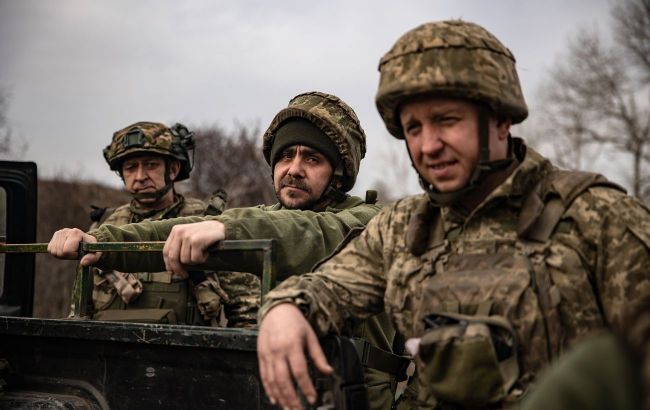 Photo: what is happening in Sumy region and whether Russia can really create a buffer zone (Getty Images)
Russian troops have stepped up activity along the border of the Sumy region. The enemy’s goal remains unchanged — to create a so-called “buffer zone.”
RBC-Ukraine asked a serviceman of Ukraine’s Territorial Defense Forces and military expert Oleksandr Musiienko why Russia has intensified its actions now and whether these plans are realistic.
What is happening on the Sumy front
Last week, it became known that Russian occupiers abducted 19 residents of Sopych, a small village located right on the border of the Sumy region with Russia.
A few days ago, analysts from the DeepState monitoring project reported an expansion of “red zones” in the Sumy region in areas held by units of the Territorial Defense Forces.
At the beginning of December, the enemy captured an area of 45 square kilometers around the village of Hrabovske. Now, Russian forces have entered the neighboring settlements of Popivka and Vysoke.
According to DeepState, Russian troops have also entered the village of Komarivka. Meanwhile, when they entered Sopych, the enemy reportedly used local residents as human shields.
In addition, analysts are recording a large number of “gray zones” along the border in the Sumy region, where the enemy is probing the situation.
The enemy’s goals and tactics
According to Mykhailo Drapatyi, commander of Ukraine’s Joint Forces Group, the Russian grouping Sever (North) has been tasked with creating a so-called buffer zone along the border.
The occupiers operate in small units ranging from an assault company to a battalion, using what experts describe as the “thousand cuts” tactic.
After such probing actions, Russian forces do not bring in heavy equipment and avoid large-scale assaults.
Ukrainian military command has identified 12 areas where the enemy may attempt to create such a buffer zone.
These include the directions to Krasnopillia and Velyka Pysarivka in the Sumy region, as well as to Zolochiv in the Kharkiv region.
Military expert Oleksandr Musiienko believes that by intensifying actions in the Sumy region, Russian forces are trying to divert Ukrainian troops from the south and east, where Ukraine’s Defense Forces are conducting successful counteroffensive operations.
The enemy constantly probes the defense line, searching for weak points.
At the same time, Russian propaganda actively uses these local advances to simulate victories against the backdrop of setbacks on priority sections of the front, he added.
“The goal really is a ‘buffer zone.’ This objective was defined by the Russian command last year and has never disappeared. The enemy simply failed to implement it before — and is still struggling to do so. But they are trying,” Musiienko told RBC-Ukraine.
Is the enemy’s plan realistic?
According to Musiienko, the Ukrainian Defense Forces have done a great deal to prevent the enemy from advancing 10–15 kilometers inland.
“Despite pressure, for example, in the Vovchansk direction, there have been no advances in the Kharkiv region. In the Sumy region, if we look at the situation, we are talking about small border villages where the enemy is trying to gain a foothold,” he explained.
Musiienko believes that the Russian army will continue active operations along the border and, in some places, may manage to entrench itself.
However, there is currently no threat of large-scale operations in that area.
“At the moment, it cannot be said that these are large forces capable of immediately implementing the task of creating a buffer zone,” the military expert concluded.