New Russian target in Ukraine: Why Ukrnafta gas stations are under attack


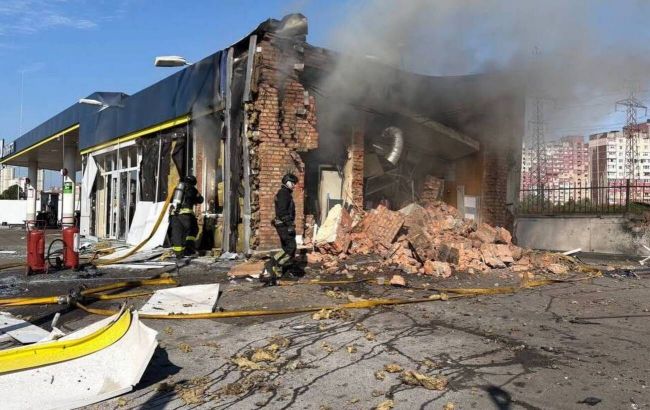 Photo: Aftermath of the attack on a Ukrnafta gas station in Kyiv on September 11 (t.me/dsns_kyiv)
Russia has recently stepped up attacks on gas stations across Ukraine. In particular, Ukrnafta gas stations in Kyiv have been targeted.
RBC-Ukraine asked experts about the real goal behind the attacks, whether there is a risk of a fuel shortage and whether the strikes will affect prices.
Why is Ukrnafta being targeted?
As Volodymyr Omelchenko, director of energy programs at the Razumkov Centre, told RBC-Ukraine, Ukrnafta is currently Ukraine's largest network for selling petroleum products.
In addition, the company is state-owned and plays an important role in stabilizing the fuel market. Also, the Ministry of Defense of Ukraine holds a stake in Ukrnafta, and the company is important for supplying fuel for defense needs.
Oleksandr Sirenko, an analyst at Naftorynok consulting company, believes Russia may be choosing gas stations with high fuel sales volumes as targets.
According to him, Ukrnafta has recently managed to attract customers from other networks. At the same time, the expert is skeptical of theories about possible involvement by pro-Russian politicians in the attacks. (A theory circulating online suggests that the attacks may be linked to the origins of some Ukrnafta gas stations, which came from the nationalized Glusco network previously associated with Viktor Medvedchuk).
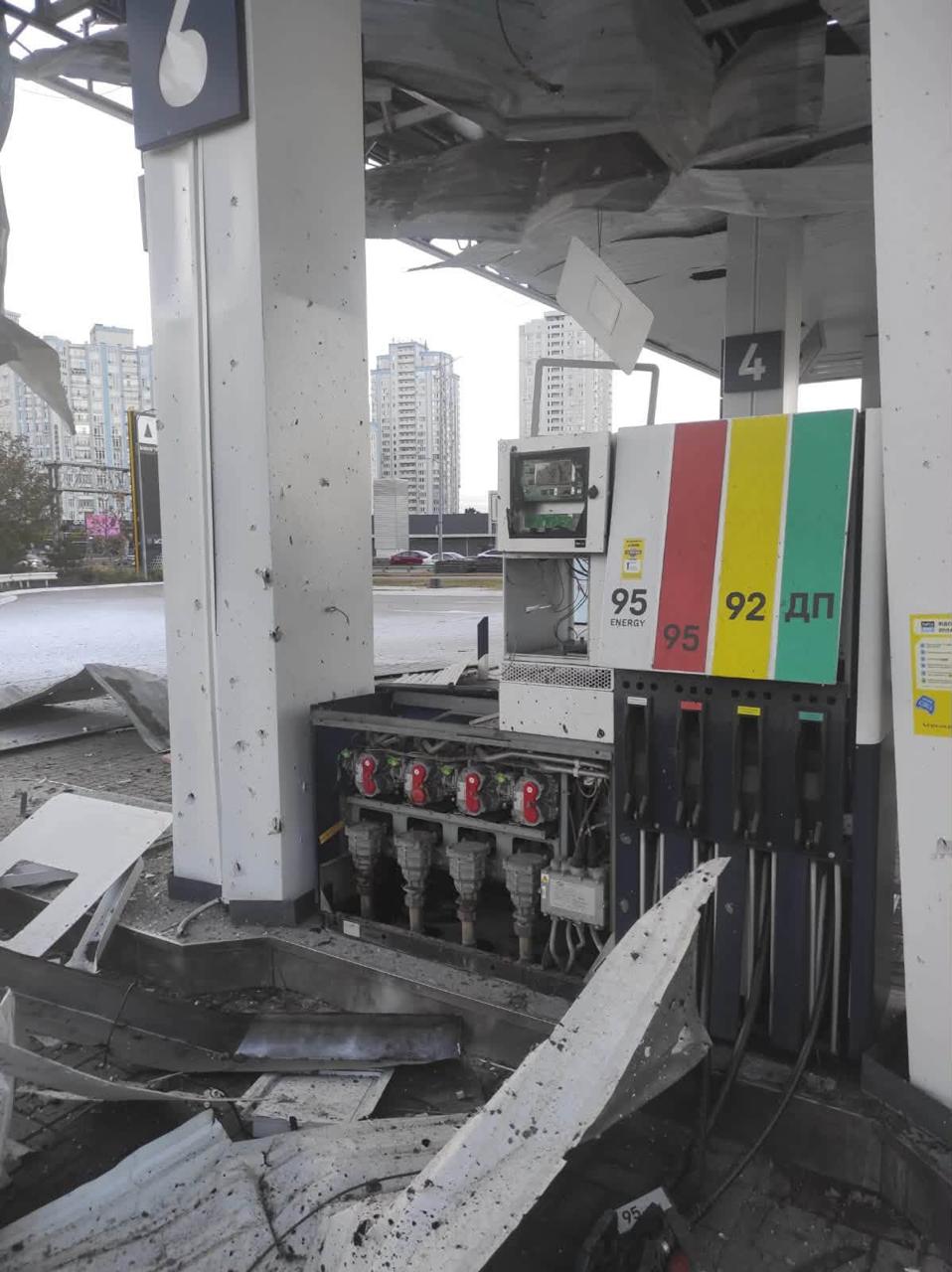
Photo: Russia attacked two more Ukrnafta gas stations in Kyiv on the morning of September 15 (facebook.com/bogdan.kukura.page)
Sirenko also points out that Russian forces may well know the locations of some stations that previously belonged to Russian companies.
What is the goal of the attacks on gas stations?
Omelchenko believes Russia may be using the attacks to disrupt fuel supply logistics, worsen pricing conditions on the petroleum products market and amplify inflationary processes.
In addition, such strikes can create psychological pressure on the population and lay the groundwork for deepening economic problems.
At the same time, the expert does not expect a general physical fuel shortage. According to him, problems may arise only at individual locations if fuel delivery there becomes more difficult due to the destruction of gas stations.
Overall, Ukraine has the ability to import fuel through various routes.
Sirenko stresses that attacks on gas stations are not a new tactic. Russian forces have previously targeted gas stations in frontline regions, including Zaporizhzhia, Sumy and Kharkiv regions. There have also been strikes in the Poltava region. At the same time, attacks on Kyiv have received significantly more attention because of the city's population density and the focus on events in the capital.
The expert notes that Ukraine has a large number of gas stations. Therefore, damage to several stations primarily creates inconvenience for drivers, who have to use other gas stations.
In addition, he says, air attacks generally damage above-ground infrastructure, such as fuel pumps, canopies, facades and operator booths. Underground fuel tanks, meanwhile, may remain intact.
"Our advantage as a Ukrainian fuel market is that we have a surplus of gas stations. We have two, and some say even three times more gas stations than Ukraine needs overall, including Kyiv," Sirenko said.
Why is Russia focusing on Kyiv?
At the end of August, Energy Minister Denys Shmyhal said Russian forces had already damaged or destroyed around 300 gas stations in Ukraine over six months. Later, as Russia gained greater capabilities to use long-range drones, the attacks began spreading to the capital as well.
According to Omelchenko, the Kyiv region has a high population concentration. It is also home to government institutions and many key companies in the defense and economic sectors.
Analysts are skeptical about whether Russia is refraining from attacking private networks, including SOCAR gas stations, because of its diplomatic ties with Azerbaijan. Russia has repeatedly and systematically attacked facilities belonging to companies from countries with which it seeks to maintain relations.
"There is no way to predict this. Russia systematically attacks American companies in Ukraine. It could also attack SOCAR. There are no red lines for Russia on this issue," Omelchenko said.
Sirenko also does not rule out strikes on stations operated by other networks, regardless of the country of origin of the brand.
Will there be a fuel shortage and higher prices?
Both experts do not expect that attacks directly on gas stations will be able to cause a general fuel shortage in Ukraine.
According to Omelchenko, local problems may arise due to damage to stations or disruptions to logistics. At the same time, Ukraine's fuel import capabilities make it possible to avoid a nationwide physical shortage.
Sirenko also stresses that damage to individual gas stations does not mean fuel will disappear from the market. According to him, the attacks primarily create inconvenience for customers, who have to refuel at other stations.
He also sees no direct impact from such strikes on retail fuel prices. Fuel stored in underground tanks at damaged gas stations may be distributed after repairs or used in other ways.
"Russian attacks on gas stations are pointless. They are offended that they have a shortage, so they came up with the idea of hitting gas stations using the coordinates that Rosneft has. And what next? We lose five gas stations for a few days, while they lose several plants for months. Let's see who stands," Sirenko said.
Earlier on Tuesday, September 15, Russian forces again struck two Ukrnafta gas stations in Kyiv. This was already the fifth attack on the state-owned company's gas stations in the city during a short period. The network has already begun installing protective gabions at its Kyiv stations.
In addition, authorities have announced plans to test a software solution that will allow gas stations to track the direction of approaching drones and respond to the threat in advance.