From kindergarten to battlefield: How Moscow militarizes Ukrainian children in occupied territories


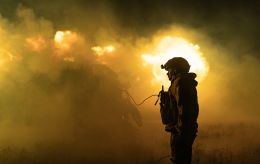
 Photo: How Russia is preparing Ukrainian children to serve in its own army (Getty Images)
Russia has turned the temporarily occupied territories of Ukraine into a massive conveyor belt for re-educating young people, spending hundreds of millions of rubles on militarizing the next generation. The Kremlin is systematically erasing Ukrainian identity and preparing minors to serve in its own military.
How does Russia’s system for drawing Ukrainian children into its system work, and who bears responsibility for this crime? RBC-Ukraine examines the issue.
Key points:
- A recruitment pipeline: The process consists of four stages, from kindergartens and schools to military training camps and enrollment in Russian universities.
- Scale of involvement: Hundreds of paramilitary units operate in the occupied territories, involving tens of thousands of children.
- Military training: Teenagers are taught to operate FPV drones, shoot weapons, navigate obstacle courses and handle mines.
- Pressure on parents: Families who refuse Russian programs face threats of fines and having their children taken away.
- Responsibility: The system is run by Russia’s Defense and Education ministries together with occupation administrations; Ukraine’s Security Service is investigating.
When a stranger reaches out to a child who is not their own, a mother’s protective instinct kicks in instantly. She is ready to do anything to remove the threat. But what happens when the danger does not come with a weapon, but through lessons, children’s camps, military uniforms and propaganda? Why does a parent’s instinct to protect a child fade when their mind is reshaped day after day by Russia’s militarized ideology?
"In Crimea and Sevastopol, 874 Yunarmiya units have been established, involving about 29,000 children. In the occupied parts of the Kherson, Zaporizhzhia, Luhansk and Donetsk regions, at least 1,290 children went through the Warrior Center’s programs in 2024 alone. Researchers from the Yale School of Public Health counted more than 210 such locations in Russia and the temporarily occupied territories," the National Resistance Center (NRC) told RBC-Ukraine.
Twenty-nine thousand children is roughly the number of students enrolled in 50 to 60 Ukrainian secondary schools. In effect, this is an entire generation being systematically drawn into military and ideological training.
The scale of these crimes has already become the subject of international prosecution. The illegal deportation and transfer of Ukrainian children formed the basis for the International Criminal Court’s arrest warrant for Vladimir Putin. But physically taking children out of Ukraine is only part of the problem. A significant number of minors remain in the occupied territories, where Russia has been reshaping their minds for years.
The recruitment pipeline: How children are pushed toward serving in the Russian army
What is happening today in Ukraine’s temporarily occupied territories is an ideological parallel to the Ottoman devshirme system. At the time, sultans abducted Christian boys, erased their memories, and raised fanatical Janissaries who would later ruthlessly destroy their own homeland.
This forced conveyor belt also echoes the Nazi Lebensborn program aimed at Germanizing Slavic children and Stalin’s NKVD practices of raising "mankurts" in special orphanages. How does it work today?
Stage one – kindergartens
A child’s first introduction to society begins with their parents, followed by kindergarten. After indoctrinating adults, Russian propaganda begins targeting an even younger audience — essentially from the moment children start learning the alphabet.
In kindergartens, children are introduced to Russian state symbols, including flags and the national anthem, military holidays, May 9 celebrations and drawing contests about "heroes of the special military operation."
Children are dressed in military uniforms for holiday events, photographed with Russian military personnel and taught to view the army as a natural part of everyday life. Serhii Nikitenko, editor-in-chief of the Kherson-based Most outlet, told RBC-Ukraine how this is happening in the Kherson region in particular.

Photo: Children in kindergartens are introduced to Russian state symbols (Getty Images)
Stage two – schools
Along with the erasure of the Ukrainian language and distortion of Ukraine’s history, school schedules include so-called "Conversations About Important Things," where children are taught the Kremlin’s official position on the war, history and "a united Russia." Russian military personnel are regularly invited to schools to conduct "lessons in courage."
It is during this period that children are introduced to weapons, shown military equipment and taught to view Russian soldiers as the main heroes.
According to information obtained by RBC-Ukraine from law enforcement sources, Russia’s Federal Agency for Youth Affairs (Rosmolodezh), as part of the "Rosmolodezh Grants" competition, allocated 878 million rubles to support universities under its control and another 69 million rubles to nonprofit organizations.
One grant recipient was the occupation structure known as the People’s Militia of the DPR, which received 2.1 million rubles to develop the ARM training center for drone operators. Thus, the state is funding not only propaganda efforts but also practical military training for young people.
Children who enter the system receive "rewards": access to trips, camps, awards, additional education, and favorable school recommendations. Parents who refuse to send their children to Russian-language schools and military organizations are intimidated by occupation administrations with fines, the loss of parental rights and the forced removal of minors to orphanages in Russia.
But the most alarming trend has been the systematic persecution of Ukrainian schoolchildren under the pretext of "fighting extremism." Occupation authorities open criminal cases against teenagers and bring politically motivated charges against them.
Stage three – youth organizations and cadet classes
A child can join Yunarmiya at the age of eight. The National Resistance Center says the organization is the main tool for militarization. Children there are taught drill, weapons handling, and tactics.
Camps such as Avangard and the Warrior Center provide additional channels for selection and training. Children are taught weapons handling, drone operations, mine safety, first aid, and even how to correspond with Russian military personnel.
The network of these organizations continues to expand rapidly. In early 2026, the leadership of Yunarmiya’s regional headquarters in the occupied Donetsk region announced plans to open another 14 Yunarmiya Houses, although only six are currently operating there.
At the same time, the Warrior Center for military and sports training is expanding its programs. In April 2026, its branch in the occupied Donetsk region officially introduced a "sniper shooting" discipline, indicating the continued professionalization of military training for teenagers.
In addition, the Warrior Center announced a major expansion of its summer military-patriotic camps, called "Time of Young Heroes," according to RBC-Ukraine sources. In 2026, nearly 15,000 teenagers aged 14 to 17 are expected to attend the camps — about 10% more than the previous year. More than 70 themed sessions lasting up to three weeks are planned across 20 Russian regions.
Cadet classes: Teenagers receive basic military training, participate in the "Zarnitsa 2.0" military tactical games, learn to assemble assault rifles, operate FPV drones, navigate obstacle courses and perform "assault troop" roles.

Photo: Children can join Yunarmiya from the age of eight (Getty Images)
Stage four – Russian military educational institutions
The final stage of the system is enrollment in Russian military educational institutions or service in the Russian armed forces. This path is further encouraged through educational incentives. The head of the Warrior Center’s board said that 32 Russian universities in 13 regions award the center’s graduates between one and 10 additional admission points, while universities in the occupied Donetsk region award between three and five.
A telling example of this policy came on February 24, 2026, in Mariupol, where the occupation administration, together with Russian National Guard special forces, organized a formal oath-taking ceremony for schoolchildren. Fifty-three students from one of the city’s schools joined the National Guard’s cadet ranks.
"Officially, all of this is called ‘patriotic education,’ but in essence, it is training future personnel for the occupation army and an attempt to displace Ukrainian identity," the National Resistance Center said.
Propaganda as part of everyday life
Military training is accompanied by propaganda. Paramilitary organizations host IT clubs, media studios, political forums and political schools, organize "educational marathons," and hold military-patriotic games such as "Zarnitsa," "Family Zarnitsa," "Drone Battle" and "I Serve the Motherland."
In 2025 alone, the N. I. Krupskaya Donetsk Republican Library held more than 500 "patriotic and spiritual-moral events," attended by more than 10,000 people.
According to law enforcement officials, during the 2025–2026 academic year alone, more than 40,000 educational and propaganda events aimed at integrating children into Russia’s political and cultural space were held in the occupied territories of the Donetsk and Luhansk regions.
In comments to RBC-Ukraine, Serhii Nikitenko, editor-in-chief of the Kherson-based Most outlet, said an analysis of budget execution by the occupation administration of the Kherson region showed that spending on propaganda was almost fully funded.
"Occupation officials mostly act as organizers, while the system itself operates as a single vertical. Through schools, mass events, public holidays, volunteer initiatives and youth organizations, children are gradually integrated into Russia’s political and cultural space, developing loyalty to the aggressor state from an early age," he said.
A resident of the occupied Kherson region, speaking anonymously, said Russian propaganda is having a very targeted impact even on people with strong patriotic views. By pushing the narrative that the occupation is "liberation," Ukrainian children are sent to "patriotic education" programs.
"As far as I know, even from our small village, there are already five teenagers who have signed contracts with the Russian army. And where the children go, the parents follow. The propaganda is working at full force. I try not to turn on that television or read the newspapers, because you start believing all those lies yourself," the woman told the outlet.

Photo: Military training is combined with propaganda (Getty Images)
Who is responsible
The militarization of children in Ukraine’s temporarily occupied territories is not the initiative of individual officials or local administrations. It is a centralized Russian state policy backed by federal patriotic education programs and government funding.
It is implemented by Russia’s Ministry of Education, Ministry of Defense, Federal Agency for Youth Affairs (Rosmolodezh), Defenders of the Fatherland state fund, the Warrior Center for Military and Sports Training, Yunarmiya, the Movement of the First, and occupation administrations in the seized Ukrainian territories. This is reported, among others, by the National Resistance Center and is also documented in studies by the Institute for the Study of War (ISW), Yale University’s Humanitarian Research Lab, and UN materials.
Political responsibility for the system lies with Russian leader Vladimir Putin. It was under his decrees that Russia significantly expanded its system of "patriotic education," and after the full-scale invasion began, military training for children became one of the state’s policy priorities.
One of the key figures implementing the policy is Russian Education Minister Sergey Kravtsov. His ministry integrates military-patriotic programs into schools, approves new educational standards, coordinates the work of education advisers and facilitates cooperation between educational institutions and Yunarmiya, the Movement of the First and the Warrior Center.
Kravtsov himself has repeatedly spoken about the need to raise schoolchildren in the "spirit of defenders of the Fatherland."
The Warrior Center for Military and Sports Training, established by Putin’s decree in 2022, plays a separate role. The center’s work is coordinated by its head, Dmitry Shevchenko, co-chair Andranik Gasparyan, and supervisory board member Daniil Martynov, a longtime former aide to Ramzan Kadyrov. Yunarmiya also operates under the leadership of its chief of staff, Vladislav Golovin.
In the occupied territories, federal policy is implemented through local occupation administrations. These include the so-called "heads" Denis Pushilin (occupied parts of Donetsk region), Leonid Pasechnik (occupied Luhansk region), Volodymyr Saldo (occupied Kherson region) and Yevgeny Balitsky (occupied parts of Zaporizhzhia region). Together with the education and youth policy "ministries" under their control, they ensure the integration of Russian educational standards.
However, the activities of these structures are already the subject of Ukrainian criminal investigations. According to law enforcement sources, investigators with the Security Service of Ukraine’s main directorates in the Donetsk and Luhansk regions are conducting pretrial investigations into possible violations of the laws and customs of war by representatives of occupation administrations, Yunarmiya and a number of cadet institutions, including:
- the "Republican Cossack Cadet Corps named after Marshal of Aviation Alexander Yefimov";
- the "Alchevsk Cossack Cadet Corps named after General M. I. Platov";
- the "Starobilsk Cossack Cadet Corps named after V. F. Margelov."
In addition, pretrial investigations into the activities of the Warrior Center and the Movement of the First are being conducted by investigators from the National Police’s main directorates in the Donetsk and Luhansk regions.
Law enforcement officials emphasize that the activities of Russian youth military-patriotic organizations are viewed not as separate educational or youth projects, but as part of a systemic effort to prepare residents of the occupied territories for service in the Russian armed forces. In particular, Yunarmiya implements Russian strategic planning documents that call for increasing its share among citizens drafted for military service.

Photo: War is no longer perceived as a tragedy (Getty Images)
Psychological consequences for children
The greatest danger of Russia’s militarization of children is not that a child is handed a rifle. Far more alarming is the gradual transformation of the child’s understanding of the world.
According to Anna Kozlova, a PhD in psychology and psychologist with the Poruch project, a child develops primarily through the environment in which they grow up.
"If displays of weapons, military force, aggressive behavior or participation in war are accompanied by approval, respect or glorification, a child may develop the perception that violence is a socially acceptable or effective way of interacting with others," the psychologist explained to the outlet.
In other words, war ceases to be a tragedy. It becomes an ordinary phenomenon, while weapons become symbols of strength, authority and respect. A child gradually becomes accustomed to aggression, loses sensitivity to it and begins to view violence as a normal way of achieving goals.
Younger children are particularly vulnerable because they are not yet capable of critically assessing information and tend to trust adults unconditionally. Teenagers are more likely to ask questions and resist propaganda, but this is also the period when they are searching for their identity, making them particularly sensitive to ideas that offer simple answers, a clear value system, and a sense of belonging to a "chosen" community.
After returning to Ukrainian-controlled territory, another difficult stage begins. Children have to rethink everything they have heard for years about history, the state and themselves. This does not happen overnight.
"The mere fact of returning to Ukraine does not automatically mean that propaganda-based ideologies disappear," the psychologist stressed.
That is why, she says, these children need not condemnation but a safe environment where they can ask questions, feel free to talk about their experiences and gradually rebuild trust in people and state institutions. Only under such conditions can they be fully reintegrated.
***
Russia is investing hundreds of millions of rubles not only in weapons. It is investing in a generation that is expected to fight for its interests. That is why the struggle for Ukrainian children in the occupied territories has long ceased to be merely a humanitarian issue and has become a matter of Ukraine’s national security.