Attack on Ukraine's central bank: Who launched major smear campaign and why

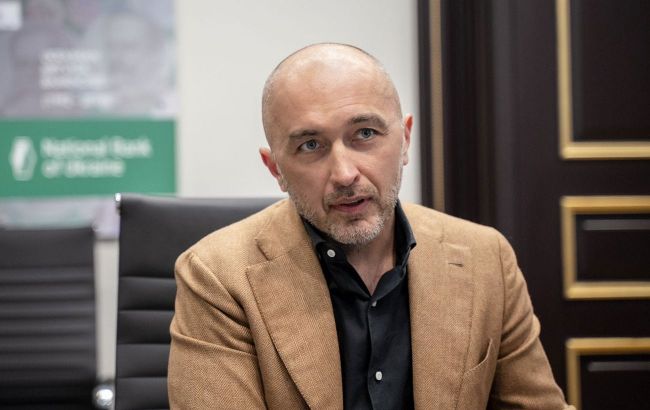 Photo: Head of the National Bank of Ukraine Andriy Pyshnyi (facebook.com/NationalBankOfUkraine)
At the end of the year, a series of publications appeared in the public space attempting to cast doubt on the education of Andriy Pyshnyi, the head of the National Bank of Ukraine (NBU). The Center for Countering Disinformation also took note and even issued a statement about a “systematic discreditation campaign aimed at undermining trust in the National Bank of Ukraine.”
Who benefits from this and who is trying to shake the central bank chief’s position — read in an RBC-Ukraine article.
How the doubts narrative is formed
The core message of the campaign is built around Pyshnyi’s education. By masking a lack of facts with value judgments, assumptions, and references to sources involved in the campaign, an illusion is created that there is ambiguity or even a public debate surrounding this issue.
These claims are then spread through bloggers and selected media platforms and gradually transform from personal accusations about education into broader generalizations about trust in the National Bank as an institution. In the public space, this is also presented as a potential risk to the NBU’s continued cooperation with international partners.
At the same time, an analysis of such publications reveals several features typical of discreditation information campaigns.
First, the materials often rely on incomplete or selective information that is not supported by verified facts or documents.
Second, the most active distributors of these messages are bloggers who systematically publish critical content about the National Bank or its leadership. As a rule, these publications take the form of loud statements but are not followed by official confirmations.
Finally, such materials appeared simultaneously, mainly on anonymous Telegram channels, creating an illusion of scale without independent verification from reliable sources.
Given Pyshnyi’s more than 20 years of experience in the financial sector, senior positions in state banks and regulatory bodies, as well as his political career as a member of parliament and the National Security and Defense Council, doubts about his education appear groundless. Appointments to public office are impossible without verification of diplomas and compliance with qualification requirements by the NBU and other state authorities.
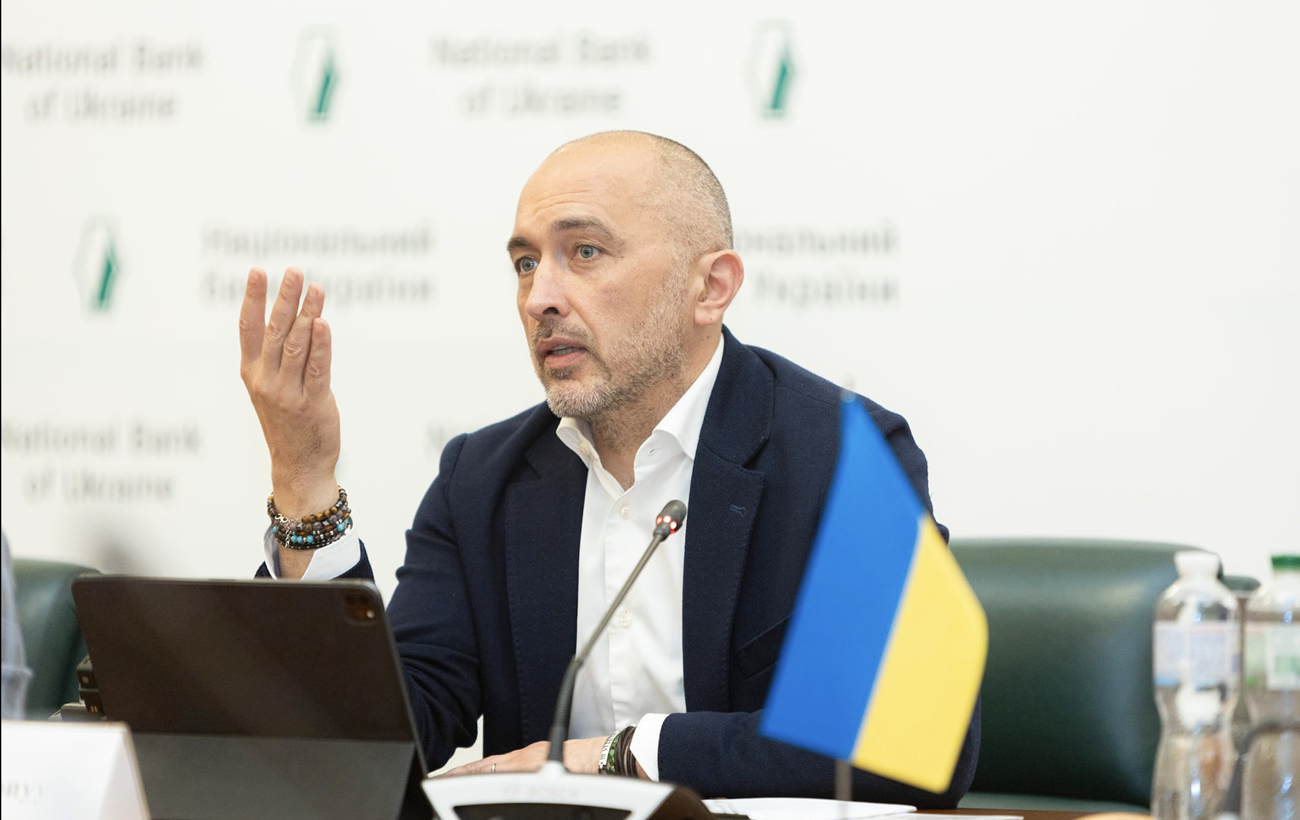
Pyshnyi has more than 20 years of experience in the financial sector (facebook.com/NationalBankOfUkraine)
Appointment to the position of head of the National Bank of Ukraine requires a comprehensive special vetting procedure involving several state institutions and the submission of a consolidated conclusion to parliament. Without a positive outcome of this review, the appointment is legally impossible.
In response to an inquiry from RBC-Ukraine, the Verkhovna Rada confirmed that the vetting process for the appointment of Andriy Pyshnyi as NBU head was carried out in accordance with established procedures.
“A special vetting of the candidate for the position of Governor of the National Bank of Ukraine was conducted in compliance with the requirements of current Ukrainian legislation,” parliament said.
The parliamentary apparatus emphasized that the procedure was conducted in accordance with Article 205 of the Rules of Procedure of the Verkhovna Rada, which sets out the list of documents a candidate must submit. These include information on education.
Thus, attempts to present Pyshnyi’s education as ambiguous or an “open question” contradict the formal procedure that was completed back in 2022. Andriy Pyshnyi holds two higher-education degrees, including one in economics, and also has academic experience — five years of teaching at Chernivtsi State University.
Fake narratives surrounding the regulator are not limited to the issue of the governor’s education. At the same time, several other lines of attack are being introduced into the information space. Among the most common are allegations of NBU leadership involvement in shadow schemes with certain banks — gambling businesses, capital outflows abroad, interference in operational processes, and personnel decisions at financial institutions.
At the same time, an obvious fact is ignored: under Pyshnyi’s leadership, the NBU began cracking down on miscoding in 2022, resulting in several dishonest banks and financial institutions being removed from the market. The regulator has continued systematic efforts to increase transparency in the non-bank financial sector and to block drop schemes and capital-outflow mechanisms.
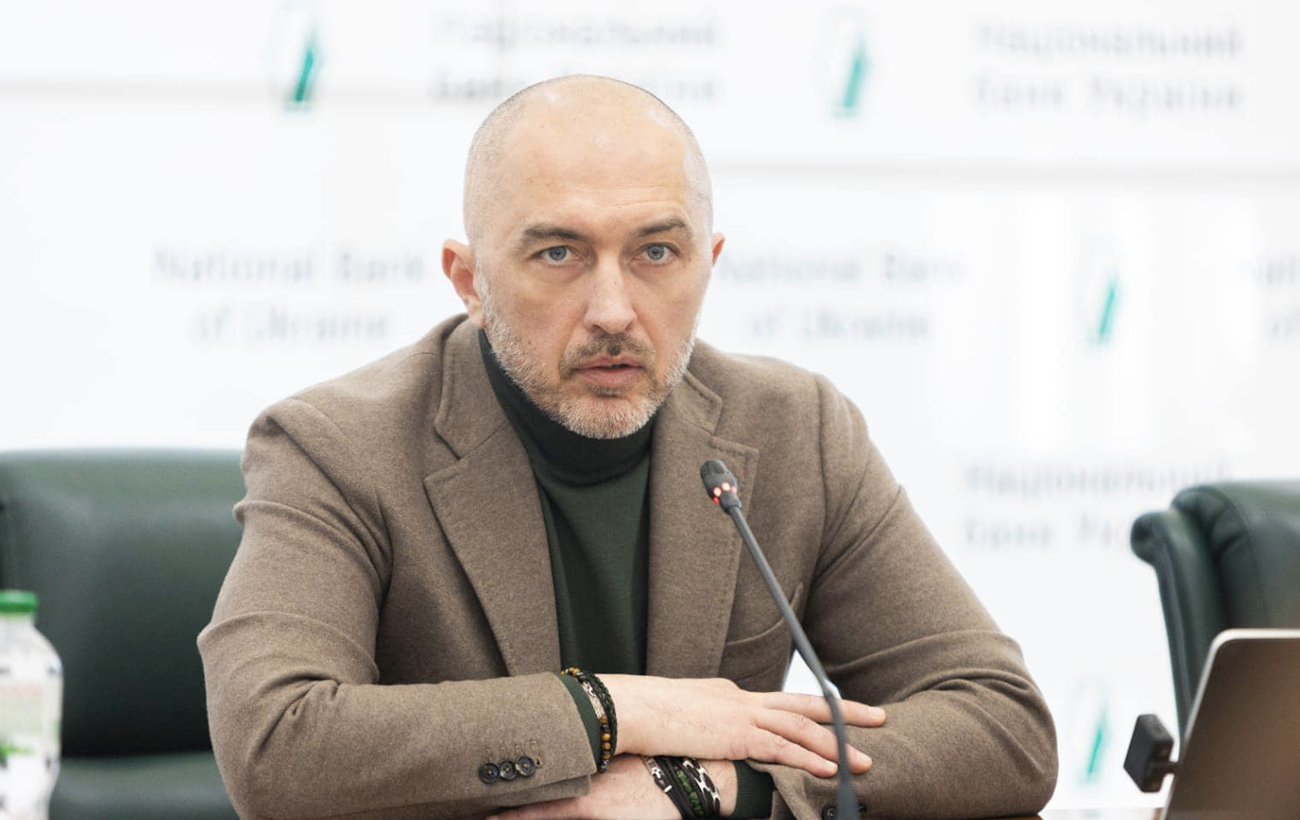
Under Pyshnyi’s leadership, the NBU launched a crackdown on miscoding in 2022 (facebook.com/pyshnyy)
Speculation about information disclosed in NBU officials' asset declarations is also frequently used to pressure the regulator. However, NBU leadership is subject to enhanced scrutiny by Ukraine’s National Agency on Corruption Prevention. If there were false or questionable information in declarations or discrepancies between income, savings, and expenditures, anti-corruption bodies would have already responded accordingly.
There are also frequent attempts to portray the National Bank’s supervisory actions toward specific financial institutions as political pressure on their beneficiaries, despite the absence of evidence to support such claims.
A topic revived for more than 20 years
Notably, questions about Pyshnyi’s diplomas are neither new nor spontaneous. Open sources show that over the past two decades, this topic has been periodically brought back into public discourse.
It first emerged in 2005, amid an internal conflict at the Ukrainian Academy of Banking in Sumy between the institution’s leadership. At the time, the prosecutor’s office found no grounds to open a criminal case.
In 2007, the issue was used as a tool of pressure during attempts to block Pyshnyi’s nomination to the supervisory board of Oschadbank and the position of head of Ukreximbank. The National Bank publicly confirmed that the candidate’s documents had been verified and that the regulator had no reservations.
In 2012–2013, the topic was revived under political pressure from the authorities in power at the time. According to Andriy Pyshnyi, then-member of parliament Andrii Derkach personally threatened him in the halls of the Verkhovna Rada with fabricating a “diploma case” if he did not comply with political demands. Today, Derkach is a convicted traitor to Ukraine and a Hero of Russia.
In 2015, the attacks coincided with the cleanup of Oschadbank’s problematic loan portfolio and the bank’s filing of lawsuits against Russia over the annexation of Crimea.
In 2023–2024, the topic resurfaced — this time to discredit the head of the NBU and undermine trust in the regulator.
Typical mechanics
The National Bank confirmed that it is recording another wave of discreditation of the regulator and noted that in recent years, it has periodically encountered identical mechanics behind such information dumps. The goal remains unchanged — to undermine the legitimacy of decisions and trust in the regulator, something explicitly stated in one of the publications.
“Systematic personal attacks are a typical tool of pressure on an independent central bank when the regulator makes important decisions — particularly now, during the formation of a new cooperation program with the IMF and amid intensified efforts by the adversary to undermine trust in key Ukrainian institutions,” the NBU press service told RBC-Ukraine.

The National Bank confirmed it is recording another wave of discreditation of the regulator (flickr.com / National Bank of Ukraine)
This involves a sudden surge in attention to so-called exposés from bloggers and pseudo-experts with questionable reputations, the further replication of materials across multiple websites and anonymous Telegram channels, and the use of assumptions rather than verified facts. Similar patterns have been observed in previous discreditation campaigns, including those surrounding Energoatom, where the same speakers and information platforms appeared.
Member of parliament Yaroslav Zhelezniak, commenting on such information attacks, ironically referred to them as the “$100 experts column,” drawing attention to the low quality of arguments and overt manipulation.
Former National Bank head Stepan Kubiv, who oversaw Andriy Pyshnyi's tenure at Oschadbank, also noted in a comment to RBC-Ukraine that reopening the issue of the regulator’s education has no basis, given the existing legal procedures.
“I know this procedure well because I went through it myself. Appointment as head of the National Bank involves a multi-level review by all authorized bodies. If a person does not pass anti-corruption, security, and other checks, they simply cannot be appointed,” Kubiv said.
He added that compliance with procedures is particularly important for an independent regulator, given its constant interaction with international financial institutions.
“We are talking about an institution that works with the IMF (International Monetary Fund ), the World Bank, the EBRD, and other partners. There are multi-level approval and reporting mechanisms there, so doubts about the legitimacy of leadership without decisions by competent authorities have no grounds,” Kubiv believes.
According to him, similar regulatory procedures were applied when Pyshnyi was appointed chairman of the board of Oschadbank in 2014, and no reservations regarding his education or reputation were identified at that time.
“Questioning the qualifications of an official after many years of work in the banking system is not criticism — it is speculation,” the former NBU head emphasized.
Why now
The timing of the current attacks is not accidental. They intensified amid difficult discussions over the parameters of a new IMF cooperation program for Ukraine, uncertainty about the volume and future formats of international assistance, and heightened security tensions.
An additional, though not final, factor is changes in the country’s internal political environment, which traditionally bring dormant networks of “influence agents” out of hibernation to increase information pressure wherever it helps weaken Ukraine’s positions, fuel turbulence, and undermine trust.
The Center for Countering Disinformation under the National Security and Defense Council also responded to the situation, confirming the existence of a “systematic discreditation campaign aimed at undermining trust in the NBU.”

A systematic discreditation campaign is being waged against the NBU (flickr.com / National Bank of Ukraine)
Andriy Pyshnyi himself told RBC-Ukraine that both of his diplomas are valid and that all legally required checks have been completed.
“This is not about education at all. Those who launched the campaign know perfectly well that the diplomas exist and are proper from both a legal and any other standpoint. This is a fact that has been repeatedly confirmed over two decades of my professional activity through various vetting procedures. The goal of the campaign has been traditional and unchanged for many years: to create an illusion of toxicity, stir up fog, and try to undermine trust in decisions. That is why this old moldy junk is being dragged out again. Not for the first time, and not for the last. We are doing our job,” he said.