Why your foil doesn’t heat up in oven: Most people don’t know

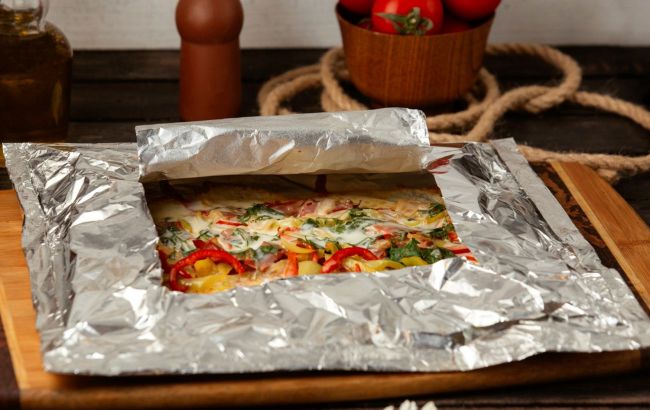 Why aluminum foil doesn’t get very hot in the oven (photo: Freepik)
Aluminum foil in the oven can reach the same temperature as the air inside (for example, 180–200 °C), but usually doesn’t feel very hot. The reason lies in its physical properties and microscopic thinness.
Real Simple explains why foil doesn’t seem to heat up.
Why does foil not feel hot
Foil heats up just like everything else in the oven, but it doesn’t retain much heat because it’s so thin.
When you touch a piece of foil at 175 °C, only a tiny amount of heat transfers to your fingertip—just enough to raise it by a few degrees. As a result, the foil feels only slightly warmer than your skin.
How foil keeps food warm
Wrapping food in foil helps keep it warm by slowing down the three main ways heat escapes: convection, conduction, and radiation.
Foil prevents hot, vapor-like air from escaping, which reduces heat loss through convection. It also holds a thin layer of air next to the food, and since air is a poor conductor of heat, this slows down heat loss through conduction.
Rules for use
For cooking: Use only food-grade aluminum foil that is specifically marked for culinary use. Do not use foil when cooking very acidic (lemon, vinegar) or very salty dishes, because aluminum can partially transfer into the food.
In the oven or on the grill, do not cover heating elements or open flames with foil, as this can cause sparks.
For storage: Do not reuse foil if it is heavily torn or dirty. Also, do not put it in the microwave, as this can cause sparks and damage the appliance.
For other household purposes: It’s better to avoid direct contact with the skin when heated. Even though foil does not get very hot, it can still cause burns.
You may also be interested in: