Why water collects under fridge drawers and how to safely clear drainage hole

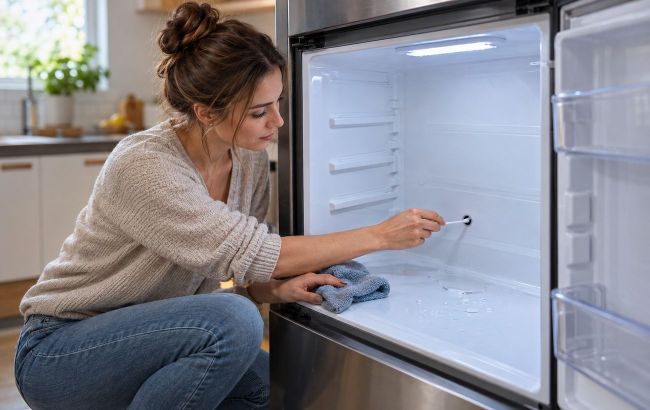 Cleaning the refrigerator (photo: Styler)
Water under the vegetable drawers does not always mean that the refrigerator is broken. Often, the cause is related to a clogged drain hole, improper placement of food, or warm, humid air entering the compartment.
Here's where water in the refrigerator comes from, how to clean the accessible part of the drain hole, and what to check if the puddle reappears.
Where does water in the refrigerator come from?
In many refrigerators with a drip cooling system, condensation forms on the rear inner wall. During compressor operation, a thin layer of frost may appear there, which subsequently melts.
The water flows through a special channel via the drain hole into a tray, where it gradually evaporates.
As Beko explains, individual drops of water or a thin layer of frost on the rear wall of refrigerators with this design are normal.
However, a puddle under the vegetable drawers may indicate a disruption in water drainage. If the drain hole is clogged, condensation does not reach the tray but accumulates inside the compartment.
How to clean the accessible part of the drain hole
One of the common causes of water appearing under the drawers is a clogged drain hole. Crumbs, food residues, and other debris can block the channel through which condensation is drained.
In refrigerators with an accessible drainage system, the hole is usually located in the lower part of the rear wall, above the vegetable drawers.
Bosch recommends carefully cleaning the accessible drain hole with a soft cloth and a damp cotton swab.
How to clean accessible contaminants:
- Check the instructions for your model and disconnect the refrigerator from the power supply before cleaning.
- Remove the vegetable drawers and, if necessary, the shelf above them.
- Locate the drain hole in the lower part of the rear wall, if provided by the design.
- Carefully clean the accessible part of the hole with a damp cotton swab or a special tool recommended by the manufacturer.
- Remove water from the bottom of the refrigerator with a soft sponge and wipe the surfaces dry.
- Return the removable parts to their place and turn on the appliance.
Do not use a knife, metal wire, or other sharp objects. Also, do not pour boiling water or aggressive pipe cleaners into the hole.
Do not try to push foreign objects deep into the drain channel.
Such cleaning does not guarantee the elimination of a clog inside the channel. If the hole is hidden behind internal panels or the clog cannot be removed without disassembling the refrigerator, contact a technician.
Why food should not be pressed against the rear wall
Sometimes the drain hole remains clean, but water still accumulates under the drawers.
Bags, containers, and other products pressed against the cold rear wall can prevent condensation from draining normally. Water wets the packaging and gets onto the shelves or the bottom of the compartment.
According to Electrolux, another cause of excessive moisture can be high-water-content foods stored without packaging.
To reduce moisture accumulation:
- Leave space between products and the rear wall;
- Do not block ventilation openings;
- Store vegetables and fruits in the designated drawers;
- Keep prepared meals and other products that require packaging in closed containers;
- Check if liquid is leaking from open containers.
Refrigerator doors are not closing tightly
When doors are left open for a long time or do not fit tightly to the body, warm, humid air enters inside. Due to the temperature difference, additional condensation may form.
Samsung explains that a damaged or dirty door seal can allow warm air into the refrigerator and contribute to moisture formation. The manufacturer also recommends not blocking ventilation openings with products.
First, ensure that products, containers, and pull-out drawers do not prevent the doors from closing completely.
After that, inspect the rubber seal:
- Check for food residues and other contaminants;
- Pay attention to cracks, tears, and deformed areas;
- Ensure that the seal fits evenly to the body.
If the rubber is dirty, clean it according to the manufacturer's instructions and wipe it dry.
A damaged or deformed seal may need replacement.
Can hot food cause condensation?
Open containers with liquids and hot dishes can increase the amount of water vapor inside the refrigerator compartment.
However, this does not mean that cooked food needs to be cooled on the kitchen table for hours.
According to FDA recommendations, hot dishes can be placed in the refrigerator. Perishable foods must be placed there within two hours, and at air temperatures above +32°C (+90°F), within one hour.
To cool food faster, large portions should be divided and transferred to small, shallow containers. Also, do not leave prepared meals in open containers inside the refrigerator for a long time to reduce moisture entry into the compartment.
Why water appears in No Frost refrigerators
Refrigerators with a No Frost system also undergo automatic defrosting. The resulting water is drained through a drainage system, the design and location of which depend on the model.
Unlike refrigerators with an accessible hole on the rear wall, in such appliances, the drain is often hidden behind internal panels.
If the channel is blocked by ice or debris, meltwater may accumulate inside the refrigerator.
For example, the official LG instruction explains that in some refrigerators with a top freezer, a blocked drain can cause water to enter the refrigerator compartment.
Complete defrosting may help if ice is hindering water drainage. At the same time, clogging with food residues or a malfunction of the automatic defrosting system may require different intervention.
Specifically for the described LG case of drain freezing, the manufacturer recommends complete defrosting for at least 24 hours with the doors open. Depending on conditions, ice melting may take longer, sometimes up to three days. This is not a universal procedure for all No Frost refrigerators.
If the manufacturer of your model provides for such a procedure:
- Transfer products to another refrigerator or a thermal container with cold packs that ensures a safe temperature.
- Disconnect the refrigerator from the power supply.
- Fully open the doors of the refrigerator and freezer compartments.
- Place towels near the base of the appliance to collect meltwater.
- Wait for the natural melting of ice according to the manufacturer's recommendations.
- Remove remaining water, wipe internal surfaces, and connect the refrigerator to the power supply.
Do not accelerate defrosting with a hair dryer or boiling water. High temperatures can damage plastic parts of the refrigerator.
It is also important to take care of food storage. According to FoodSafety.gov recommendations, meat, fish, milk, and prepared meals should be discarded if they have been at temperatures of +4°C (40°F) or higher for more than two hours. For other products, recommendations depend on their type—they can be checked in the agency's table.
What to do if water reappears
If water returns after cleaning or recommended defrosting, pay attention to where exactly it accumulates.
- Under vegetable drawers: First, check the accessible drain hole and the placement of products near the rear wall.
- On shelves and packaging: Check if products are touching the rear wall, if containers are closed, and if doors are closing tightly.
- Together with ice: Possible problem with meltwater drainage or the automatic defrosting system.
- On the floor under the refrigerator: The source of leakage may be related not only to condensation but also to the tray or water supply system, if present.
Whirlpool explains that incorrect installation of the refrigerator can also cause leakage. In particular, water can accumulate near the front edge of the tray and leak onto the floor.
Check the position of the appliance and adjust it according to the manufacturer's instructions.
If the refrigerator is connected to the water supply, the cause of the puddle may also be damaged hoses or connections.
Before checking the water supply system, disconnect the refrigerator from the power supply and shut off the water supply. If there is suspicion of hose damage or hidden leakage, contact a specialist.
When to contact a technician
Professional inspection is needed if:
- Water returns after cleaning the accessible part of the drain hole or recommended defrosting;
- The refrigerator cools poorly, regularly freezes over, or has a damaged seal;
- Disassembling internal panels or repairing water connections is required to eliminate the problem.
Do not disassemble hidden elements of the drainage system yourself if such a procedure is not provided for in the manufacturer's instructions. This may lead to damage to refrigerator parts.
If the advice did not solve the problem, contact an authorized service center or a qualified technician.