US sanctions hit payment system Russia uses to fund military supplies

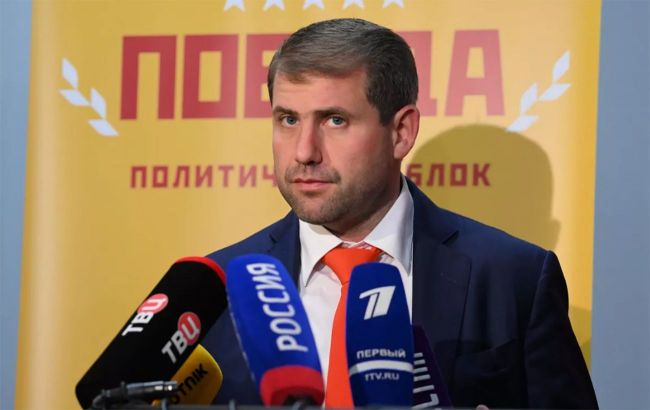 Photo: Ilan Shor, a fugitive Moldovan oligarch and founder of A7 (Russian media)
The US Treasury has designated the Kremlin-backed A7 payment system as a transnational criminal organization. It is accused of helping Iran and its allies evade Western sanctions, reports the Financial Times.
The decision, announced on October 1, freezes all of the company's assets in the US. Americans are also prohibited from doing business with either A7 or its sub-agents acting on behalf of the network.
The Treasury's financial intelligence network, FinCEN, went further and proposed banning any money transfers involving A7 sub-agents.
The Trump administration, which has largely refrained from imposing financial sanctions on Russia over the war in Ukraine, presented the move as part of an operation against Iran called Economic Outcast.
"Treasury is dismantling the financial infrastructure that allows Iran and other adversaries to evade sanctions, move illicit funds and undermine the integrity of the global financial system," US Treasury Secretary Scott Bessent said.
What is A7
The company was founded by Moldovan fugitive oligarch Ilan Shor, who is under sanctions, with the backing of Russia's state-owned Promsvyazbank. The bank is closely linked to Russia's defense industry and is also under US sanctions.
The Kremlin promoted A7 as an alternative to the Western payment system from which Russia was cut off after the full-scale invasion of Ukraine.
"These subagents form a core layer of the A7 network’s operational architecture as a purpose-built sanctions evasion and money laundering mechanism connected to Russian illicit finance and exploited by other illicit finance threat actors, including Iran," the US Treasury said in a statement.
The scale of A7's operations was revealed in a September investigation by the FT. According to the media, the company moved more than $6.9 billion through the international banking system, including through Standard Chartered and Citigroup.
This was done using a network of shell companies and widespread document forgery. From late 2024 through August 2025, journalists counted 100 such companies that made payments, with at least as many more mentioned in the documents. Most of them were in Hong Kong (87) and the UAE (61), as well as in Kyrgyzstan and Indonesia.
At a September conference attended by Putin, Shor boasted that the platform processes 1,500–2,000 transactions every day. According to him, 7.5 trillion rubles, or about $91.5 billion, passed through it in just ten months.
In May 2026, the UK hit crypto exchanges and the A7 network with a new sanctions package. Vladyslav Vlasiuk, the presidential commissioner for sanctions policy, explained at the time that more than $90 billion had passed through A7 over the course of a year. This is roughly half of Russia's annual spending on the war, while the Kremlin used the platform to purchase weapons, process oil revenues, and make payments bypassing the West.