US could clash with Russians in Mali as Trump considers strikes

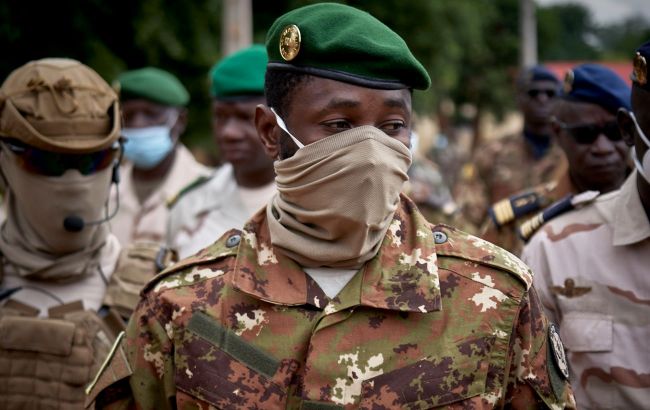 Mali is facing a growing terrorist threat (Photo: Getty Images)
The Trump administration is considering military action in Mali against the JNIM group linked to Al-Qaeda, according to The Washington Post.
If the decision is adopted, Mali will become the eighth country that Trump has ordered strikes against since the start of his second term — a presidency he initially promised to dedicate to ending global conflicts.
There is no consensus among US officials regarding the advisability of attacking the group. An active proponent of using force is Sebastian Gorka, the National Security Council’s senior director for counterterrorism.
What is JNIM and why it is a threat
The full name of the group is Jama'at Nusrat al-Islam wal-Muslimin. It has established itself in Mali and is increasingly attacking coastal countries in West Africa, becoming the best-armed militant group in the region and one of the most powerful in the world.
Last year, the militants organized a fuel blockade that paralyzed a large part of the country. This spring, they carried out coordinated nationwide attacks — militants roamed the streets of the capital Bamako, seized a strategic town in the north, and killed the country's defense minister in a suicide attack.
White House position
An administration spokesperson did not reveal whether Trump plans to carry out strikes, but stated that the US is calling on the governments of North and West Africa to purchase U.S. equipment and services to support their war efforts against the terrorists.
"We urge regional partners and NATO allies to support the Alliance of Sahel States in their war against JNIM and ISIS,” the official said.
Russia's role in the region
The Sahel States Alliance consists of Mali, Burkina Faso, and Niger — countries where military leaders have in recent years ousted democratically elected governments through coups, largely severed ties with the West, and turned to Russia for help.
A US official places the blame not on the governments themselves, but on their Russian partners, stating that Moscow has proven its ineffectiveness as a security partner for Mali.
To combat the violence, Mali's government has hired Russian mercenaries — first from the Wagner Group, and now from Africa Corps, which is more closely linked to Russia's defense ministry. According to human rights groups, the Russians have been accused of numerous atrocities.
Limited cooperation
Last year, as part of an attempt to restore relations with Mali, the US expanded intelligence sharing with the country's government, which was used in Malian army strikes. However, this cooperation remains significantly more modest in scale than the US partnership with Nigeria, which included airstrikes and a ground mission that eliminated one of ISIL's top leaders in Africa.
Direct US military involvement in Mali carries the risk of confrontation with Russian forces in the region and may require deconfliction mechanisms between Washington and Moscow, similar to those that existed in Syria.
List of countries where Trump has already ordered strikes
Military action against JNIM would add Mali to the list of countries where Trump has already ordered strikes: Yemen, Somalia, Syria, Iran, Iraq, Nigeria, and Venezuela. The administration is also conducting a controversial military campaign against suspected drug traffickers in the Caribbean and the eastern Pacific.
This is not the first attack on Russians in Mali. In July, a column of over 200 Russian mercenaries and local soldiers was attacked in the north of the country — the FLA group claimed responsibility for the attack.
The presence of Russians in the region is no accident: Russia has established an extensive network in Africa for recruiting mercenaries to fight in the war against Ukraine, luring citizens from nearly 40 African countries under the guise of employment.
In addition, Russia is actively using African states to circumvent international sanctions, recruit new fighters, and gain access to natural resources.