Can sunscreen block vitamin D production? Doctor explains

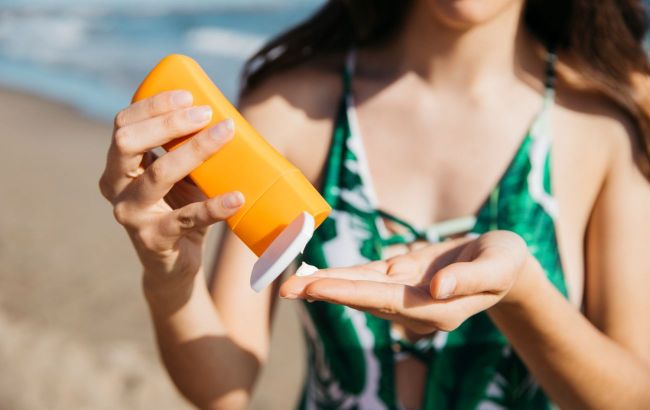 Can sunscreen creams prevent the body from getting vitamin D? (photo: magnific)
Sunscreen has long become part of daily skincare. However, there is a belief that such products prevent the body from getting vitamin D.
Ukrainian pediatrician Dariia Vlasenko explains whether it's true.
How SPF products block vitamin D
According to the doctor, sunscreen can reduce the skin’s synthesis of vitamin D.
“In laboratory and highly controlled conditions, when sunscreen is applied in a thick, even layer of 2 mg over large areas of skin, vitamin D synthesis in the skin can be almost completely suppressed or significantly reduced,” the statement says.
However, in real life, people usually apply much less product, unevenly, not over all exposed skin, and not always reapply it. Therefore, a certain amount of UVB still reaches the epidermis.
How vitamin D is formed
Vitamin D is synthesized in the skin under the influence of UVB rays from the sun. In the upper layers of the skin, there is a substance called 7-dehydrocholesterol, which absorbs this radiation and triggers the production of vitamin D.
First, previtamin D3 is formed, and then vitamin D3 (cholecalciferol). After that, it undergoes two more important activation stages in the body:
- in the liver, it is converted into 25(OH)D — this is the marker measured in tests to assess vitamin D levels
- in the kidneys — into the active form of vitamin D, which is involved in bone health, the immune system, muscles, and other processes
Importantly, if there is too much ultraviolet radiation, the skin does not endlessly produce vitamin D. Part of the precursors is converted into other inactive compounds.
In other words, the idea that “the longer you stay in the sun, the more vitamin D you get” does not work. After a certain point, there is no added benefit, while the risk of burns and skin damage increases.
The effect of SPF on vitamin D
If sunscreen is applied in an ideal thick layer:
- SPF 15 allows about 1/15 of UVB radiation to pass through
- SPF 30 — about 1/30
- SPF 50 — about 1/50
SPF is measured based on how much it prevents skin reddening (erythema), while vitamin D synthesis depends on a slightly different UVB spectrum. These are very similar and partially overlap, but they are not identical.
In addition, two creams with the same SPF can affect vitamin D synthesis differently. It depends on which UV rays a specific formula allows to pass through.
“Theoretically, a person using SPF at the beach may receive more total UV exposure than someone without SPF who barely leaves the house,” the doctor added.
How much sunscreen to apply
It is important to understand that SPF is tested in laboratory conditions, where the product is applied in a very generous layer — 2 mg per square centimeter of skin. Only under such conditions does a product receive its SPF rating (15, 30, or 50). In real life, people rarely apply this much.
To actually achieve the stated level of protection, an adult needs about 30–40 ml of sunscreen per full-body application — roughly 6–8 teaspoons.
With typical use, the risk of a clinically significant reduction in vitamin D for most healthy people is low.
UV radiation is not only about vitamin D, but also:
- sunburn
- photoaging
- accumulated DNA damage in cells
- increased risk of skin cancer
This material is for informational purposes only and should not be used for medical diagnosis or self-treatment. Our goal is to provide readers with accurate information about symptoms, causes, and methods of detecting diseases. RBС-Ukraine is not responsible for any diagnoses that readers may make based on materials from the resource. We do not recommend self-treatment and advise consulting a doctor in case of any health concerns.