SpaceX rocket debris slams into the Moon after months in space

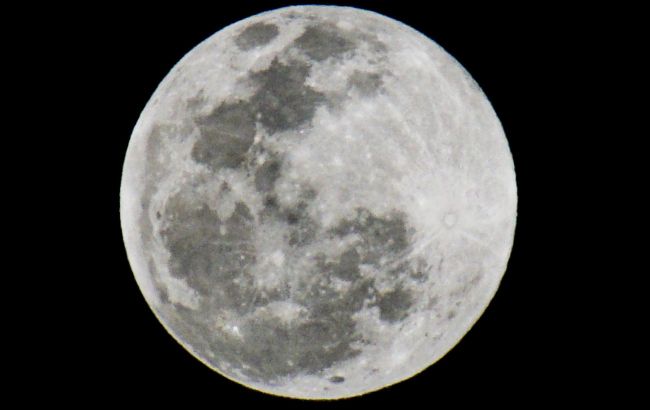 Photo: A Falcon 9 upper stage crashed into the Moon's surface (Getty Images)
A four-ton section of a spent SpaceX Falcon 9 rocket, which had been drifting through space since last year, has crashed uncontrollably into the Moon at high speed, according to The Guardian.
The impact posed no danger to Earth, but it is expected to have created a new crater on the lunar surface.
Impact details and crater formation
The object, roughly the size of a five-story building, was part of a SpaceX Falcon 9 rocket launched in January 2025 to deliver two commercial lunar landers.
The rocket stage was expected to strike the Moon on Wednesday, August 5, at a speed of about 8,690 km/h. According to NASA, the impact was expected to create a crater approximately 18 meters (59 feet) wide and 4 meters (13 feet) deep, ejecting lunar dust and rocks into the surrounding area.
Professional and amateur astronomers were unable to visually confirm the impact because the crash site was located near the visible edge of the Moon. US and South Korean satellites will be tasked with photographing the area, though images may take several days to become available.
NASA, SpaceX, and scientists respond
NASA spokesperson Jimi Russell said the incident poses no threat to Earth. He noted that scientists intend to analyze the event to improve their understanding of artificial impacts and refine methods for tracking objects in space.
Normally, spent rocket stages burn up in Earth's atmosphere or fall into the ocean. However, because the 2025 lunar mission required additional thrust, the Falcon 9 upper stage remained in space after launch. Julianna Scheiman, SpaceX's Director of NASA Science Missions and Dragon spacecraft, explained that solar activity and gravitational forces gradually pushed the rocket stage onto a collision course with the Moon.
She added that NASA and SpaceX are already discussing ways to prevent similar incidents in the future. Astronomical software developer Bill Gray described the impact as having limited scientific value but said it highlights the broader issue of inadequate management of space debris.
Historical context and mission outcome
Although Earth's orbit is crowded with space debris, artificial impacts on the Moon remain relatively rare. Similar events occurred during the space race, while more recent examples include the crash of a Chinese rocket stage in March 2022 and NASA's intentional LCROSS impact mission in 2009, which studied material ejected from the lunar surface.
Several lunar landers have also crashed while attempting to land, including Russia's Luna-25 mission in 2023, India's Chandrayaan-2, and Israel's Rocket debris spent more than a year and a half traveling toward the Moon after an unsuccessful mission in 2019.
As for the 2025 SpaceX mission, one of the payloads — Firefly Aerospace's Blue Ghost lunar lander — successfully touched down on the Moon's northeastern side to study the lunar surface.
Meanwhile, a two-meter-tall Japanese lander developed by ispace, carrying a small robotic rover, crashed during its final descent.
Separately, SpaceX recently released its first quarterly earnings report as a publicly traded company, reporting sharply higher revenue and smaller-than-expected losses. However, its shares fell as investors remained cautious about the company's ambitious long-term goals.
Space exploration continues to advance rapidly. Nvidia, together with Lunar Outpost, is developing an AI-powered system that will allow spacecraft to process data directly on the Moon without relying on commands from Earth.
Not every space project is progressing smoothly, however. Scientists recently identified a major issue with spacesuits planned for future Mars missions, concluding that current lunar suits are not suitable for operations on the Red Planet.