Russia running new political ops to undermine Ukraine - Zelenskyy

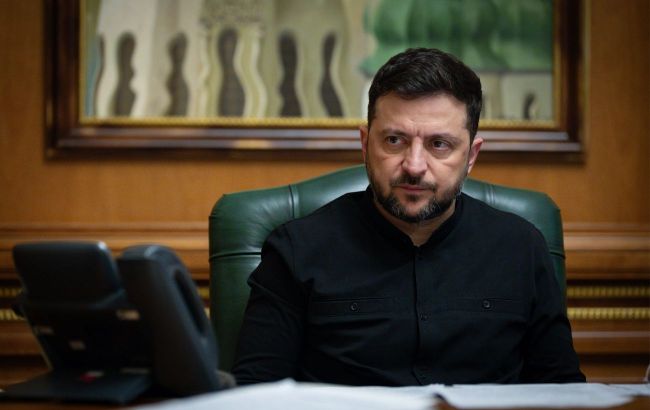 Photo: President Volodymyr Zelenskyy and Foreign Intelligence Service chief Oleh Ivashchenko (president.gov.ua)
Russia is launching political campaigns aimed at destabilizing the situation in Ukraine, according to President Volodymyr Zelenskyy.
Zelenskyy said he had heard a report from the head of the Foreign Intelligence Service, Oleh Ivashchenko, regarding the current foreign policy situation and processes occurring inside Russia.
Ukrainian intelligence provided detailed information on the growing dependence of Russian companies and state institutions on China, from investments and technologies to influence over political decision-making.
Separately, Ivashchenko reported on the political campaigns Russia is launching to destabilize the situation in Ukraine.
"We will counter and block the activities of all entities that help the enemy. We also discussed the work of Ukraine’s foreign intelligence on returning Ukrainian children and exchanging prisoners," Zelenskyy wrote.
Russian propaganda fakes about the Armed Forces of Ukraine
At the beginning of November, Russian propaganda launched fake messages about the supposed encirclement of Kupiansk, spreading AI-generated videos on social media. In these videos, fabricated “Ukrainian soldiers” spoke about a “critical situation” in the city.
At the end of the month, propagandists pushed another fake — claiming that Russian forces had allegedly entered Huliaipole in Zaporizhzhia. The Center for Countering Disinformation debunked these fabrications, stressing that the groups of Russian troops attempting to break into the city had been destroyed by Ukraine’s Defense Forces.
Vladyslav Voloshyn, spokesperson for the Defense Forces South, also assured that there were no confirmations of such claims and that the command had taken all necessary stabilization measures on time.
In addition, TikTok saw mass circulation of videos claiming the mass surrender of Ukrainian soldiers near Pokrovsk. Most of these clips had captions in foreign languages, and the accounts spreading them were found to be part of a coordinated network created to promote Kremlin narratives to international audiences, according to the Center for Countering Disinformation.