Putin rejects compromise on Ukraine, ISW points to Russia's biggest problem

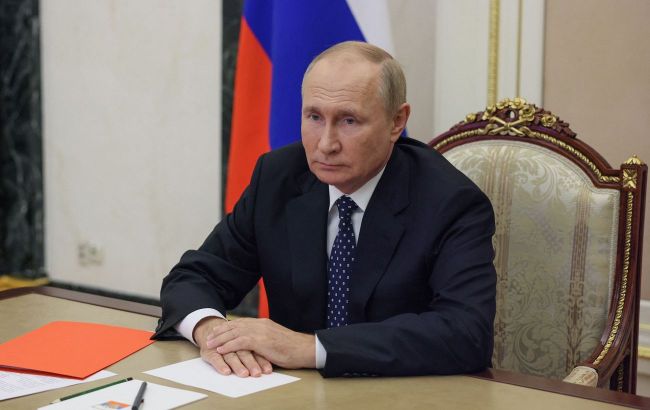 Photo: Vladimir Putin (Getty Images)
Putin is not ready to make significant compromises to end the war against Ukraine. The ISW believes that the Kremlin continues to count on achieving its goal militarily, relying on a distorted assessment of the situation on the front, according to the Institute for the Study of War (ISW).
The Kremlin maintains its previous demands
The ISW analyzed statements made following Putin's meeting with the US president's special envoy Steve Witkoff and Jared Kushner.
According to the analysts, Moscow is continuing to adhere to the demands that the Russian leader outlined in June 2024, include the complete withdrawal of Ukrainian forces from the Luhansk, Donetsk, Zaporizhzhia, and Kherson regions, including territories that the Russian army does not control.
The demands also continue to include the "demilitarization" and "denazification" of Ukraine and the country's renunciation of NATO membership.
The ISW notes that Putin aide Yuri Ushakov's statement following the talks with the US delegation "indicates that the Kremlin remains unwilling to make any meaningful compromises to Russia’s maximalist demands."
Putin is receiving distorted information about the front
The analysts believe that the Russian leadership may be overestimating its battlefield successes. According to Ushakov, Putin told Witkoff and Kushner about the Russian army's "huge successes" along the front line during their meeting. The ISW considers this assessment exaggerated.
A Kremlin-linked source stated ahead of the US delegation's visit that a peace deal was allegedly impossible until the entire Donetsk region was captured. According to the source, Putin is confident that the Russian army can accomplish this task by the end of 2026.
"A person close to the Kremlin stated prior to Witkoff’s and Kushner’s Moscow visit that there would not be a peace agreement until Russian forces seize the remainder of Donetsk Oblast and noted that Putin is confident that Russian forces could seize the whole of Donetsk Oblast by the end of 2026 — the most recent Kremlin deadline for accomplishing that goal."
The ISW also points to the systematic distortion of information by Russian military commanders. In the analysts' view, exaggerating the Russian army's successes may reinforce Putin's belief that continued offensive operations will allow him to achieve his goal without making any concessions.
"The lies and distortions of Russian military commanders at many levels are likely leading Putin to harden his perception that Russian forces can achieve his intended objectives in Donetsk Oblast by the end of 2026 and thus that he need not make any compromises in his aims," the analysts explained.
The capture of the Donetsk region is being delayed
The actual pace of Russian forces' advance does not allow for talk of quickly accomplishing this task. The ISW recalls that since the beginning of the full-scale war, Putin has set at least 15 deadlines for capturing the entire Donetsk region, but Russian forces have failed to meet any of them.
The analysts separately draw attention to Kostiantynivka. Russian forces have been fighting for the city since October 2025, but after 11 months have still failed to capture it. Beyond it are Sloviansk, Kramatorsk, and Druzhkivka, which are part of Ukraine's fortified belt.
"Russian forces have been fighting for Kostiantynivka since October 2025 and have not seized it in 11 months. Russian forces have not reached, much less entered or seized, the other Fortress Belt cities of Sloviansk, Kramatorsk, and Druzhkivka, and will not be able to seize all three within the remaining four months of 2026, considering that they have failed to complete the seizure of even one in nearly a year," the analysts are confident.
The ISW also calculated how long Russian forces would need at their current rate of advance. Last August, the average rate of the Russian offensive across the entire theater of war was 2.91 square kilometers per day. If that rate were maintained, occupying the remaining 19% of the Donetsk region would take significantly longer.
"Russian forces will not seize Donetsk Oblast until 2032 at their current rate of advance — if they can seize it at all."
According to the ISW's calculations, at August's rate, the Russian army could capture the remaining part of the Donetsk region only by October 2, 2032. The analysts separately emphasize that they are not prepared to claim that Russia will be able to establish full control over the region at all.
US president's special envoys Steve Witkoff and Jared Kushner visited Kyiv on September 6, where they held talks with Volodymyr Zelenskyy, the Ukrainian delegation, and European representatives.