North Korea suspends military support for Russia amid serious rift with Moscow

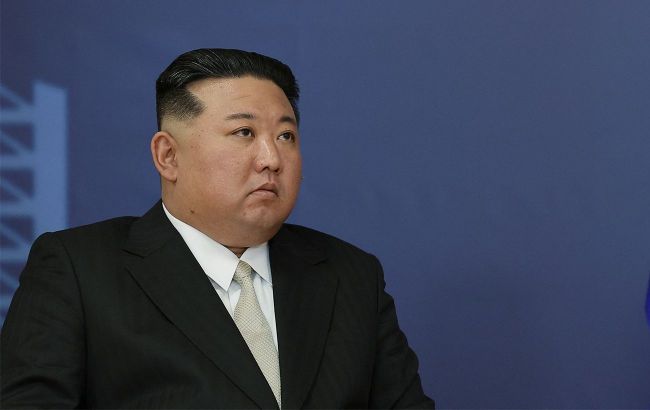 Photo: Kim Jong Un, dictator of North Korea (Getty Images)
A serious rift has emerged in relations between Russia and North Korea, resulting in Pyongyang suspending military support, according to Ukraine's Defense Intelligence.
On September 7, 2026, Russia and North Korea officially opened a road bridge across the Tumen River (Tumangan), which runs along the border between the two countries.
The new facility was expected to strengthen transport links between the countries and increase the volume of bilateral transportation.
Moscow is interested in continuing to receive North Korean weapons and their components. Pyongyang, meanwhile, is counting on Russian assistance in the form of equipment, raw materials, technology, and funding, as well as seeking to learn from Russia's experience in modern warfare.
Disagreements emerged in relations between Russia and North Korea last month. The reason was a statement by Russian Deputy Foreign Minister Andrey Rudenko that Moscow would eventually help reduce tensions between Seoul and Pyongyang. North Korea reacted extremely negatively to these remarks.
At the end of October, North Korean Foreign Minister Choe Son Hui said that such a position was inconsistent with the nature of the alliance between the two countries. She also demanded that the Russian side explain its policy toward South Korea.
Choe Son Hui announced a temporary suspension of military support for Russia. According to available information, the decision was made personally by North Korean dictator Kim Jong Un.
According to Ukraine's Defense Intelligence, the restrictions concern the use of North Korean airspace by Russian military transport aircraft, as well as the delivery of KN-23 ballistic missiles and a new batch of artillery ammunition.
Moreover, Pyongyang is in no hurry to fulfill Moscow's request to increase the size of the North Korean military contingent in Russia. The request concerns expanding the force from 8,500 to 50,000 troops.
At the same time, units of the 11th Corps of the North Korean Army's Special Operations Forces, which are already in Russia, continue serving in the Kursk region. They are stationed in the second echelon of the Kursk grouping of forces.
A combined North Korean army missile unit has been operating in the Voronezh region since mid-summer. The Russian side uses it to launch strikes against Ukraine. This unit is part of the 112th Missile Brigade of the 1st Tank Army of the Moscow Military District.
Further deepening of military cooperation between Moscow and Pyongyang is currently frozen.
The main problems in their cooperation include the low level of operational interoperability between Russian and North Korean troops, the language barrier, a shortage of interpreters, and inadequate logistical support from North Korea.
Another obstacle is the attitude of the Russian military command toward North Korean servicemen. According to available information, senior Russian military officials openly show contempt for North Korean troops, viewing them as an imposed political burden.
Another factor holding back military cooperation between the two countries is the large losses suffered by the North Korean contingent in battles with Ukraine's Defense Forces in the Kursk region.
According to Ukraine's intel estimates, North Korean military personnel have suffered total losses of 7,058. Of these, 2,251 servicemen were killed, while the rest were wounded.
Ukrainian President Volodymyr Zelenskyy recently issued an important warning regarding North Korea.
Meanwhile, Russia is asking North Korea for new and much more powerful ballistic missiles.