Never dry wool, silk, or leather on a radiator: Essential home care tips

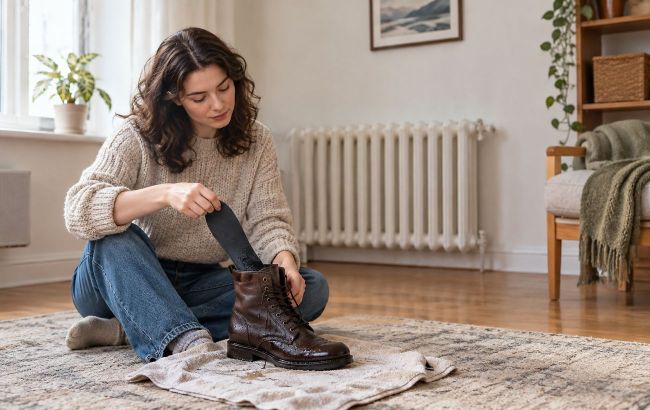 Which items should not be dried on a radiator (collage: Styler)
With the onset of cold weather, radiators become the simplest way for many to quickly dry washed clothes. However, high temperatures and direct contact with hot surfaces can damage fabric, deform footwear, and even create a fire hazard.
Here's which items are best left off the radiator.
Wool sweaters and knitwear
Woolen items are among the first on the list of things that should not be placed on a radiator. Under intense heat, fibers can change structure, and the item itself may lose its shape, shrink, or deform.
Sweaters made of merino wool and cashmere are particularly vulnerable. If placed on a hot radiator, one part of the garment will dry faster than another. This can lead to uneven color changes and material damage.
Experts from the international organization Woolmark, which specializes in wool quality standards, recommend drying wool knitwear horizontally, away from direct heat sources. To do this, lay the sweater on a clean, light-colored towel after reshaping it to its original form.
Silk blouses and dresses
Silk requires special care, as its natural fibers are sensitive to intense heat. Drying on a radiator can negatively affect the material's structure, smoothness, and appearance.
Additionally, silk items are easily damaged by improper wringing or mechanical stress while the fabric is still wet.
In its silk care recommendations, the brand ARKET advises avoiding direct heat sources and drying such items naturally. First and foremost, check the information on the inner label, as different types of silk may have varying care requirements.
Leather footwear and suede products
Wet boots, sneakers with leather inserts, suede boots, and gloves should not be placed directly on a radiator.
Rapid heating causes natural leather to dry unevenly. It can lose elasticity, become stiff, deform, and crack. Suede can also change texture and appearance.
Footwear manufacturer LOWA emphasizes in its recommendations: wet leather shoes must be dried in a well-ventilated room, away from radiators, heaters, and other heat sources.
Therefore, after a rainy walk, it is better to remove the insoles, unlace the shoes, and let them dry at room temperature.
Items with elastic inserts
Clothing containing elastane requires separate attention. It is added to leggings, sweatpants, underwear, swimsuits, and many fitted garments to allow the material to stretch better and return to its original shape.
Prolonged exposure to high temperatures can accelerate damage to elastic fibers. As a result, the fabric will hold its shape worse, and the item may lose some of its elasticity.
Items with decorative elements and glued parts
You should also avoid drying clothes with heat-transfer prints, patterns, decorative appliqués, glued rhinestones, and other temperature-sensitive elements on a radiator.
During heating, the adhesive base can lose its properties, causing decorations to peel off or change shape. Some prints may also become damaged or crack.
This applies to items made of combined materials where different components react to heat differently. For example, sports jackets with membrane inserts or clothing with water-repellent coatings.
Why you shouldn't cover the radiator with large items
There is another reason to break the habit of spreading all washed clothes over radiators. This concerns not only fabric preservation but also fire safety.
It is especially dangerous to dry items on electric heaters, convectors, and other appliances not designed for this purpose. Fabric can block ventilation openings, cause the appliance to overheat, or create conditions for ignition.
How to properly dry clothes in winter
To avoid ruining your clothes, follow these rules:
- Check the label. The manufacturer indicates whether the item can be tumble-dried, laid flat, or must be air-dried naturally.
- Use a clothes drying rack. Place it in a well-ventilated room.
- Do not layer wet clothes. Items need enough space for air circulation.
- Lay wool knitwear flat. This helps prevent stretching under the weight of water.
- Let footwear dry at room temperature. Do not use radiators, heaters, or hairdryers for this purpose.