Italy plans to connect Sicily with mainland via world’s longest suspension bridge

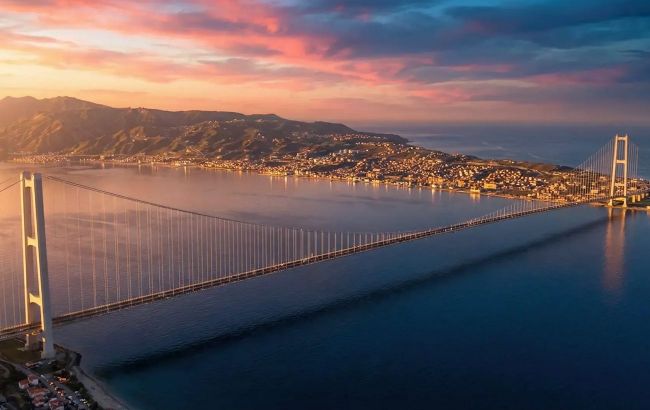 Bridge across the Strait of Messina (photo: strettodimessina.it.web)
Italy has revived plans to build a bridge across the Strait of Messina, which is intended to connect Sicily with mainland Italy. The ambitious project has been discussed for more than 2,000 years, yet it remains highly controversial today due to seismic, technical, environmental, and financial risks, according to The Guardian.
What the bridge is supposed to look like
According to Pliny the Elder, in 251 BC the Romans built a temporary bridge across the strait using boats and barrels.
Over the following centuries, the idea of a large-scale bridge resurfaced repeatedly. It was supported by, among others, Benito Mussolini and Silvio Berlusconi. In 2022, the project once again became one of Italy’s infrastructure priorities after it was backed by Transport Minister Matteo Salvini.
The cost of the modern project is estimated at €13.5 billion. The Italian authorities have postponed the start of construction several times: work was initially scheduled to begin in 2024, then early 2025, and later early 2026.
In February, Salvini said construction was expected to begin in the summer. However, in the Torre Faro area in northeastern Sicily, where the structure is planned to be built, there are still no obvious signs that work has begun.
The project involves the expropriation of more than 400 properties.
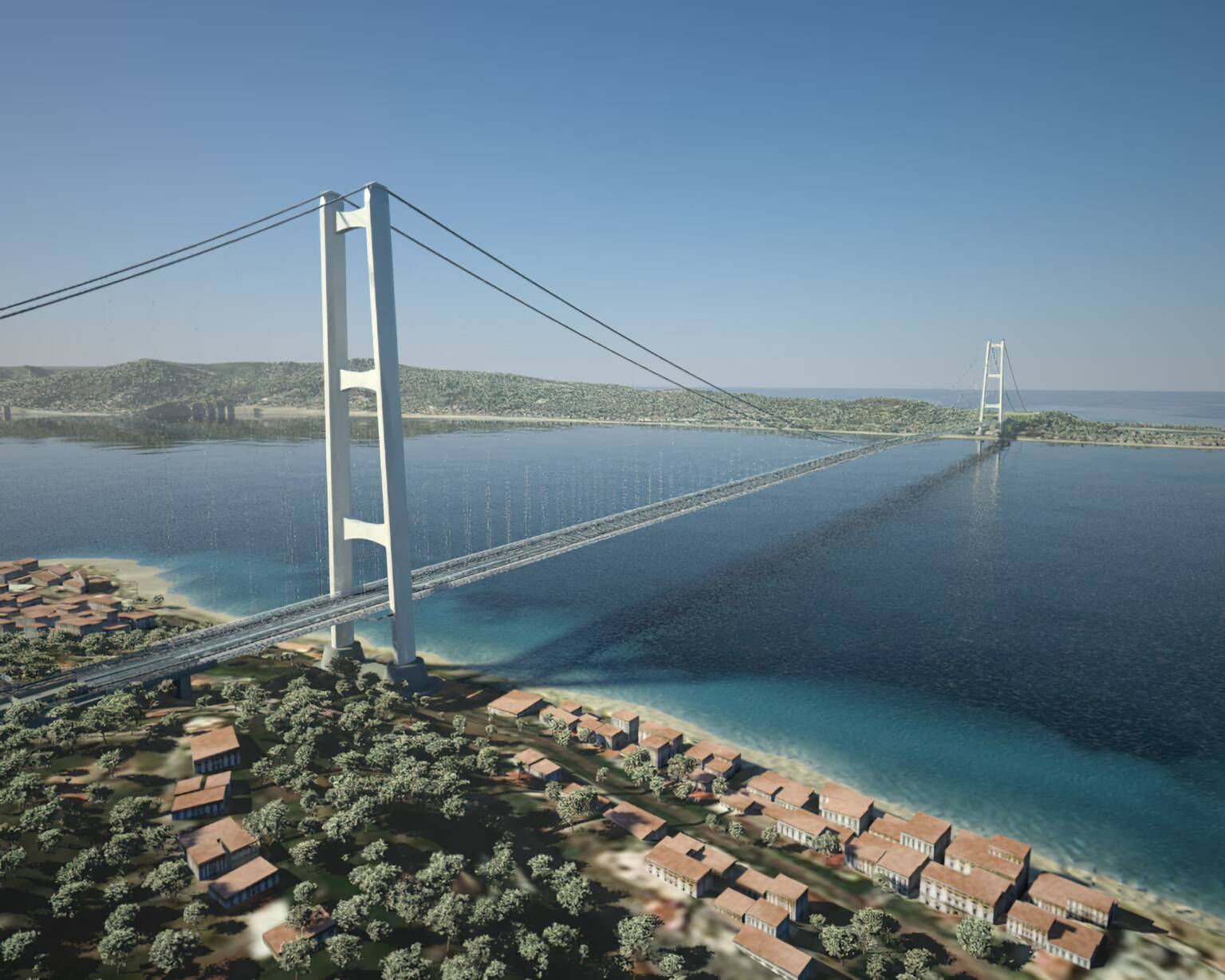 What the bridge across the Strait of Messina will look like (photo: Webuild-Eurolink Image Library)
According to the plan, the bridge is intended to connect Torre Faro in Sicily with Villa San Giovanni in Calabria. Its central span will be 3.3 km long, making it the longest suspension bridge in the world.
The bridge is expected to include six lanes for road traffic, two service lanes, and two railway tracks. In terms of scale, there is currently no comparable structure in the world.
Will the bridge withstand earthquakes?
One of the main questions remains the safety of the structure. Engineers, seismologists, and environmentalists have raised serious concerns about the implementation of the project.
Antonino Risitano, former dean of the Faculty of Engineering at the University of Catania, said that modern technology does not allow the reliability of suspension cables of such a length to be properly tested.
“If you cannot test the suspension cables, you cannot build it. Given current scientific knowledge, the present project is technically unfeasible,” the scientist said.
Webuild, the company that is expected to build the bridge, said these concerns had already been addressed and refuted in a 2025 technical report.
The region is also characterized by high seismic activity. According to geologist Carlo Doglioni, more than 5,000 low-magnitude earthquakes have been recorded within a 40-kilometer radius of the potential construction site over the past 40 years.
Supporters of the project claim that the bridge has been designed to withstand extreme conditions and should be able to withstand earthquakes with a magnitude of up to 7.1.
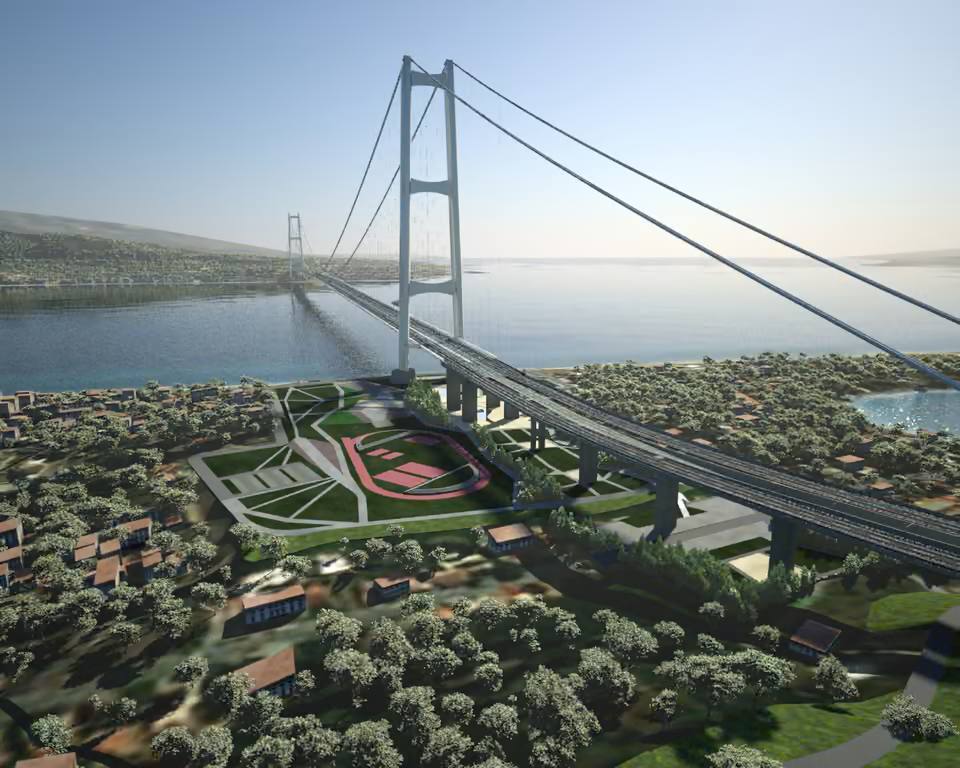 What the bridge across the Strait of Messina will look like (photo: Webuild-Eurolink Image Library)
Environmentalists fear the consequences
Some of the controversy surrounding the project centers on its potential impact on the environment. Environmentalists fear that the bridge could disrupt an important migration corridor for birds and marine mammals.
According to environmental organizations, millions of birds could fly through the area of the future bridge during just six weeks of spring migration.
Not everyone among residents supports the project either. People whose homes are planned to be expropriated fear that even unfinished construction could permanently alter the local landscape.
Activist Mariella Valbruzzi, who has opposed the construction of the bridge for more than a decade, stresses that the biggest danger may not be related to the bridge itself.
“I am concerned that work on roads and viaducts could still begin, leaving this protected landscape buried under concrete, with or without the bridge,” she said.