Italy on budget: Cheapest regions for summer 2026 travel

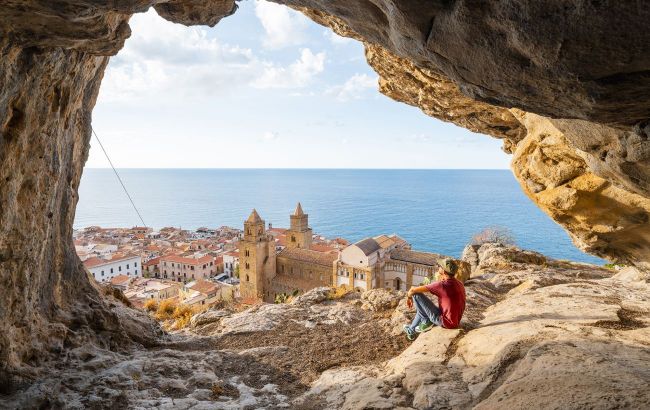 Where to find budget summer holidays in Italy (photo: Getty Images)
Italy has long topped the list of countries Ukrainians dream of visiting at least once in their lifetime. But after the first glance at hotel prices in central Rome or along the Amalfi Coast, people often give up, with an inner voice saying: “Beautiful, but not for my budget.”
RBC-Ukraine has prepared a guide to the most budget-friendly regions of Italy for a smart and atmospheric summer vacation in 2026 with up-to-date prices.
In reality, the true Italy is much larger, more generous, and more diverse than expensive tourist postcards suggest.
While foreign tourists stand in kilometer-long queues and overpay for a glass of water, Italians themselves vacation in completely different places, where the sea is clearer, the food more authentic, and the wallet doesn’t experience a small financial tragedy.
Main life hack: why the south always wins
In Italy, there is a golden rule: the further south you go from Milan, the lower the prices and the larger the portions. Regions such as Apulia, Calabria, Sicily, and Basilicata still preserve the cinematic vibe of old Italy, where coffee is not drunk on the run and life is measured by smiles rather than euros in your account.
Bari (Apulia): Italy without a tourist shock
Milan or Florence can empty your budget in two days. Bari cannot. This port city on the “heel” of the Italian “boot” is washed by the Adriatic Sea and has long remained off the radar of mass tourism.
It has everything: the historic white maze of Bari Vecchia, where local Italian grandmothers roll orecchiette pasta right on wooden tables in the middle of the street, cozy beaches, and fresh seafood.
In addition, Bari is an ideal base. From here, you can cheaply visit the fairy-tale town of Alberobello or the white cliffs of Polignano a Mare.
- Accommodation: cozy Airbnb room — from 45–60 euros per night.
- Restaurant bill: plate of homemade seafood pasta — 9–12 euros, glass of local Primitivo wine — 3.50 euros.
Lecce: the Florence of the South without capital-city prices
If you love luxurious architecture, stucco, cathedrals, and romantic evenings accompanied by violin music, but don’t want to pay outrageous prices, Lecce is for you. It is called the capital of the Southern Baroque.
The city is built from special golden limestone, so at sunset it literally glows from within. The nearest clean beaches of the two seas (Ionian and Adriatic) are just 20–30 minutes away by bus.
- Accommodation: palace-style hotel with breakfast — 50–70 euros for two.
- Restaurant bill: traditional full lunch (pasta, salad, water) — 12–15 euros per person. Famous local pastry, pasticciotto with cream and coffee — only 2 euros.
Naples: chaotic, delicious, and strikingly cheap
Naples either makes you fall in love at first sight or scares you with its wild traffic, laundry hanging from balconies, and loud scooters. But one fact remains: it is the cheapest major city in Italy.
Authentic Neapolitan pizza here costs less than a dry sandwich at a highway gas station somewhere near Venice. From Naples, it is also easy to reach Pompeii, Mount Vesuvius, and the picturesque islands of Ischia and Procida.
- Accommodation: hostels or simple apartments — from 35–50 euros per night.
- Restaurant bill: iconic Margherita pizza in historic pizzerias (like Da Michele) — only 5–6.50 euros! Espresso at the bar counter — 1.10 euros.
Sicily: sea, volcanoes, and food culture
Forget mafia myths — today Sicily is one of the most welcoming and affordable corners of the Mediterranean.
Especially if you fly not to elite Taormina but choose Catania or Palermo as your base. There is fantastic street food, huge markets with giant shrimp and tuna for very low prices, and incredible beaches with views of Etna.
- Accommodation: apartments near the sea — 40–55 euros per night.
- Restaurant bill: huge Sicilian rice-and-meat arancini (a full meal substitute) — 3 euros, seafood dinner for two in a port tavern — about 30 euros.
Calabria: a hidden beach paradise
When Italians want unbelievably turquoise water like the Maldives but don’t want to overpay for Sardinia, they go to Calabria — the very tip of Italy’s boot.
Towns like Tropea or Scalea offer wild cliffs, white sand, and crystal-clear water without selfie-stick crowds. Calabria is officially one of the poorest — and therefore cheapest — regions in the country.
- Accommodation: guesthouses near the coast — from 40 euros per night.
- Restaurant bill: local pasta with spicy ’nduja sausage — 8 euros, beach umbrella and two sunbeds on the front line — 10–15 euros for the whole day (compared to 40+ euros on the Amalfi Coast).
Cilento: the Amalfi for smart travelers
Everyone knows Positano and Sorrento, but few have heard of Cilento National Park just further south. And that’s a mistake: the scenery is the same — winding roads, cliffs dropping into the sea, olive groves, and tiny fishing villages.
But prices are at least three times lower, and the atmosphere is completely authentic, without glossy tourist glamour.
- Accommodation: room in a rural mini-hotel (agritourism) — 45–60 euros.
- Restaurant bill: dinner with homemade wine on a terrace overlooking the sea — 18–22 euros per person.
Real money-saving checklist for Italy 2026
Avoid August. August in Italy is Ferragosto month, when the entire country goes on holiday. Prices skyrocket, and beaches are packed. The ideal time for a budget trip is June or September.
Bar counter rule (al banco). If you drink coffee or eat a croissant standing at the bar, it costs 1–1.50 euros. If you sit at a table, a coperto (service charge) of 2–5 euros per person is automatically added.
Regional trains (Trenitalia Regionale). High-speed Frecciarossa trains are expensive, but regular regional trains are very cheap (for example, Bari to Polignano costs about 3 euros).