Israel’s first exit poll results identify leading party or candidate

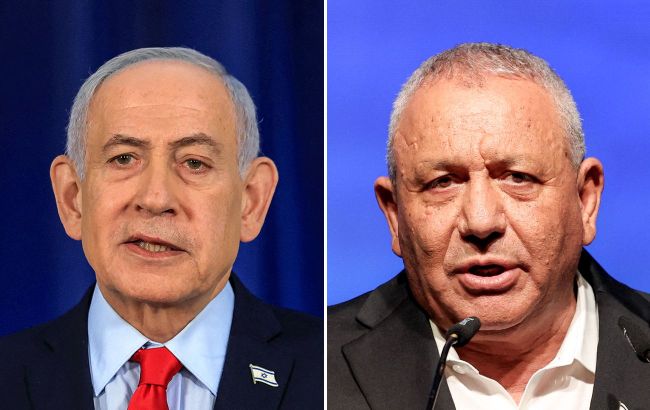 Photo: Benjamin Netanyahu and Gadi Eizenkot (collage: RBC-Ukraine)
Voting in the parliamentary elections in Israel has concluded. Overall, the opposition bloc is gaining more than the ruling bloc, but the incumbent Prime Minister Netanyahu’s Likud party is in first place among the parties, according to exit poll data.
Channel 12 exit polls
According to Channel 12 exit polls, the bloc of Gadi Eizenkot, leader of the opposition Yashar party, secured 52 seats:
- Yashar – 22 seats;
- Yisrael Beytenu (Israel Our Home) – 9 seats;
- Bennett’s party – 12 seats;
- Democrats – 9 seats.
Meanwhile, the bloc of incumbent Prime Minister Benjamin Netanyahu secured 50 seats:
- Likud – 24 seats;
- Shas – 8 seats;
- United Torah Judaism – 6 seats;
- Religious Zionism – 6 seats;
- Otzma Yehudit – 6 seats.
Channel 11 exit polls
At the same time, Channel 11 exit polls differ slightly.
Eizenkot’s bloc secured 53 seats:
- Yashar – 21 seats;
- Yisrael Beytenu – 8 seats;
- B'Yachad ("Together") – 14 seats;
- Democrats – 10 seats.
Meanwhile, Netanyahu’s bloc secured 50 seats:
- Likud – 25 seats;
- Otzma Yehudit (Ben-Gvir’s party) – 7 seats;
- Shas – 6 seats;
- Religious Zionism – 6 seats;
- United Torah Judaism – 6 seats.
Neither side has yet secured the 61 seats required to form a government.
Additionally, two Arab parties, Ra’am and the Joint List, achieved very high results, securing 17–18 seats according to the exit polls. They typically do not join any coalitions, which further complicates the formation of a stable majority in the new parliament.
Elections in Israel
Parliamentary elections in Israel are taking place on October 27. These are the first elections in the country since the Hamas attack on October 7, 2023, and the war in the Gaza Strip. Voters are electing 120 members of the Knesset, the Israeli parliament.
The main contest is unfolding between the bloc of incumbent Prime Minister Benjamin Netanyahu, leader of the Likud party, and the opposition led by Gadi Eizenkot, former Chief of the General Staff of the Israel Defense Forces (IDF) and leader of the Yashar party.
The Israeli electoral system provides for the proportional distribution of seats in the Knesset among party lists. To enter parliament, a party must secure at least 3.25% of the vote.
However, the victory of a single party does not guarantee its ability to form a government: securing a parliamentary majority requires the support of at least 61 out of 120 members of parliament.
Incidentally, it has been reported that Israel recorded the highest voter turnout in the last 50 years.