
Iran threatens to blow up Persian Gulf internet cables if US resumes attacks — Reuters

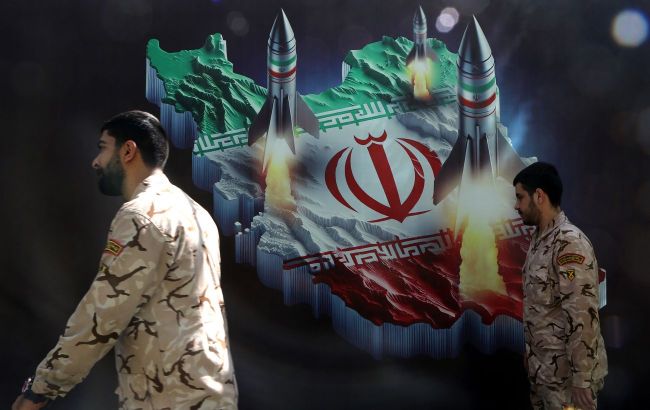 Photo: Iranian military personnel against a backdrop of missiles and a map of Iran (Getty Images)
Iran is preparing to launch attacks on undersea cables in the event of a new escalation with the US and Israel. Officials in Tehran say they will no longer respect red lines, according to Reuters.
Two high-ranking Iranian security officials told Reuters that Tehran has prepared detailed plans for attacks on undersea communication cables in the Persian Gulf. This scenario is being considered in the event of renewed US and Israeli military operations against Iran, should diplomatic negotiations with Washington fail.
Iranian officials had previously warned that the region's undersea communications infrastructure could become a target in the event of a new escalation.
At the same time, one of the sources told the agency that Iran would attempt to hinder the restoration of damaged networks in order to prolong communication disruptions, particularly regarding internet access.
"If Iran is attacked, there will be no more red lines ... from undersea cables to military bases, including covert ones," one of the officials says.
He also urges Washington not to "play with fire" and claims that Iran has access to undersea cables and can destroy them.
Yadollah Javani, deputy head of the political affairs department of the Islamic Revolutionary Guard Corps, said on Wednesday that in the event of strikes on Iranian infrastructure, Tehran could target the seven major internet cables that run under the Strait of Hormuz.
Could Iran disrupt global internet service?
Undersea cables are the backbone of international internet connectivity. According to the United Nations International Telecommunication Union, they carry approximately 99% of global internet traffic.
At the same time, potential attacks in the Strait of Hormuz area would not necessarily cause widespread disruptions around the world. Alan Mauldin, director of research at the telecommunications company TeleGeography, noted that less than 1% of international Internet bandwidth passes through this strait.
Furthermore, the consequences of cable damage will depend on the number of affected lines, operators' ability to reroute traffic, and the capacity of alternative routes. Extensive damage could slow down internet services and disrupt financial transactions, e-commerce, and cloud computing.
Restoring connectivity in a wartime environment can also be challenging. Repair work may be delayed due to rising insurance costs and difficulties in obtaining permits to conduct operations in territorial waters.
US President Donald Trump is considering the possibility of resuming large-scale military operations against Iran.
According to NBC News, US military leaders have already presented him with possible strike scenarios. A new phase of the operation could begin before or after the US midterm elections scheduled for November.
In addition, media reports indicate that Israeli Prime Minister Benjamin Netanyahu is also calling for a resumption of strikes against Iran.

