How to safely unclog a sink drain without harming the siphon

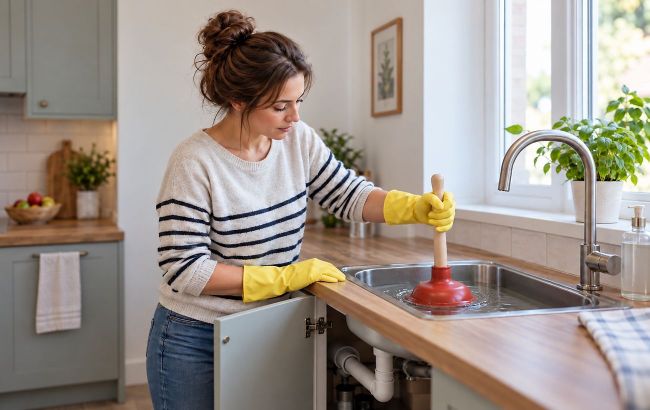 A woman cleaning a sink (collage: Styler)
Has the water started draining slowly from the sink or stopped completely? A simple clog can turn into a more serious problem if you misuse a plunger, damage pipe connections, or carelessly disassemble the siphon.
Here's how to safely unclog a sink at home, what mistakes to avoid, and what to do to prevent flooding your neighbors.
What to do if the sink is clogged
Before attempting to unclog it, determine whether the problem affects only one sink or if water is also draining poorly from other plumbing fixtures.
As experts from the plumbing company SparkFlow explain, this will help identify the possible location of the clog and determine whether it is safe to handle it yourself.
Pay attention to the following signs:
- Water drains slowly from only one sink. The drain hole, siphon, or the nearest section of the pipe is likely clogged.
- Water does not drain at all. There may be a dense blockage, so do not add more water.
- Water backs up through another drain. The problem may lie in the sewer section to which several plumbing fixtures are connected.
- Several drains are working poorly simultaneously. This may indicate a clog deeper in the pipeline, particularly in the common sewage system.
If water rises in the sink even though the tap is closed, check if any household appliances connected to the drain are running.
If water backs up from the sewer or the problem occurs simultaneously in several fixtures, stop using them. In an apartment building, notify the building manager, homeowners' association (OSBB), or emergency plumbing service.
Do not attempt to disassemble or clean the common sewage riser yourself.
How to safely unclog a sink drain
The plumbing company NSP Plumbing recommends starting with the simplest mechanical methods. They help remove some household clogs without using aggressive chemicals.
Remove the water and check the drain
If there is standing water in the sink, carefully bail it out using a small container.
However, first ensure that no chemical drain cleaners have been poured into the drain. If such products have already been used, do not attempt to remove the water or disassemble the siphon yourself.
Remove the accessible strainer or drain plug and check for accumulated food residues, hair, or other debris underneath.
Visible contaminants can be removed while wearing gloves or using tweezers. Do not try to push them further down the pipe.
Try hot water
If the water is draining slowly and the cause may be minor grease deposits, try flushing the drain with hot tap water.
Do this only if the sink and pipe materials can withstand such temperatures. This method does not guarantee the removal of a dense clog.
Do not use boiling water. High temperatures can damage certain materials, seals, and connections.
If the sink is completely full of water, do not add more.
Use a plunger
A plunger with a flat rubber cup is suitable for sinks.
Before using it, inspect the pipes under the sink. If the connections are loose, cracked, or already leaking, do not use a plunger.
If the plumbing is in good condition:
- Add a little water to cover the rubber part of the plunger.
- Tightly cover the overflow hole with a damp cloth, if present.
- If it is a double sink, cover the second drain.
- Press the plunger against the opening and make several smooth, controlled up-and-down movements.
- Carefully remove the plunger and check if the water has started to drain.
Do not apply excessive force. If water appears under the sink or the pipes begin to shift, stop the procedure immediately.
How to clean the siphon without causing leaks
The siphon is an element of the drainage system under the sink that retains a small amount of water. This creates a water seal that prevents sewer odors from entering the room.
Hair, grease, and small debris can also accumulate in the siphon.
Plumbing component manufacturer Oatey explains in its guide that improper installation of seals or overtightening of connections can lead to leaks.
You can only clean a siphon yourself if its design allows for disassembly, such as a model with a removable bottom part or slip nuts.
Check the manufacturer's recommendations before starting work. If the design is unfamiliar, the connections are damaged, or you are unsure if you can install the seals correctly, contact a plumber.
If the siphon is detachable and in good condition, and no aggressive chemicals have been poured into the drain, follow this sequence:
- Stop using the sink. Turn off the tap. If necessary, shut off the water supply valves under the sink to prevent anyone from accidentally opening them during work.
- Place a bucket underneath. Even if the sink is empty, water remains in the siphon and will spill out after unscrewing.
- Take a photo of the structure. Record the position of parts, nuts, and seals before disassembly.
- Carefully unscrew the removable part. Do not jerk the pipes or apply excessive force. Support the siphon to avoid stressing other connections.
- Remove contaminants. Rinse the removed parts in a separate container and remove accumulated debris.
- Check the seals. They must be intact, clean, and properly installed. Damaged parts must be replaced.
- Reassemble the siphon. Follow the instructions for the specific model and do not overtighten plastic nuts.
If the nuts do not unscrew, the plastic has become brittle, or the connections are fixed with glue, do not try to force the structure apart.
How to check if the siphon is leaking
After reassembly, be sure to check the tightness of all connections.
First, place dry paper towels under the siphon and run a small amount of water. Inspect the joints between parts.
If everything is dry, gradually increase the water flow and check the pipes again.
Even a few drops may indicate an improperly installed seal or a non-watertight connection.
After the first use of the sink, inspect the space underneath again to ensure no moisture has appeared.
If the leak cannot be eliminated, do not use the sink.
Which cleaning methods can damage pipes
Not all popular home methods are equally safe for plumbing.
Plumbing equipment manufacturer Geberit warns against using devices that create excessive pressure in pipes. They can damage siphons and other elements of the drainage system.
Therefore, avoid the following mistakes:
- Cleaning with strong air or water pressure. This is especially dangerous for damaged and insecurely fixed connections.
- Using stiff wire. A homemade tool can scratch internal surfaces, get stuck, or damage drain components.
- Overtightening plastic nuts. This can damage threads or cause cracks.
- Trying to forcefully push the clog through. If it is located deep in the pipeline, it is better to contact a specialist.
Chemical drain cleaners require special attention.
According to the American Poison Control Center, some products contain concentrated acids or alkalis that can cause serious chemical burns.
Also, do not rely on a mixture of baking soda and vinegar as a universal solution. Their reaction does not guarantee the removal of dense clogs consisting of grease, hair, and other contaminants.
It is especially dangerous to mix drain cleaning products with each other or add vinegar, bleach, or other household chemicals to them. This can cause a dangerous reaction releasing harmful fumes.
An important warning is even included in the Drano manufacturer's instructions: after using their chemical product, do not use a plunger, as the corrosive liquid may remain in the pipe and splash.
If a chemical product has already been poured but the water is not draining, do not disassemble the siphon, use a snake, or add other agents.
Contact a plumber and be sure to inform them which specific product was used.
When it is better to call a plumber
Professional help is needed if:
- Water does not drain at all, and simple methods do not help;
- Clogging recurs regularly;
- A leak appears under the sink;
- The siphon is damaged or cannot be safely disassembled;
- Water backs up through other plumbing fixtures;
- The problem occurred simultaneously in several drains.
If water is leaking onto the floor, stop using the sink immediately.
If a water supply connection is leaking, shut off the corresponding valve. If water is coming from the sewage drain and continues to leak even with the tap closed, contact the emergency plumbing service.
If possible, place a container to collect water and remove items that could get wet.
In an apartment building, if you suspect a clog in the common sewage riser, notify the building manager or homeowners' association (OSBB). Do not interfere with this section of the system yourself.
How to prevent recurrent sink clogs
Many clogs occur gradually as grease deposits, food residues, and other contaminants accumulate on pipe walls.
British water utility Thames Water emphasizes that even small amounts of fat and oil can accumulate in the sewer over time.
To reduce the frequency of sink clogs:
- Do not pour fat and oil from cooking into the sink;
- Remove food leftovers from plates before washing;
- Use a protective mesh on the drain hole;
- Regularly clean the mesh of debris;
- Wipe grease residues from the pan with a paper towel before washing;
- Collect used oil in a separate container for proper disposal later.
Do not rely solely on hot water and dish soap. They do not guarantee the complete removal of grease deposits.
When the water cools, grease can settle on the pipe walls again and gradually form a clog.