How to clean your washing machine: Drum, tray, and filter guide

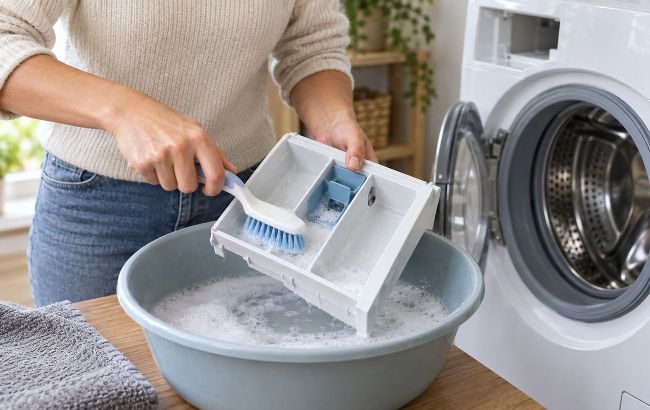 Cleaning the washing machine (photo: Styler)
It is advisable to clean your washing machine periodically, even before an unpleasant odor appears. Buildup in the detergent drawer and debris in the filter can hinder the flow of detergent and water drainage.
What to check before cleaning
Find the instruction manual for your specific washing machine model: it specifies the maintenance program, permissible cleaning agents, and the procedure for removing parts.
Before manual cleaning, turn off the appliance and unplug it from the socket. Before working with the drain filter, also shut off the water supply. If a wash cycle has just finished, wait for the water to cool down before draining.
How to clean the drum
Start the cleaning cycle with an empty drum. Remove clothes and other items, then select a special program if available.
The British consumer organization Which? recommends running an empty wash at 60–90 °C for models without such a program. Choose the specific mode according to the manufacturer's instructions.
A special cleaner is not required for every cycle. If you use one, follow the dosage and application method indicated on the packaging.
How to clean the rubber seal
Water and dirt can accumulate in the folds of the rubber around the door. This area should be cleaned with a microfiber cloth dampened with warm water and dish soap.
Carefully pull back the edge of the seal and wipe the accessible folds. Stubborn buildup can be removed with a soft brush, avoiding excessive pressure. Finally, wipe the rubber dry.
How to rinse the detergent and conditioner drawer
Cleaning expert Kathryn Green, in a comment to Ideal Home, recommends rinsing the drawer in warm soapy water and cleaning corners and recesses with a toothbrush.
Cleaning procedure:
- Remove the drawer as specified in the instructions.
- Take out any removable inserts and rinse the parts with warm water.
- Remove buildup with a soft brush. If necessary, use a small amount of dish soap and rinse thoroughly.
- Wipe the accessible part of the compartment where the drawer is inserted.
- Dry the parts and reinstall them.
How to clean the drain filter
The following procedure is suitable for models with an accessible drain filter and an emergency hose.
Home care expert Mary Marlowe Leverett, in an article for Real Simple, describes the following steps:
- Place a shallow container for water underneath and lay down a towel.
- Open the service cover, take out the emergency hose, and remove the cap.
- Drain the water. If the container fills up, temporarily close the hose with the cap, empty the container, and continue.
- After draining, remove the filter, clear away debris, and rinse it.
- Reinstall the filter, close the hose cap, and return all parts to their original positions.
If there is no emergency hose, drain the water as specified in the model's instruction manual.
Should you use vinegar, baking soda, or dishwasher tablets?
Good Housekeeping experts warn that excessive use of vinegar can damage hoses and rubber seals. Baking soda may help eliminate odors but does not provide complete removal of internal deposits.
The Australian consumer organization CHOICE does not recommend using dishwasher tablets, as such products can damage seals and hoses over time.
Do not mix different cleaners. The CDC warns that chlorine bleach combined with certain other agents can release dangerous chlorine gas.
How often should you clean the washing machine?
Experts suggest cleaning the drum approximately once a month or after 30 wash cycles. The exact frequency depends on the manufacturer's recommendations and the intensity of use. Clean the drawer, seal, and filter according to the separate instructions in the manual.
After each wash, wipe the seal and leave the door and drawer slightly open to allow them to dry.
If the odor persists after cleaning or the machine drains poorly, contact a technician to inspect the drainage system.