Strange but true: Unusual dining etiquette rules from around the world

 Dining (photo: magnific.com)
What is considered perfectly normal behavior at the table in one country may seem strange or even rude in another. In some places, slurping noodles is encouraged; in others, it is better not to rush for the last piece from a shared plate; while in some cultures, who starts eating first is particularly important.
RBC-Ukraine has collected several unusual dining etiquette rules from different countries around the world that will be interesting for travelers.
Japan: Eat noodles the right way
If you are eating ramen, soba or udon in Japan and hear the characteristic slurping sound, it does not necessarily mean that someone has forgotten their table manners. On the contrary, this way of eating noodles is perfectly acceptable. The Japan National Tourism Organization notes that it is a common practice.
However, it is better to be more careful with chopsticks. They should not be stuck vertically into a bowl of rice, as this gesture is associated with funeral rituals. You should also avoid passing food directly from one pair of chopsticks to another.
Another interesting detail: when dining in a group, people generally do not rush to start eating until everyone has been served. And if there is one last piece left on a shared plate, it is polite to ask first whether you can take it.
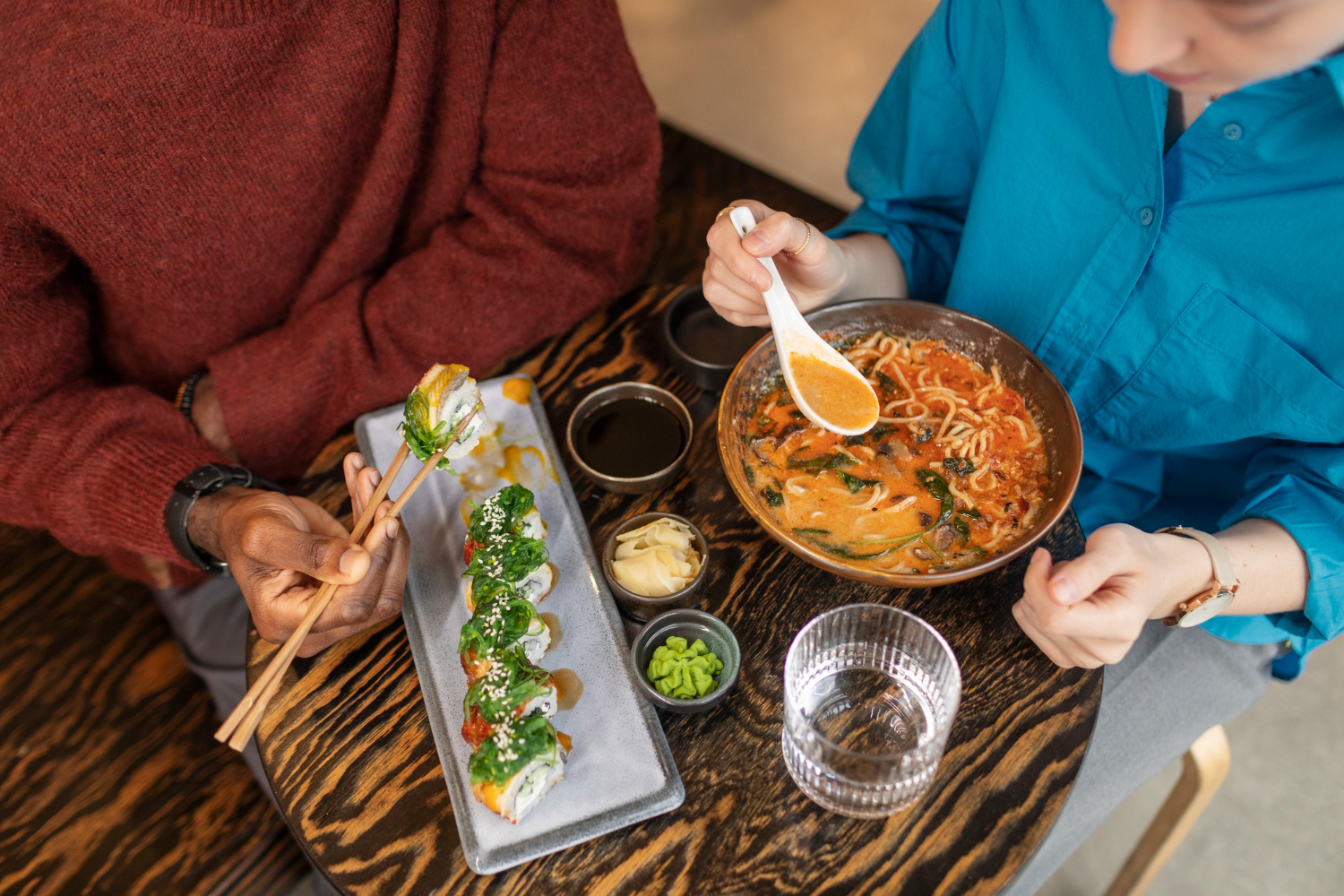 Japanese food (photo: magnific)
Korea: The spoon matters more than you might think
Korean cuisine is associated with chopsticks, but at a traditional table, the spoon plays an equally important role. It is used to eat rice and soup, and can also be used to mix or transfer food.
The table usually features many small plates with different side dishes — banchan. They can be combined with rice according to personal taste, so the same dinner can consist of different combinations for each person.
Italy: Breakfast can look completely different
Italy has its own culture of morning coffee. For example, the country’s official tourism portal describes a traditional Italian breakfast as sweet, with coffee and pastries. At the same time, in Genoa, focaccia with cappuccino or coffee with milk is a perfectly common combination.
So the stereotype that Italians never combine coffee with savory food is more of a myth. It is better to follow the local habits of the particular region.
Georgia: Don’t rush to turn down a toast
A Georgian meal is not simply dinner but a social occasion, an important part of which is the supra. At the table, there is a tamada, who gives toasts and sets the pace of the gathering. Therefore, interrupting the tamada or demonstratively rushing to end the evening may be inappropriate. Toasts here are part of
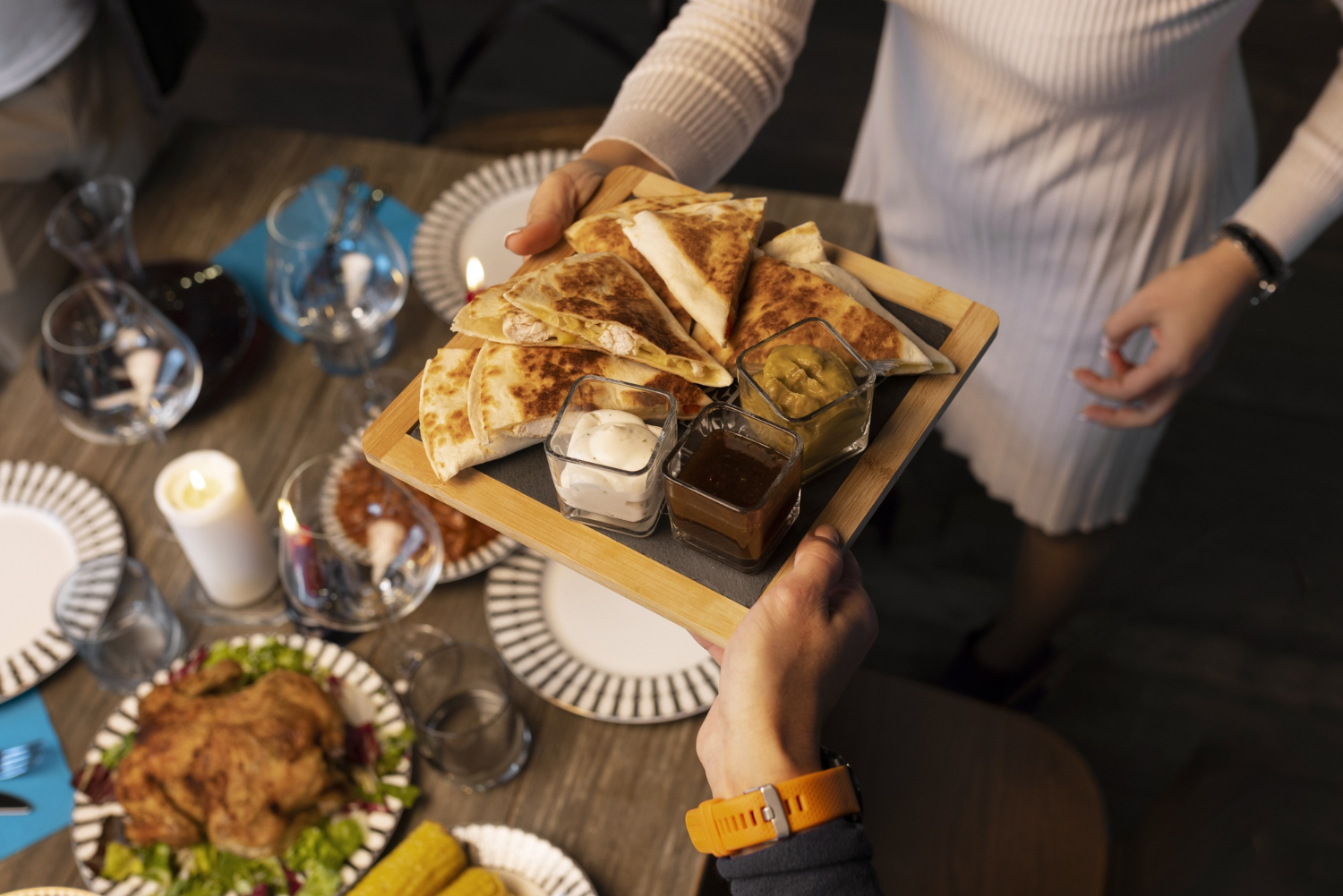 Japanese food (photo: magnific)
Korea: The spoon matters more than you might think
Korean cuisine is associated with chopsticks, but at a traditional table, the spoon plays an equally important role. It is used to eat rice and soup, and can also be used to mix or transfer food.
The table usually features many small plates with different side dishes — banchan. They can be combined with rice according to personal taste, so the same dinner can consist of different combinations for each person.
Italy: Breakfast can look completely different
Italy has its own culture of morning coffee. For example, the country’s official tourism portal describes a traditional Italian breakfast as sweet, with coffee and pastries. At the same time, in Genoa, focaccia with cappuccino or coffee with milk is a perfectly common combination.
So the stereotype that Italians never combine coffee with savory food is more of a myth. It is better to follow the local habits of the particular region.
Georgia: Don’t rush to turn down a toast
A Georgian meal is not simply dinner but a social occasion, an important part of which is the supra. At the table, there is a tamada, who gives toasts and sets the pace of the gathering. Therefore, interrupting the tamada or demonstratively rushing to end the evening may be inappropriate. Toasts here are part of the culture of communication at the table.
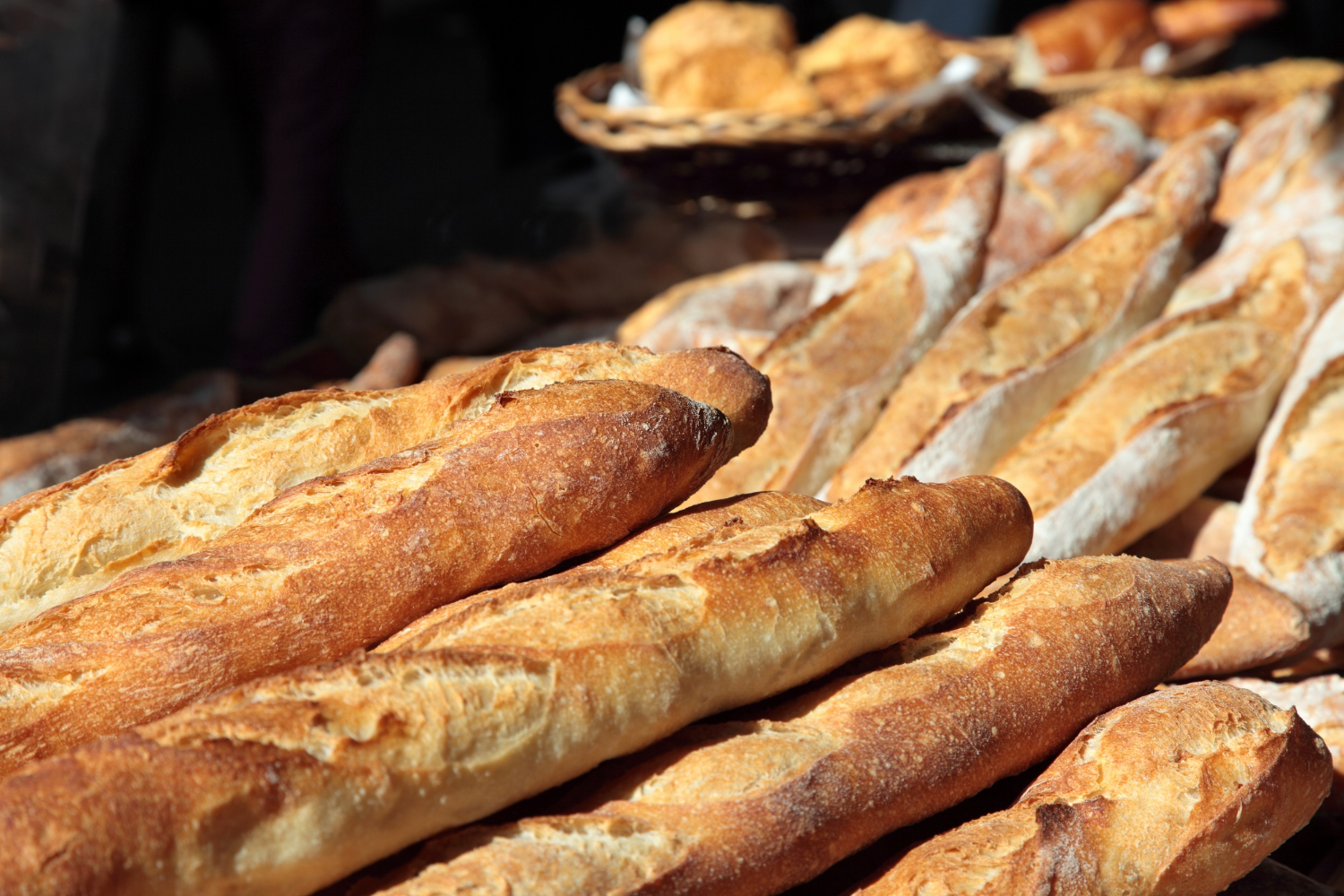 French baguette (photo: magnific)
Spain: Dinner can start very late
What is unusual here is not so much a rule of behavior as the local dining culture itself. In Spain, dinner traditionally takes place much later than many tourists are used to — often after 9:00 p.m.
So if a restaurant in a small Spanish town is almost empty at 7:00 p.m., that does not necessarily mean it is unpopular.