France rocked by student protests: Over 5,000 arrested

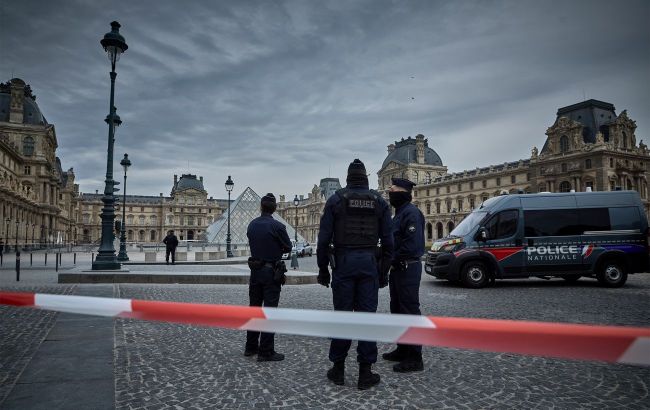 Photo: French police (Getty Images)
Large-scale protests by schoolchildren have erupted in France, starting in the poor suburbs of Paris and later spreading to other cities across the country, according to Reuters.
Protesters are demanding better learning conditions, increased funding for education, and a solution to the teacher shortage. Meanwhile, authorities have faced increasingly intense protests, during which clashes with police have occurred.
The protests began in the suburbs of the French capital, particularly in Aubervilliers, and then spread to Paris, Marseille, Strasbourg, Tours, and Lille. This week, students from more than 1,200 French schools joined the protests.
Students complain about overcrowded classrooms, a shortage of teachers, and the poor condition of schools. In some schools, math, humanities, English, and physical education classes have been canceled due to a lack of teachers.
"Last year I took the high school French exam without a French teacher, and teachers have a huge impact," says 17-year-old Maisa, who lives in a low-income suburb of Paris and dreams of becoming an English teacher.
"These are not conditions to study in," she adds.
Another protester, 15-year-old Amelia, joined the demonstration carrying a sign that read: "Our address should not decide our future."
According to her, students are demanding the same opportunities as students in other regions of France.
"The education authority is not investing enough in the suburbs. It's classist and racist," the student declares.
According to the CGT union, in the Seine-Saint-Denis department, home to Paris's poor suburbs, about two-thirds of high schools participated in Thursday's protests.
The union also claims that teaching positions remain unfilled in two-thirds of the region’s schools.
Students, their parents, and teachers also report problems with school sanitation, as well as a shortage of nurses and social workers. According to them, some schools do not even have enough drinking water.
Clashes with police
At the same time, the protests have been accompanied by clashes with law enforcement. In some cases, police have used tear gas and rubber bullets.
According to Reuters, over 5,000 people have been arrested since the protests began, and some participants have suffered serious injuries, including eye injuries, knocked-out teeth, and head injuries.
At the same time, police report that law enforcement officers have been injured. According to Agathe Foucault, a spokesperson for the French National Police, more than 600 police officers have been injured.
Paris Police Prefect Patrice Faure said that the protest movement had spiraled out of control and called on participants to return to peaceful forms of protest.
The situation has escalated amid budget disputes in France. The government presented the 2027 budget, which includes, among other things, a 1.7% increase in education spending—to 65.53 billion euros. However, this increase is below the inflation rate and does not account for teachers' pensions.
Protesters believe that years of underfunding have led to a deterioration in learning conditions. Meanwhile, in 2026, the government cut 3,256 teaching positions nationwide.
According to the French Ministry of Education, the average cost per high school student in 2024 was 11,660 euros. By comparison, in 2010 this figure stood at 11,910 euros, meaning it has not changed significantly over the past decade.
The current protests have become the largest nationwide protest movement by French students in recent decades. Similar large-scale protests over education funding took place in France in the 1990s. At that time, the protesters succeeded in securing increased funding, but spending per student subsequently began to stagnate again.