European airports face massive queues: Here's why

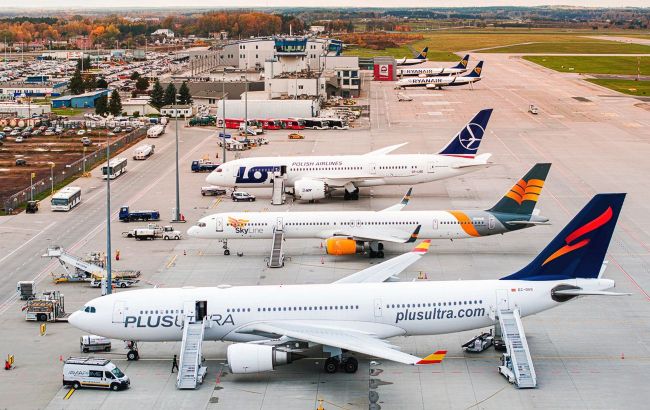 Photo: An airport in Poland (Facebook/KatowiceAirport)
The new border control system at the EU's external borders has run into problems right in the middle of the summer tourist season. At some major airports, passengers are having to wait significantly longer to clear border control than they did last year, according to the Financial Times.
This is due to the European Union’s new Electronic Entry/Exit System (EES), which has led to longer wait times at several major European airports. In July, peak wait times at Frankfurt and Amsterdam airports reached 120 minutes.
In Frankfurt, the maximum wait time for passengers doubled compared to last year—from 60 to 120 minutes. At Munich Airport, this figure rose from 31 to 60 minutes, and in Amsterdam, from 80 to 120 minutes.
EES system
The EES is designed to process travelers from non-EU countries. When travelers first cross the external border, the system records their personal data, takes their photo, and captures their fingerprints.
These additional biometric procedures were one of the factors affecting the speed of border control.
Even before the system's launch, representatives of the tourism industry warned that the new procedures could cause significant delays at airports.
European Commission sees no issues for most passengers
According to the European Commission, registration in the EES system takes about 70 seconds on average. The Commission states that for most travelers from countries outside the EU, the system does not create any significant additional problems.
At the same time, airlines acknowledge that at some airports, the new rules have already led to significant passenger congestion.
Representatives from British Airways and easyJet have called on airport operators to streamline the screening process so that people are not forced to stand in line for hours.