EU tightens deportations as certain nationalities face highest removal rates

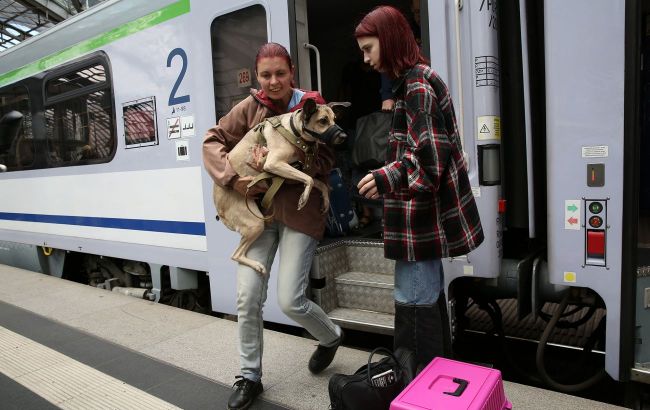 Ukrainian refugees in Germany (Photo: Getty Images)
Europe is radically changing its approach to migration. The number of incoming asylum seekers is declining sharply, while deportations are hitting multi-year records, according to a Euronews study.
Over the past four years, the number of new migrants entering the EU has steadily declined. Figures fell from 5.4 million to 4.5 million people in 2024 — a reduction of 24%.
Statistics for 2025 also show a decline. Only 361,000 people received protected status, the lowest figure in six years.
Instead, the number of repatriation orders is rising. Last year, authorities issued nearly half a million such decisions. Although only about a third actually return, the number of deportations — 155,000 people — was the highest since the start of the decade.
Why are refugees being expelled from Europe?
European Commissioner for Home Affairs and Migration Magnus Brunner, speaking at the Europe in Motion conference, announced the final stage of a major reform.
"With it, we strengthen the protection of our external borders, putting in place the most modern border management system in the world – the Entry/Exit system," he said.
The bloc is intensifying cooperation with other countries. The main goal is to stop illegal border crossings and suppress human smuggling.
Who is being sent home most often?
In 2025, Turkish citizens were sent home most frequently. Their number exceeded 13,000 people. Next on the list are Georgians — 10,475 people — followed by Syrians and Albanians.
Germany is currently the strictest; over the past year, Berlin carried out nearly 30,000 actual deportations. France deported 15,000 people, and Sweden over 11,000. Spain issued 54,000 orders, the Netherlands 32,000.
Interestingly, France issues the most deportation papers — 138,000 repatriation orders. But there is a catch: most people who receive such a document in France ultimately remain in the country.
Why do plans not always become reality? Authorities often cannot determine a person's country of origin. Sometimes health problems or minor status get in the way.
Poland as the EU's refugee border
Rejections at borders have become more frequent. In 2025, entry was denied to 133,000 people. The most common reason — lack of a clear purpose for travel — accounts for one in three cases.
Poland has become the main outpost. Warsaw reported the largest number of migrants turned back at its border — nearly 30,000. France ranked second with 12,000.
Another 17% of people were refused entry due to overstaying their allowed period. Many did not have valid visas.