EU sets final date to cut off all Russian gas imports by 2027

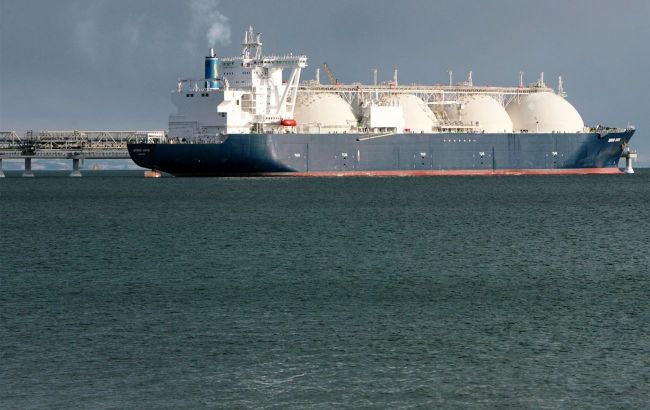 Photo: EU agreed on a date for a full phaseout of Russian gas (Getty Images)
Representatives of the European Council and the European Parliament have reached a preliminary agreement on completely ending imports of Russian natural gas by 2027, according to the Council of the European Union.
Gradual phaseout by 2027
The preliminary agreement must be formally approved by the EU Council and the European Parliament, after which the drafted regulation will be fully adopted.
It provides for a complete ban on importing Russian liquefied natural gas (LNG) and pipeline gas.
According to the agreed-upon rules, imports will be fully stopped by September 30, 2027. Gas purchases made without prior contracts will end by June 2026.
Deliveries of liquefied natural gas under long-term contracts must end on January 1, 2027, and pipeline gas supplies on September 30, 2027.
Transition period
A transition period is provided for existing contracts. Any changes will only be allowed for technical reasons and cannot increase supply volumes.
Some exceptions are provided for certain supplier countries with large export volumes to the EU.
The regulation also introduces fines for violations of the rules and the option to temporarily suspend the ban in the event of an emergency threat to the energy security of specific states.
The document will enter into force after official approval by the EU Council and the European Parliament. After that, detailed regulatory rules and specific timelines for implementing the restrictions will be presented.
EU’s refusal of Russian gas
On October 20, the EU Council supported the launch of the RePowerEU mechanism by a majority vote. It outlines a gradual and complete phaseout of the EU’s dependence on Russian fossil fuels. Hungary and Slovakia opposed the decision.
Hungarian Foreign Minister Péter Szijjártó said Budapest would not support restrictions on Russian oil supplies because such measures, in his view, could threaten the country’s energy security.
Given that Hungary and Slovakia regularly block new restrictions on Russia, the European Commission proposed changing the procedure for adopting sanctions.
Instead of requiring unanimous approval, the proposal suggests adopting sanctions by a majority vote of EU member states.
Meanwhile, the US has stated its readiness to rapidly replace all Russian gas and oil supplied to Europe with American energy resources if needed.