Effective ways to clean bathroom limescale without ruining the coating

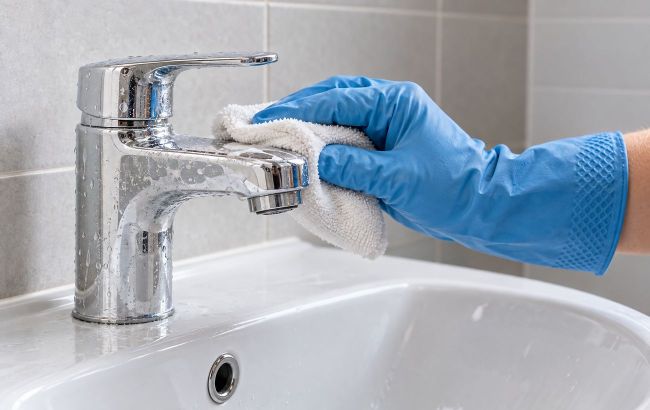 Cleaning faucet limescale (photo: Styler)
Do not scrub limescale off faucets, tiles, and bathtubs with a hard sponge or remove it with any product labeled "anti-lime." Improper cleaning can leave scratches, damage the coating, or strip the surface of its shine.
Here's how to remove limescale from various surfaces and which mistakes to avoid.
Why limescale appears in the bathroom
After water dries on faucets, sinks, and tiles, mineral deposits remain. The harder the water, the faster they accumulate and form noticeable white spots.
As Kärcher explains, acidic cleaners are used to remove stubborn limescale. However, strong acids can damage metals, cement grout, and other sensitive materials.
Therefore, a product should be chosen not only for its ability to dissolve scale but also for its compatibility with the surface.
What to check before cleaning
First, determine what the surface is made of and whether it has a special coating. Care rules for an acrylic bathtub, an enameled bowl, and a stone sink differ.
Before using a cleaner:
- Check if the product is approved by the plumbing or finishing manufacturer.
- Read the instructions, including dilution ratios and exposure time.
- Test the compatible cleaner on a small, inconspicuous area.
- Prepare a soft cloth or a non-abrasive sponge.
- Ensure ventilation and use protective gloves if required by the instructions.
Testing on a small area does not override the manufacturer's prohibitions. If a product is not intended for a specific coating, it should not be used.
How to clean a faucet of limescale
For their faucets, Hansgrohe recommends a mild cleaner based on citric acid and a cotton cloth.
How to properly clean a faucet:
- Apply the cleaner to a cotton cloth, not directly onto the faucet.
- Gently wipe the areas with scale, adhering to the recommended exposure time.
- Thoroughly rinse off residues with clean water.
- Dry the faucet with a soft cloth.
The manufacturer does not recommend using vinegar, products containing acetic acid, chlorine bleaches, or abrasive cleaners. For faucets, the German plumbing manufacturer also advises against hard brushes and microfiber cloths.
If the design allows, the aerator can be removed and cleaned separately. Hansgrohe recommends placing the part in warm water with a small amount of appropriate cleaner for about 10 minutes, then rinsing. For other models, check the manufacturer's instructions.
Important: These recommendations apply to Hansgrohe products. For faucets of other brands, especially those with decorative coatings, you must check the specific manufacturer's instructions.
From the experience of the Styler editor: Once, after using an aggressive limescale remover on a faucet, reddish stains appeared. The product was left on the surface for too long, which may have damaged the coating. Therefore, it is important not to exceed the recommended exposure time and to rinse the product thoroughly with water.
How to remove scale from acrylic and enameled bathtubs
For an acrylic bathtub, choose a product approved by its manufacturer. KOHLER recommends cleaning acrylic with a soft, damp cloth or sponge, avoiding abrasive materials that can damage the surface.
If limescale remains after regular washing, a cleaner designed for its removal and compatible with acrylic is needed. For an enameled bathtub, also check if the product is allowed for the specific coating.
Follow the application and exposure instructions, then thoroughly rinse off the cleaner. Do not leave it overnight unless specified by the manufacturer.
How to clean tiles without damaging the grout
Even porcelain stoneware is not always resistant to acidic cleaners.
Tile manufacturer Daltile warns against using acidic products on fully polished porcelain stoneware and porcelain stoneware with a polished glaze. They can cause clouding, staining, and surface damage.
Special attention should be paid to grout lines. Acidic cleaners can damage cement grouts, so care rules for them should be checked with their manufacturer.
How to proceed:
- Ensure the cleaner is suitable for both the tile and the grout.
- Treat a small area according to the product instructions.
- Gently remove the scale without using hard brushes.
- Thoroughly rinse the surface with clean water.
It is especially important to remove cleaner residues from the floor, as they can make it slippery.
How to remove scale from natural stone
Marble, limestone, and other acid-sensitive stones cannot be cleaned with vinegar or citric acid. They can damage the surface and leave matte marks.
According to the Natural Stone Institute, neutral stone cleaners or a mild detergent solution with warm water should be used for regular care.
After washing, the surface must be thoroughly rinsed and dried with a soft cloth.
However, a neutral product may not necessarily remove hard mineral deposits. If scale remains, consult the stone supplier to clarify which specialized cleaner is permitted for the specific stone type and coating.
Do not try to enhance the effect of the product by adding vinegar or another acid.
Which products must not be mixed
Never mix chlorine bleach with vinegar, limescale removers, or other acidic cleaners.
Such a combination can release toxic chlorine gas, which is dangerous to the respiratory system.
As the CDC warns, household chlorine bleach can release chlorine when mixed with certain other products.
Do not apply a new cleaner over residues of the previous one. Before using another product, thoroughly rinse off the previous one with water and follow the manufacturer's instructions.
How to prevent new scale formation
It is difficult to completely avoid mineral deposits with hard water, but regular care helps reduce their accumulation.
After using the bathtub or shower:
- Rinse soap residues off surfaces.
- Dry faucets with a soft cloth.
- Remove water from the shower cabin glass with a squeegee with a rubber edge.
- Do not let water dry on tiles and bathtub rims.
Regular drying of surfaces reduces scale formation and the need for strong cleaners. The main thing is to choose fabrics and tools according to the coating manufacturer's recommendations.