angerous cleaning product combinations to avoid: Bleach, vinegar, and ammonia

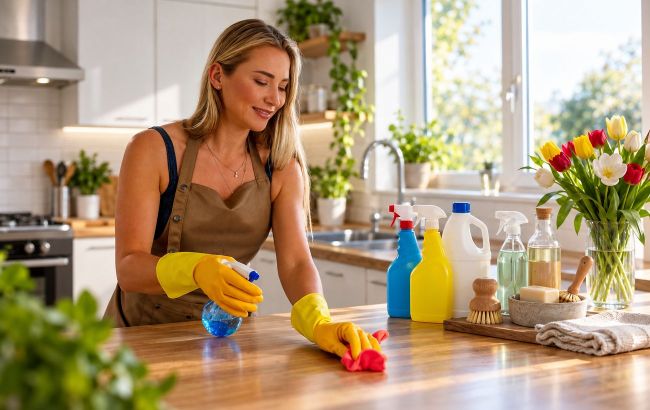 Which cleaning products should never be mixed (collage: Styler)
When cleaning, it is sometimes tempting to mix several products to quickly remove limescale, grease, or stubborn stains. However, combining certain household chemicals can trigger dangerous reactions, cause respiratory irritation, and even lead to serious poisoning.
Here's which household cleaning products you shouldn't mix, why those combinations are hazardous, and what to do if you notice a sharp odor or have trouble breathing while cleaning.
Why you shouldn't mix cleaning products
Household chemicals contain active ingredients that can react with one another. As a result, instead of more effective cleaning, you may produce dangerous fumes or a corrosive mixture.
Products containing sodium hypochlorite require particular caution. This substance is found in many chlorine-based bleaches and disinfectants, commonly referred to in everyday life as "chlorine bleach."
According to the U.S. Centers for Disease Control and Prevention (CDC), chlorine bleaches should not be mixed with other cleaning or disinfecting agents, as this can release fumes hazardous to breathe.
Moreover, a dangerous reaction can occur not only when two liquids are intentionally mixed. The risk also exists when one product is applied to a surface where residues of another remain.
Bleach and vinegar – a dangerous combination for the respiratory system
Vinegar is often used to remove limescale, while chlorine-based products are used to disinfect plumbing. However, combining them is strictly prohibited.
Vinegar contains acetic acid, which reacts with sodium hypochlorite. This can release toxic chlorine gas.
As explained by the Washington State Department of Health, inhaling chlorine can cause:
- Burning and watery eyes;
- Irritation of the nose and throat;
- Coughing;
- Difficulty breathing;
- Chest pain.
Significant exposure can lead to serious lung damage. Therefore, you should never pour a chlorine-based product into a bathtub or toilet and then add vinegar in an attempt to enhance the cleaning effect.
This rule applies to other acidic products as well, such as certain rust and limescale removers.
Bleach and ammonia – why glass cleaners can be dangerous
Ammonia, also known as aqueous ammonia solution, may be present in certain products for cleaning glass, mirrors, and other surfaces.
If mixed with chlorine bleach, it can form chloramines - toxic compounds whose fumes irritate the respiratory tract.
According to Poison Control, this reaction can cause coughing, mucous membrane irritation, and breathing problems. The danger lies in the fact that ammonia is not always obvious in a product's ingredient list. Therefore, it is important to check the label before use.
Particular care should be taken when cleaning toilets and areas where urine traces may remain, as urine also contains substances capable of reacting with chlorine-based products.
Hydrogen peroxide and vinegar – another cleaning mistake
Both products are frequently used separately for household cleaning. However, they must not be mixed in the same container.
The reaction between hydrogen peroxide and acetic acid can produce peracetic acid. This substance can irritate the skin, eyes, and respiratory tract.
Do not prepare homemade cleaning mixtures from peroxide and vinegar, even if recommended in DIY videos.
Bleach and alcohol – why you shouldn't combine disinfectants
Another dangerous combination is chlorine bleach and alcohol-based products.
These may include certain disinfectants, surface cleaners, and products based on ethyl or isopropyl alcohol.
According to Transport Canada, mixing these substances can produce toxic compounds, including chloroform.
Exposure to dangerous fumes can cause headaches, dizziness, nausea, and other symptoms of poisoning. Therefore, do not mix different disinfectants or add alcohol to chlorine-based products.
Why you shouldn't mix drain cleaners
Drain cleaning products may contain strong acids or alkalis. They are designed to dissolve blockages but can cause chemical burns. If one product fails to work, do not immediately pour another into the pipe.
Depending on the composition of the products, this can cause intense heat generation, splashing of corrosive liquid, or the formation of dangerous fumes.
If the product does not work, follow the manufacturer's instructions. Do not experiment with other chemicals on your own.
What to do if you accidentally mix household chemicals
If you notice a sharp, unusual odor, coughing, eye burning, or difficulty breathing while cleaning, stop working immediately.
Key actions to take:
- Move away from the reaction site. Immediately leave the room and get fresh air.
- Do not attempt to neutralize the mixture. Do not add vinegar, baking soda, water, or other agents in an attempt to stop the reaction.
- Do not return to the room to clean up. Do not lean over the mixture or inhale the fumes to identify the smell.
- Seek help. If you experience breathing difficulties, chest pain, severe coughing, or worsening condition, call 103 or 112.
- If chemicals get into your eyes or on your skin, rinse the affected area with running water for at least 15 minutes and seek medical advice.
Even if you feel better after getting fresh air, do not ignore the symptoms. Damage to the respiratory tract from inhaling certain toxic gases may manifest with a delay.
How to use household chemicals safely
To avoid dangerous reactions, simply follow a few rules:
- Use one product at a time and only for its intended purpose.
- Read the ingredients, warnings, and instructions on the packaging.
- Do not mix different products, even if both are intended for bathroom use.
- Before applying another product, remove residues of the previous one according to the manufacturer's instructions.
- Ventilate the room while cleaning, if safe to do so.
- Store household chemicals in their original packaging, out of reach of children and pets.
Remember that for routine household cleaning, water and a standard detergent are often sufficient.