Ancient Egyptian tomb discovery shocks archaeologists: What they found inside

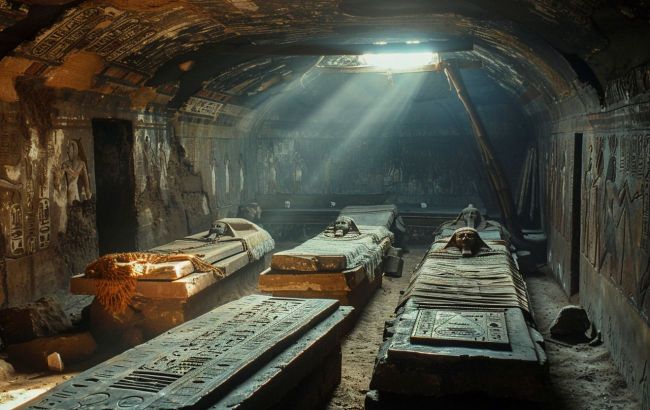 Ancient tomb (photo: magnific.com)
The remains of people buried over a period of more than 700 years were found in an ancient Egyptian tomb, along with a mummified dog.
Frontiers in Environmental Archaeology tells the story of the unusual discovery that has helped researchers learn more about burial practices in ancient Egypt.
The tomb was used for more than 700 years
Burial chamber TT 209 is located in the Theban Necropolis, opposite modern-day Luxor. Archaeologists found the remains of 16 people, a mummified dog, as well as traces of at least four additional burials.
What makes the tomb particularly remarkable is that it was used for many centuries. New burials continued even when there was almost no space left.
Bodies were placed on top of one another
The earliest burials were arranged separately: the deceased were placed in coffins and left with funerary objects, amulets, and other items.
Later, as space became scarce, bodies were placed in available gaps and, in some cases, one on top of another.
However, researchers do not consider this to be a chaotic pileup. On the contrary, the arrangement of the remains suggests that people who came to bury their loved ones later adapted new burials to those already present in the chamber.
Why was a dog buried alongside the people?
The mummified dog attracted the most attention. It was found directly above the remains of a man and a woman.
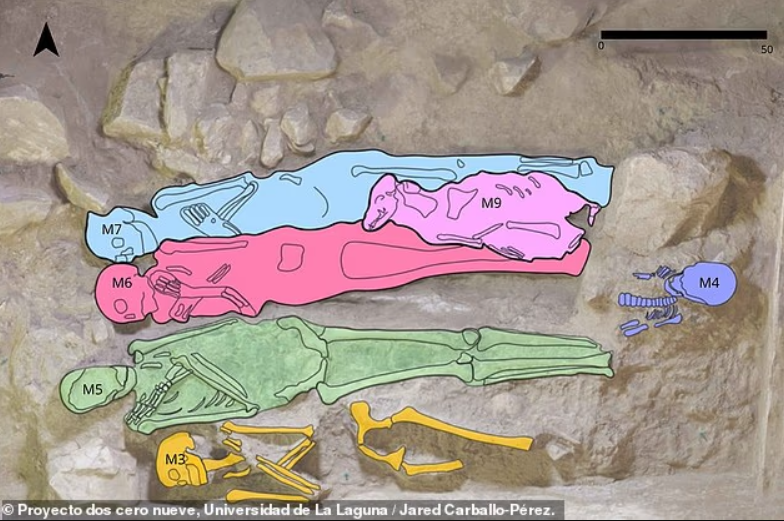
The dog was found buried in the same tomb as the people (photo: Frontiers in Environmental Archaeology)
Archaeologists have not yet established the exact reason for this burial. However, they suggest that the animal may have had a special connection to the couple.
A symbolic meaning cannot be ruled out either: ancient Egyptian beliefs may have associated the animal with the role of a companion or guide for the deceased in the afterlife.
The tomb preserved the history of several generations
According to the researchers, TT 209 was more than just a place for repeated burials. The chamber gradually changed with each new burial, and its space literally preserved the memory of the people who were buried there over the centuries.
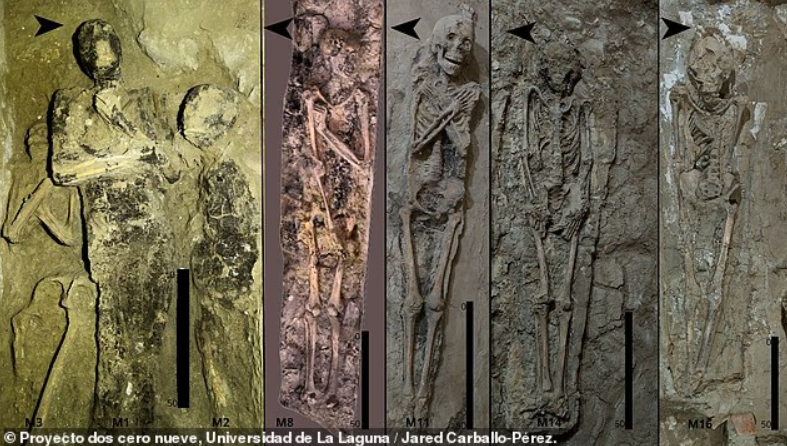
Burial practices of ancient people (photo: Frontiers in Environmental Archaeology)
That is why the discovery is important to archaeologists: it shows how burial practices changed and how ancient Egyptians adapted old tombs for new generations.