AI cracks Napoleon’s secret cipher in just 6 hours after 217 years

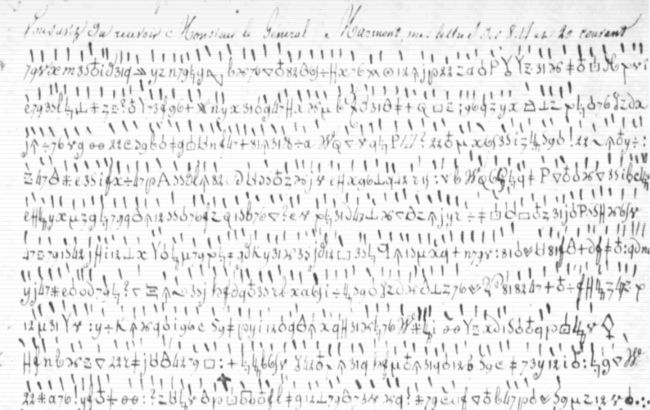 Artificial intelligence cracks Napoleon’s cipher (screenshot: Revue historique des Armées 25(4), 1969)
AI helped decrypt a secret letter from Napoleon that had remained unsolved for over 200 years. In 1809, the French emperor encrypted data on the positions of his and allied armies within it, and modern algorithms allowed for the complete restoration of the text, according to a blog post by SentinelOne engineer Carter Church.
How did the algorithms "crack" the complex cipher?
Thanks to the use of GPT-6 Astra, the decryption process took about 6 hours of computer time.
The artificial intelligence independently performed the full cycle of analytical work, which previously required many months of labor by entire teams of specialists.
What exactly did the algorithm do?
Automatic transcription: The model sliced the scanned image into separate lines, recognized 1,300 encrypted units, and classified 155 unique characters.
Whole word search: AI identified 29 individual symbols that represented not single letters, but entire nomenclature concepts and words (such as "general," "you," "and," etc.).
Algorithmic matching: Using simulated annealing and comparison with statistics of the 19th-century French language, the model selected precise values for each character, fully reconstructing the original key table (tableau chiffrant).
Historical value and restored details
The decrypted document meticulously reproduces the deployment of forces before the War of the Fifth Coalition.
In the letter, Napoleon reveals the location of the 40,000-strong Bavarian corps, the disposition of troops in Saxony, Bavaria, and near Munich, and analyzes the probable actions of Russian forces.
Beyond the general disposition, the decryption allowed for the restoration of a fragment lost in official printed editions of Napoleon's correspondence.
Where the quote was previously interrupted by ellipses, the encrypted original contained a sharp phrase: the emperor urged Marmont (Bonaparte's personal friend) not to fear "a few detachments or a gathering of rabble" (rassemblement de canailles).
Church is convinced: the success of this project proves that vast arrays of archival and military-historical documents, previously considered hopelessly lost due to a lack of human resources, can be fully decrypted using the analytical capabilities of AI.